Blog

All Workers' Compensation Car Accidents Workplace Accidents Workplace Injuries Construction Workers' Accidents Medical Malpractice Industrial Workers' Injuries Product Liability Personal Injury Truck Accidents Firm News Wrongful Death Uncategorized
Are remote employees eligible for workers’ compensation?

Are remote employees eligible for workers’ compensation?

For over a year, businesses across Maryland have had to adjust the way they operate to keep workers and clients safe in a pandemic. In that time, many companies have determined that what might have been a temporary need for employees to work remotely could be a savvy long-term arrangement. If you are one of the workers who telecommute regularly, you still remain covered by workers’ compensation laws. Work-from-home accidents While you may be more comfortable and relaxed working in your home, accidents can still happen. As one New York Times article notes, injuries involving back, wrist, neck and shoulder pain can be common among telecommuters. Workers’ compensation benefits are available to covered employees who suffer injuries like these in the course of and arising out of their employment. Factors to consider for compensable worker’s compensation clams include the following: The nature of working from home Does the worker sit in front of desk all day, or does she fabricate or have an at-home workshop? What actual activity was the worker engaged in at the time of the accident? Was the worker in their normal at-home workspace, or in another area of the home? Were they in a hallway by their office, or were they in their basement far from the home office? Was the remote work required or voluntary? What, if any, rules or instructions were provided as to the nature of the remote work? The nature of the accident: slip and fall, strain, or laceration? While these may be slightly different than claims involving a traditional workplace, the fact is that an employee hurt in the course of their employment can be eligible for compensation if they were at home. Challenges that complicate claims Telecommuters seeking benefits for a work injury can face some challenges in pursuing benefits, including proving that an accident occurred arising out of or in the course of a person’s employment. Thus, it can be crucial to take the following steps: Report the injury to your employer as soon as possible Retain documentation from medical visits Note the conditions of your workspace Record the details of an accident, including time, date and place These measures can make it easier to submit a successful claim for workers’ compensation benefits. Maryland employees have enough to worry about thanks to COVID-19, including lockdowns, financial challenges, and the concern of the health of their family. A workplace injury, even if at home, are just make matters that much worse. However, knowing that you can still be protected and covered for medical care and lost wages after an injury is critical for the times we are in.


Spring cleaning could keep you safe on the road this season

Spring cleaning could keep you safe on the road this season

Spring cleaning gives people the opportunity to make a fresh start after the winter. While most people think of spring cleaning their homes, it can also be a good time to address your car. Cleaning your vehicle can help you feel more organized and calm, but it can also help keep you safe and avoid car accidents this season. Below are some tips for how you can accomplish this. Performing routine maintenance Whether you drove a lot this winter or your car spent a lot of time in the garage, it could benefit significantly from a tune-up. You or your local auto shop can: Change the oil Refill the fluids Check the battery Replace broken lights Replace broken windshield wipers Check the condition and air pressure of your tires This routine maintenance can ensure your car is in working order, and it can minimize the risk that your vehicle breaks down or malfunctions in the coming months. Refresh your driving habits Driving in the winter is notoriously treacherous in Maryland. Drivers know they should be attentive and cautious behind the wheel when roads are icy, snowy or slick. However, these behaviors are no less important when the roads are clear, the sun is out and your windows are down. Thus, now can be a great time to commit to driving safely. Remember to: Wear your seatbelt Obey the speed limit Give other vehicles space Refrain from driving while distracted, drunk or drowsy These habits may have been top-of-mind during winter, but they remain critical in every season. And, in times of spring storms, be sure you adjust your driving accordingly. Prepare for road hazards Countless road hazards seem to crop up when the snow melts. You might notice things like road construction, novice drivers testing their skills out, and reckless drivers. Do not let these hazards catch you by surprise. Keep your eyes open, focus on the road and steer clear of any motorist who may be swerving or driving too fast for road conditions. Statistics from the National Safety Council show that car accidents increase in the spring as more people drive more miles than in winter. However, with these tips, you can protect yourself and your family from a devastating car crash.

Restaurant workers must beware of serious burn risks

Restaurant workers must beware of serious burn risks

Workers in Maryland’s food service industry face a significant amount of stress. They work a fast-paced and demanding job. On top of that, a number of workers in this field are new to the working world altogether. The average age of restaurant employees across the nation is 18 years old. The environment of restaurant work can be overwhelming for even the most experienced workers. Regardless of a worker’s experience in this industry, almost all restaurant workers face a high risk of suffering burn injuries on the job. Burn risks are almost everywhere in food service Injuries from burns are some of the most common work injuries that restaurant workers report, according to the Bureau of Labor Statistics. And it is no wonder that this is the industry where most burn injuries occur. The risk is high primarily because of the many sources of heat and burn risks that workers come across in these workplaces, including, but not limited to: Deep fryers Hot food or beverage spills Ovens and grills Hot plates and steamers In a busy kitchen where speed is often of the utmost importance for all workers, the chance of an accident involving these objects only increases. Do not overlook the seriousness of burn injuries Some burns are minor. They can be incredibly painful, but they may only require some ointment, pain medication and bandages to heal. Unfortunately, that is not always the case. Burns can be severe injuries that lead to many days out of work while workers recover. While most burns take roughly two to three weeks to heal, third-degree burns can take much longer. They also require much more care. Workers often face: Painful blisters Scarring Frequent risk of infections Permanent damage to skin cells Nerve damage Burns can also significantly limit one’s ability to move. Many injured individuals might have to seek physical therapy to regain movement after serious accidents. It is critical that workers never overlook the risk or severity of these injuries. Dealing with these injuries can be frightening, especially if workers worry about returning to work. But injured workers can recover workers’ compensation for burn injuries, which can help them focus entirely on healing.

Does my employer get to choose my doctor?

Does my employer get to choose my doctor?

After suffering serious injuries in a fall on the worksite, emergency responders rush the injured worker to receive immediate medical attention. Once the injured worker is stable, and perhaps even able to return home, then they have to begin preparing for long-term recovery. During this recovery, most people would prefer to seek continuing medical care from a doctor they know and trust. The medical benefits they receive will cover this treatment, but many workers worry that their employer will be choosing the doctor they see. Myth or fact: Employers choose your doctor It is true that an employer, their insurer and even the Workers’ Compensation Commission can require an injured worker to see a physician of their choice if they order an independent medical evaluation (Maryland Code, Labor & Employment §9-720). However, workers do not have to continue seeing the physician of their employer’s choice when they seek medical care and a treatment plan to help them heal from their work injury. Workers and their families often wish to seek medical care from a physician they already know they can rely on to protect their own best interests, whether it is one they know or one they vet for specialized treatment. In Maryland, injured workers have the right to choose any treating medical physician, so long as the doctor accepts the Maryland Worker’s Compensation Fee Guide for their billing. Workers could still face challenges Employees who suffer injuries on the job generally reserve the ability to choose who provides their long-term medical care. Even so, the process of that decision might not always be easy for workers. They could face some obstacles in selecting their doctor, including: Their employer might provide a list of “preapproved” physicians The employer’s insurance company might not authorize the worker’s choice Even the doctor might disagree and worry about the workers’ compensation fee schedule These issues can complicate the process of obtaining workers’ compensation benefits, but they do not have to hold it up. Injured workers should consult a workers’ compensation attorney if they face any of these hurdles to secure the benefits and medical care they need. While an attorney can not provide medical advice, an experienced attorney will be familiar with physicians that are often partial to Employer/Insurer interests, or providers that understand the pitfalls of the system and will provide medical without pre-approval by an insurance company.

Workers’ compensation denied? You still have options

Workers’ compensation denied? You still have options

A work-related injury can disrupt your life. It can take a financial toll if you cannot work; it can cause frustration for your family; it can result in a great deal of physical and mental suffering for you. While workers’ compensation benefits may not remedy all these issues, they can provide vital support during a difficult time. Thus, learning that your employer or an insurance carrier has denied your claim can be devastating. However, in this situation, it is crucial not to lose hope. You have options and may still be able to collect these valuable benefits. Understanding the reason for the denial Before you decide how to proceed, you should understand why an Employer and its insurer denied your claim. Some of the most common reasons for denied workers’ compensation benefits include: A desire for the employer or its insurer to have more time to investigate the accident An effort by the employer or its insurer to pressure an injured worker to return to work A failure of communication between the employer and its insurer Failure to notify your Employer timely Failure to receive medical care shortly after the accident Although the above may be all reasons for a denial, none of the above are an actual bar to compensability of a Claim. Pursuing an Claim In order to challenge an employer and its insurer’s internal determination, an injured worker must properly file a Claim with the Worker’s Compensation Commission. Filing a Claim provides the framework and a place a redress for injured workers. Should an injured worker has a Claim filed, they have a right to request a hearing for the Worker’s Compensation Commission provide an Order compelling the Employer/Insurer to pay benefits. Since filing Claim opens the door to an injured worker’s rights, it is important that individual seek experienced and competent representation. Employer and insurer’s have representatives and attorneys that handle such claims every day. In order to level the playing field, injured workers must find their own representation to protect their rights.

Report: When do work injuries happen?

Report: When do work injuries happen?

All construction workers know that they work in a particularly risky field. In their training and from their experience on the job, they often know what hazards and factors contribute to the chance of a worksite accident. However, a new study suggests that there is another factor workers should be aware of – the time during their shift that they face the highest risk of injury. When are workers more likely to suffer injuries? A new study, according to Occupational Health & Safety, is one of the first to examine the times when injured workers reported they suffered an injury or accident on the job. Oregon State University (OSU) conducted the study and found that there could be a pattern. The researchers reviewed more than 12,000 claims from between 2007 and 2013 and determined that construction workers were more likely to suffer injuries: Within the first four hours of work Especially during the fourth hour of work The rate of work injuries generally decreased after the fourth hour ended. Why is the risk higher at these times? It is difficult to say why the first four hours of work carry such a high risk for construction workers. The study does not elaborate on the reasons, and there are several risk factors that workers face on a project site. However, this portion of a worker’s shift could hold a higher risk of injury for a few reasons, including: Workers’ bodies and muscles are still adjusting as they begin their shift Workers might suffer fatigue, especially in the fourth hour of work before a meal period There are several reasons why injuries might be more likely to occur in the first half of one’s shift. Regardless of these reasons, workers must consider this new information carefully. And why is this information important? EHS Daily Advisor indicates that awareness and education are two of the first steps to preventing workplace injuries. That is the primary reason that this information is important for Maryland construction workers to take into account. As we have discussed in previous blog posts, workers can focus on safety and injury prevention efforts on worksites as long as they are aware of the risks they face. Therefore, if workers know the details of work injuries – including when they are most likely to occur – it can help workers to be vigilant and improve their safety.

Workers: Don’t underestimate the risk of concussions

Workers: Don’t underestimate the risk of concussions

It is common to hear about concussions in the media nowadays, especially considering that they are a common risk in many sports. The Centers for Disease Control and Prevention (CDC) defines concussions as a type of traumatic brain injury, usually classified as mild. This definition might lead many people to think that concussions do not pose a large risk, but that is not true. Workers who suffer concussions on the job should not overlook the risk. Concussions are a common risk for many workers As we have discussed in previous blog posts, falls on the same level or from a height are some of the most common injury risks that workers in many industries face. And even though there is personal protective equipment (PPE) that workers can wear to prevent these falls, the risk of both falls and injuries seems to be increasing. Concussions are a common injury resulting from falls. They can seriously affect a worker’s: Balance Memory Vision Ability to focus In turn, a concussion can also significantly impact one’s ability to work. Even though most concussions take roughly two weeks to heal, it is critical that workers take time to rest. Rest is critical after a concussion Since many workers might think that concussions are a mild injury, they might continue to work. This is especially common if they do not experience extreme symptoms – such as sensitivity to light or severe headaches. However, it is important that workers take the time they need to recover after a concussion. These injuries are usually compensable under Maryland’s workers’ compensation law, which can cover medical bills and the time workers are out of work recovering. It is essential to rest for several reasons: Symptoms might arise later and put workers at risk while on the job Continuing to work and exert oneself could worsen the concussion Workers could suffer further physical injuries if they lose consciousness at work Concussions may not be visible injuries, but they are just as serious as any other. They may be defined as mild, but they are still a significant injury that workers must not overlook.

How dangerous are vibration hazards in the workplace?

How dangerous are vibration hazards in the workplace?

Vibration hazards are frequent issues in the workplace. Workers grow accustomed to these hazards, even if it causes them to feel uncomfortable for a while after they leave the worksite. However, this discomfort could be a greater risk to industrial workers than they believe. Does vibration exposure really cause injury? Exposure to vibration is a risk in many industries, especially: Construction, from working with heavy machinery and power tools Manufacturing, also from operating power tools and machinery Transportation, from driving long distances in a vibrating vehicle However, most workers in these fields do not consider vibration a risk in their job, especially in comparison with the other imminent hazards they face regularly. It is true that exposure to vibration is not the greatest risk of injury that industrial workers face, but it is a cause of injury that can affect workers long-term. What is the risk? There are generally two conditions that can result from long-term exposure to vibration: whole-body vibration and hand-arm vibration syndrome. Hand-arm vibration syndrome often stems from operating power tools and can lead to: Weakened hand muscles Nerve damage Blood vessel collapses and damage Raynaud’s syndrome Depending on the duration of exposure, workers could also suffer serious pain or injuries to their backs. There are ways to mitigate the risk. There are methods to dampen vibrations, and maintaining machines and tools properly can keep vibrations under control. But according to Safety + Health Magazine, the Occupational Safety and Health Administration (OSHA) does not strictly enforce standards limiting workers’ exposure to vibrations. Maryland workers suffering injuries from these conditions can seek workers’ compensation benefits, but they must make sure they understand the hazards they face – including those that are commonly overlooked.

New emphasis on loading dock safety

New emphasis on loading dock safety

The loading dock is often the busiest place in many industrial plants and warehouses. With deliveries coming in and workers all about, it can quickly become very hectic. Unfortunately, such a hectic atmosphere often creates dangerous circumstances that increase the risk of industrial accidents. Loading dock accidents happen too often It makes sense that the center of the action in these workplaces also carries a higher chance of injuries, but that does not mean workers should be any less cautious. It is easy to focus less on safety when workers grow accustomed to the job, but loading dock workers must always be on their guard. According to a 2017 report from Industrial Safety & Hygiene News (ISHN), 25% of industrial accidents happen at the loading dock. In particular, loading dock workers face a significant risk of injury from: Forklift accidents Collisions Slips and falls Even carbon monoxide poisoning The injuries resulting from struck-by accidents or falls can often be serious, leading to several days away from work and a long recovery. How can workers stay safe? Recent reports indicate that there is a renewed focus on safety measures at the loading dock to prevent serious accidents, such as: Revamping training to improve safety Finding ways to increase visibility Adding safety technology to the loading dock Adjusting workplace safety standards On top of these much-needed safety measures, workers must make sure they are putting safety first every day on the loading dock. Each day, workers should take time to inspect the loading dock according to their employer’s safety checklist. Even so, workers cannot control all aspects of the workplace. That is why it is essential to increase their awareness.

Demolition: Another dangerous field for workers

Demolition: Another dangerous field for workers

It is not only construction work that involves risks to workers. The flipside of this industry – demolition – also puts workers at risk of occupational injuries. Construction and demolition workers face very similar risks on the worksite, but safety for demolition workers has recently received increased attention with a new change in safety standards. New criteria for demolition safety While the newly updated standards are for employers to maintain, workers should still be aware of them. The standard applies specifically to sites and projects with many employers – and therefore workers – interacting on the same site. The revised standards would require employers to: Establish clear roles regarding worksite safety Determine work plans and hazard management processes Inform all team members about how to handle hazards Reaffirm training standards and requirements Since construction projects and sites are constantly evolving, it is critical that safety standards are as well. However, that is one of the main risks workers face, and they must make sure they are fully aware of the hazards they face on the job to keep themselves safe. Beware of the risks In addition to the new safety standards, demolition workers must also make sure they are aware of the hazards they could face daily on the job, including: Electrical injuries from live wires Falling objects Falls from heights or ladders Exposure to loud noises Exposure to dangerous chemicals Even though demolishing a particular building or site is a necessary part of the workers’ jobs, it can create new hazards each day. Even if a risk is inherent or a part of the job, an injury resulting from such a known risk remains compensable under Workers’ Compensation. Workers do not have to show negligence of their employer in order to receive coverage for on-the-job injuries. Employers and their Insurers may state otherwise, but that is why it is important to consult an experienced Workers’ Compensation attorney to ensure your rights are protected.

New common risks to watch out for in the workplace

New common risks to watch out for in the workplace

Regardless of where individuals work, many are aware that the workplace could hold serious risks of occupational injuries. As we discuss in previous blog posts, there are a few particular hazards that commonly lead to serious work injuries across industries. However, the beginning of 2021 brought a new report that details common risks that many workers might not expect. New study names four common risk factors of work injuries While safety is almost always a priority for workers, some jobs involve risks that cannot be avoided. And, a new report from ISN highlights certain factors that pose the largest risk of serious and fatal injuries on the job. ISN analyzed injury reports from the last three years to determine the most commonly cited causes and contributing factors. According to the research, the primary risk factors include: Working at a height: Most workers are familiar with this risk. After all, falls are one of the most common work injuries reported in many industries, especially construction. Bringing chemicals on site: This is another concern common in construction and manufacturing jobs. When third parties bring hazardous chemicals to the worksite, workers face a risk of exposure. Working with rigging materials: Individuals who work with rigging or in material handling often move and transport heavy objects. With the amount of equipment necessary and the objects these workers must move, it is no secret that they face a serious risk of injury. Hot work: The Occupational Safety and Health Administration (OSHA) defines hot work as any work that involves welding, cutting, burning or work with tools that use heat. Workers whose responsibilities involve hot work could face the risk of burns or exposure to hazardous fumes if they do not have the proper protective equipment (PPE). Most of these risks apply to similar industries. For example, both a construction worker as well as an industrial manufacturer could face almost all of these risks at some point on the job. Managing risks is every worker’s responsibility Maryland workers must be aware of the hazards in their workplace – whether or not those risks include any of the four listed above. Awareness of the potential risks allows workers to be better prepared and mitigate the chance of injury. Employers have responsibilities to increase safety in the workplace, but workers must still make sure they manage risks daily on the job, especially if they face these four factors.

Electrical safety is a critical issue

Electrical safety is a critical issue

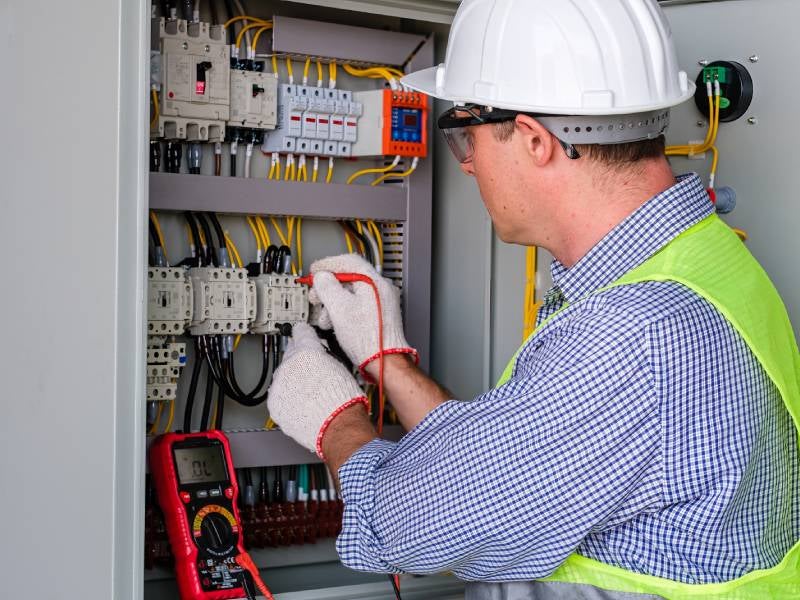
We use electricity every day. We hardly give it a second thought at home, but it can pose considerable risks to workers on the job. It does not matter whether or not individuals work with electricity, they must ensure they do not overlook electrical hazards and the risk of injury that they present. Electrical hazards are a bigger risk than many think According to Safety + Health Magazine, there was a sharp increase in fatal electrical injuries just between 2017 and 2018 – with an increase of 17.7%. Workers could face a risk of fatal or serious injuries from: Electric shocks or electrocution Burns from contact with electrical fires or live wires Falls from contact or explosions involving electricity This risk is not confined to one industry. The study found that the risk increased for many different workers, including those in construction and manufacturing, but also in education and medical fields. Workers must be aware of these potential risks. After all, it seems that many employers overlook them, putting their workers in danger. Many employers failing to control hazardous energy Electrical hazards have the potential to exist in many industries, but there are a few industries that carry a higher risk of injury from these hazards. Industrial and construction workers especially face risks as they come in contact with electricity directly. Yet, their employers may not be promoting proper safety practices. For example, lockout/tagout procedures are critical to prevent exposure to electrical hazards. These practices are important for workers who work directly with electricity. And in 2019, the Occupational Safety and Health Administration (OSHA) reported that lockout/tagout issues are the fourth most common violation found in the workplace. As we have discussed in previous blog posts, training plays a critical role in workplace safety. Employers must train workers and enforce these proper procedures to prevent these serious injuries. Additionally, workers must not only be aware of these hazards but also take time to understand how they can mitigate them to stay safe.

Contact Us

Fill out this form below and we'll contact you shortly
*Required Fields