Blog / Truck Accidents

Blog

All Truck Accidents Workers' Compensation Car Accidents Workplace Accidents Workplace Injuries Construction Workers' Accidents Medical Malpractice Industrial Workers' Injuries Product Liability Personal Injury Firm News Wrongful Death Uncategorized
Drug use can complicate workers’ comp claims

Drug use can complicate workers’ comp claims

Drug use in the workplace can inspire serious consequences for both workers who are trying to avoid occupational harm and for some who have already suffered due to work-related circumstances. For example, in Maryland, workers who are injured on the job are generally entitled to benefits regardless of fault. However, if drug use played a role in causing their work-related harm, those benefits can be denied or significantly reduced. Proving—or disproving—that connection often becomes a central issue in workplace injury cases involving positive drug tests. Workers’ comp is a no-fault system… most of the time Under Maryland law, employers or their insurers can argue that intoxication or drug impairment was the primary cause of an accident. If successful, this defense can prevent an injured worker from receiving compensation for medical care, lost wages or disability. The key question is causation: Did the drug use directly contribute to the injury, or did the accident occur independently of any impairment? For example, a worker who tests positive for an illegal substance after being struck by falling equipment may still be eligible for benefits if their impairment had no role in the incident at issue. Recent research underscores how pervasive workplace drug use has become in recent years. For example, a recent survey published by the National Safety Council indicates that one-third of American workers have witnessed the use of cannabis by others during work hours. Additionally, “More than half of employers that eliminated THC testing reported an increase in incidents or workplace performance concerns.” This trend suggests that many workers use marijuana while on the clock, potentially due to stress, chronic pain or “simply” accessibility. Marijuana use can cause drowsiness, confusion, apathy and slowed reaction times—all of which heighten the risk of workplace accidents. Even so, a positive drug test does not automatically disqualify a worker from receiving benefits. The Maryland Workers’ Compensation Commission requires evidence that the intoxication directly caused the injury at issue in a workers’ claim. A skilled legal team can help affected workers – who are obviously not alone, given the widespread nature of drug use in the workplace – to make their case as successfully as possible. Employers and insurers often use drug test results to limit liability, but workers still have rights. Anyone facing a disputed claim due to alleged drug use is generally wise to seek immediate legal guidance accordingly.
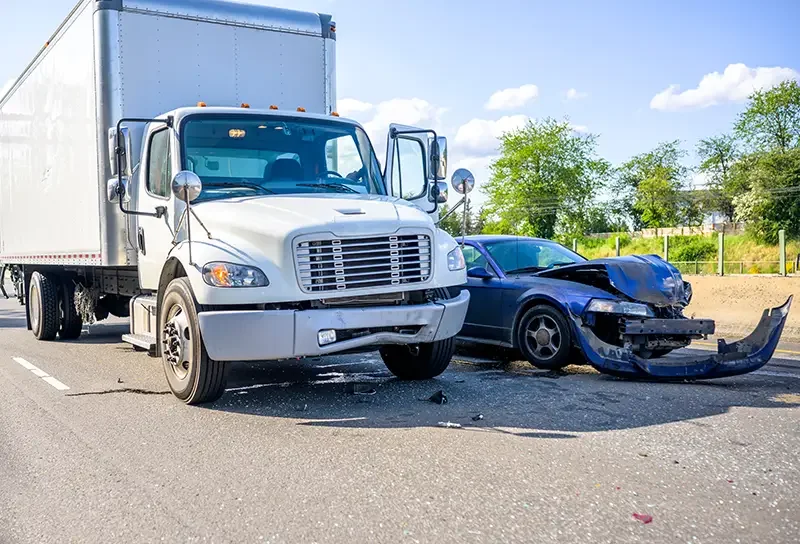
Truck Accident with passenger vehicle.

5 common causes of semi-truck collisions

Collisions involving large commercial trucks and passenger vehicles are among the worst wrecks possible. The difference in size and weight often produces catastrophic damage to the smaller vehicle. While drivers generally want to avoid any type of collision, preventing crashes that carry the highest degree of risk should be a priority. Semi-truck collisions can cause debilitating or fatal injuries and may also total passenger vehicles. Drivers who are aware of what causes these collisions can be more proactive about preventing them. What are the leading causes of semi-truck collisions? 1. Mistakes by other drivers The Federal Motor Carrier Safety Administration (FMCSA) recognizes that large trucks are responsible for slightly more than half of the commercial crashes that occur. However, many of the collisions are the fault of other motorists. Drivers who stay in blind spots for too long or cut semi-trucks off in traffic could cause collisions with disastrous results. 2. Commercial driver mistakes When looking at the FMCSA’s analysis of collisions caused by commercial vehicles, mistakes by the commercial driver are the top cause of collisions. Exceeding the speed limit or failing to yield at an intersection are seemingly minor mistakes that could have catastrophic consequences for others. 3. Surveillance failures The second most common reason that commercial vehicles cause collisions involves insufficient observation of surroundings. The failure to check blind spots or the visual distraction of the truck driver could result in them overlooking key details in traffic and then causing a collision. 4. Driver non-performance When truck drivers spend hours on the road, they may have experiences that render them incapable of performing their jobs effectively. A commercial truck operator who falls asleep at the wheel cannot maintain control as they should. Drivers who have allergic reactions, heart attacks and other medical emergencies may also become incapable of operating a commercial truck safely. 5. Vehicle issues The FMCSA estimates that approximately 10% of commercial vehicle crashes occur due to issues with the vehicle itself. Tire blowouts, brake failures and improperly loaded trailers are all vehicle issues that could cause collisions. Motorists who are aware of the factors that are within their control and outside of their control can better focus their safety efforts in traffic. Understanding the underlying cause of a semi-truck collision can help people reduce their risk of a crash or handle the aftermath of a wreck. With that said, those involved in semi-truck crashes often need help handling a complex insurance claim or taking legal action in pursuit of financial compensation, and that’s okay.

Has your knee been injured in a work-related fall?

Has your knee been injured in a work-related fall?

Unpredictability is one of the most dangerous things about falls. They can happen to anyone at any time, including in the workplace. Many times, you may be able to simply dust yourself off after a fall and get on with your day. Sadly, however, this is often not the case. Falls can be hard on your knees, and the resulting injuries can be serious. Outlined below are some of the more severe knee injuries associated with work-related falls. Damaged ligaments Torn ligaments are among the more serious and painful knee injuries that can result from a fall. The knee is comprised of four ligaments: the anterior cruciate ligament (ACL), the posterior cruciate ligament (PCL), the medial collateral ligament (MCL) and the lateral collateral ligament (LCL). Ligaments help the knee move forward and backward, as well as to rotate from side to side. Because each of these ligaments has a distinct function, damage to any of them can be painful and limit your mobility. Surgery and an extended period of recovery are often the only way to get better after ligament damage to avoid chronic pain issues. Dislocations During a fall, your knee may be manipulated and twisted into positions it is not designed to be in. This can result in a dislocation, which is very painful and can be difficult to treat. As a general rule, the sooner you seek medical treatment after this type of injury the better. Depending on whether or not there is nerve damage, you may require multiple surgeries before you can get back on your feet. If your knee has been injured in a fall at work, then you may be entitled to compensation for your pain and suffering. This won’t undo the damage, but it will help you to stay on top of your finances while you recover and are unable to work. Seeking legal guidance will offer you the best possible chance at obtaining a just outcome in your case.

A closer look at nail gun safety

A closer look at nail gun safety

Nail guns are a common sight in workshops and construction sites across Maryland. When used appropriately, they can increase productivity and efficiency at work. However, it is important to remember that nail guns are a powerful piece of equipment. According to the CDC, nail guns result in 37,000 emergency room visits annually and 68% of these visits involve workers. It only takes one small error or malfunction for something to go horribly wrong. Outlined below are a few examples of how nail gun accidents can occur. Faulty equipment Any tool that has the potential to be dangerous must be routinely maintained. Older equipment is more likely to malfunction. Usually, nail guns have safety mechanisms in place, such as guards. If these are bypassed or missing, then it makes an accident and injury much more likely. Underestimating the power Nail guns can penetrate all sorts of tough materials, especially wood. If a piece of wood is not very thick, it’s possible that the nail could penetrate all the way through to the other side, catching the nail gun operator off guard and posing injury risks. Nails can also ricochet when using the tool on certain surfaces like metal. When this happens, the nail essentially becomes a missile that can penetrate flesh and cause serious damage to the eyes. Preventing nail gun injuries Employers have a legal duty to ensure that workers are as safe as possible. This includes taking preventative measures like maintaining tools, providing appropriate safety gear and facilitating adequate training. Proper training is especially important, both for new and experienced workers. This can help workers understand the tool’s different triggers, how to hold and load the nail gun, what to do when it malfunctions and more. If you have suffered an injury on the job, then you may want to consider your options regarding workers’ compensation. An experienced attorney can help you understand your next steps.

If you drive for work, you could be at risk of an accident

If you drive for work, you could be at risk of an accident

People often worry about work-related injuries while they are on a job site, whether that is a manufacturing plant, construction project or office. However, not all work accidents happen in a building. For instance, you could get seriously injured in a work-related accident while you are driving. In fact, motor vehicle crashes are the cause of most work-related fatalities in the United States. Work-related car accidents The Centers for Disease Control and Prevention states that 24 percent of fatal work accidents in 2018 involved motor vehicle crashes. And between 2003 and 2018, more than 29,000 people were killed. While every motorist is at some risk of getting in an accident, workers who drive as part of their job can be on the road more and for longer periods. Under these circumstances, a person can be more likely to encounter dangerous situations, including: Distracted drivers Drowsy or fatigued drivers Drivers impaired by drugs or alcohol Dangerous roads Work zones Reckless drivers Unfamiliar routes These components present a threat to every road user, but the more a person drives, the more likely it can be that they will encounter these hazardous scenarios. Workers at the highest risk Some occupations that put people at a higher risk of getting into a crash while working include: Truck drivers Firefighters Police officers Oil and gas extraction workers Taxi or rideshare workers Delivery services Sanitary workers Salespeople People working in these roles can be on the road more than the average driver. They can also be more likely to be driving at high speeds, early in the morning or late at night. And it is not just the drivers who can be in danger of getting hurt in a crash. Passengers can also suffer a fatality in a work-related motor vehicle accident, and pedestrian workers can be injured, too. These parties might include road construction workers and highway maintenance crews. When a person is operating a vehicle at the request of their employer and an accident occurs, any injuries to the employee are likely covered.  As the Maryland Worker’s Compensation Act is a “no-fault” statute, even if a worker is partially or completely at-fault for an accident they still can be eligible for coverage and compensation for their injuries sustained in a vehicle crash. However, it should be noted receipt of benefits from an insurer of an at-fault vehicle can adversely affect long-term benefits an injured worker may be entitled to under Worker’s Compensation.  As a result, these types of accidents can be es can be highly complex in relation to injuries, fault, and the intersection of different compensation. . As such, consulting an attorney who specifically handles these issues is critical in ensuring no mistakes occur for the injured worker.

Maryland man killed in truck accident with tractor-trailer

Maryland man killed in truck accident with tractor-trailer

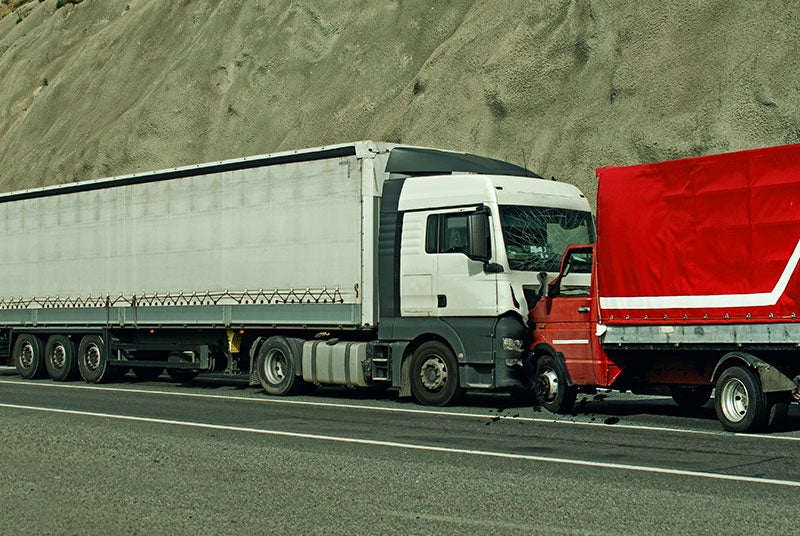
As we’ve previously discussed in this blog, truck accidents have the potential to be extremely dangerous. The force of an 18-wheeler can do significant damage to a smaller vehicle, and the time and distance it takes for a fully loaded truck to effectively slow down or stop may not be enough to avoid a collision. As a result, truck accidents are often fatal for drivers and passengers of any cars involved. But truck accidents can also be deadly when they involve other trucks. If two trucks come too close to each other, they might not be able to avoid a collision on time due to the difficulty of stopping, and swerving to avoid that collision tends to be much more difficult due to trucks’ poor handling ability. An accident between two trucks recently caused the death of a man from Greenbelt, Maryland. The man was driving a commercial box truck on Interstate 95 in the early-morning hours of Aug. 16 when his vehicle collided with a tractor-trailer. According to a Delaware State Police sergeant, the tractor-trailer was heading north on I-95 when the driver decided to make an illegal U-turn by using an emergency cross-over. As he pulled onto the southbound lanes of the interstate, he entered the path of the box truck, which was in the left lane. The box truck driver attempted to swerve around the 18-wheeler, but hit the back of it on the driver’s side. The box truck overturned onto its left side, causing the cargo box full of soiled laundry to separate from the frame and spill its load. With the driver trapped inside the cab, the wreckage of the truck came to a stop in the right-hand lane. Most commercial truck drivers are under intense pressure to deliver their goods in the shortest time possible, so it’s not entirely surprising that the tractor-trailer driver chose to make a U-turn, rather than continue until he found an exit that allowed him to turn around legally. But turning in front of traffic only added to the many risks that the tractor-trailer driver carried with him. Either he or his transportation company may end up having to compensate the family of the other truck driver, who had his own load to carry and was doing so safely and responsibly. Source: Delaware Online, “Md. man killed in predawn I-95 crash,” Robin Brown, Aug. 17, 2012 Our firm handles situations similar to the one described in this post. To learn more about our practice, please visit ourMaryland truck accidentspage.

Settlement OK’d for 3 killed in Baltimore fire truck collision

Settlement OK’d for 3 killed in Baltimore fire truck collision

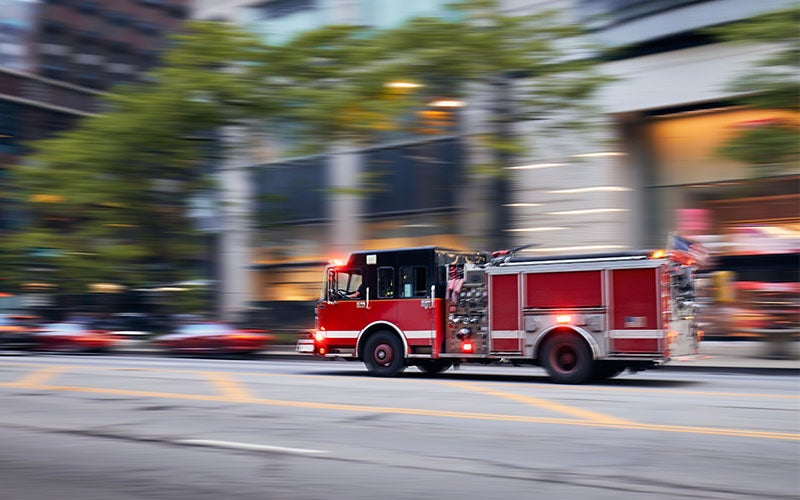
The family members of three people killed in a Baltimore fire truck accident will split a $40,000 settlement approved by the city’s spending board. The figure is the highest amount allowable for motor tort claims involving police and firefighters responding to emergencies. The December 2007 crash happened as a Baltimore County husband, wife and family friend were returning to the couple’s home around 3 a.m. A Baltimore City fire truck was responding to a report of an apartment building fire and had its lights and siren on as it sped through an intersection at 47 mph. The truck collided with the couple’s SUV, which was going about 23 mph. All three of its occupants died. The accident is thought to be the worst fatal collision between a fire truck and a civilian vehicle in the city in 50 years. No criminal charges were filed against the driver, who failed to stop at the intersection even though emergency vehicles are required to stop at all red lights when responding to emergencies. The 49-year-old woman who was driving the SUV left behind two grown children. She and her husband, who was 35, had been married for seven years. The 24-year-old man riding with them was engaged to be married. All were originally from Ukraine. The $40,000 settlement is a relatively small sum, but will help offset the funeral and burial costs their families paid more than four years ago. They also received some compensation in insurance, but needed to rely on donations from other family members and friends for financial support. What makes this case all the more tragic is that it was one of three civil lawsuits that the city recently settled involving its vehicles. One of the other crashes happened when a woman waiting for a bus was run down by a city Health Department worker who had either passed out or fallen asleep at the wheel. No one expects to suffer serious injuries or be killed by a public safety vehicle, but when it happens, it’s often up to the victims and their loved ones to pursue compensation and hold the municipality responsible. Source: The Baltimore Sun, “ City settles civil suits, one involving deaths in fire truck accident,” Peter Hermann, May 8, 2012

Truck driver fatigue caused crash that killed Maryland professor

Truck driver fatigue caused crash that killed Maryland professor

If you drive on a regular basis, you may have experienced it: that overwhelming fatigue that can creep in as the hum of traffic on a busy roadway lulls you. Your head starts feeling heavy and your eyelids begin to droop. You might try to open a window or turn up the stereo to snap yourself out of it, but the fact remains: Drowsy driving can be as dangerous as drunk driving, and leads to countless accidents that injure or kill people. This is especially true for commercial truckers who drive long distances on little sleep. This week, a truck driver was sentenced to five years in prison after pleading guilty to aggravated vehicular homicide. The charge stems from an accident in 2010 on the Ohio Turnpike that killed a Maryland woman and seriously injured her two children. The woman, a professor at Stevenson University, was returning to Cockeysville with her sons after visiting relatives. According to police, the truck driver fell asleep, causing his tractor-trailer to crash into the family’s car and slam into five other vehicles just outside Cleveland. The woman’s husband said he didn’t take any pleasure in seeing the truck driver go to prison, but hoped the case would bring more attention to the issue of driver fatigue, especially as it applies to long-haul commercial truck drivers. These drivers face tremendous pressure to deliver their goods on time, leading many to drive for long stretches without adequate rest. Although laws exist to limit the amount of time truckers can drive before taking a mandatory break, these laws are not easily enforced. It’s not clear how long the trucker had been driving when he fell asleep at the wheel. But even truckers who follow the law can face a civil suit for personal injury or wrongful death if they fall asleep and cause an accident that injures or kills someone. Truckers who are paid by the mile instead of the hour may see rest times as lost wages, but that lost time and money pales in comparison to that of a prison sentence or damages owed in a civil lawsuit after a serious accident. Source: Baltimore Sun, “ Driver whose truck hit, killed woman gets five years,” Candus Thomson, Jan. 12, 2012

Ice cream truck and cyclist collide

Ice cream truck and cyclist collide

Now that summer has unofficially arrived in Maryland, pedestrians, bicycles, motorcycles and other seasonal vehicles are returning to the road after a long winter in hibernation. Unfortunately, the additional traffic on the road can lead to additional accidents on the road. In a most unusual bicycle accident, a Maryland ice cream truck driver is being charged with running down a bicyclist. Last month, a 24-year-old cyclist was riding his bike on a sidewalk while on the way home from work on Bike to Work day when he was hit by the ice cream truck driven by a 52-year-old man from New Carrollton, Maryland. According to police, the ice cream truck was coming from a side street when the driver failed to see the bicyclist. After striking the cyclist, the truck dragged him a short way down the street. Police Sgt. Daniel Grim reported that the cyclist’s injuries were painful and included tire tracks on his back, but that none of his injuries were life threatening. The driver of the ice cream truck has been charged with a failure to yield the right of way. A witness to the accident said he is reconsidering his idea to bike to work and plans on using his job as a civil engineer to help create special bike lanes designed to increase safety for cyclists. The family of the injured cyclist said that he was recovering at his parent’s house from broken bones. Acting as a spokesman, the young man’s father said that the members of his family are all avid cyclists, saying that he doesn’t believe the public cares about cyclists, adding that he and his family practice safe biking. Source: FairfaxTimes.com, “Burke cyclist run over by ice cream truck,” Gregg MacDonald, 5/27/2011

Fatal truck accident on Maryland bridge raises safety concerns

Fatal truck accident on Maryland bridge raises safety concerns

Last week, a frightening truck accident on the Bay Bridge claimed the life of a 70-year-old Maryland man. Harry Blauvelt was a long-time golf writer for USA Today before retiring to Chester, Maryland. Like many residents on Kent Island, he was dependent on the Bay Bridge and had expressed concerns over the safety of bridge. Seven years ago, Blauvelt spoke out about the dangerous conditions on the bridge at a Kent Island community meeting. He greatly feared the two-way traffic on the narrow bridge and he had referred to its lanes as “suicide lanes.” Last week, after dropping his dog off at canine daycare like he had done so often before, he was driving back to Kent Island on the Bay Bridge in his Honda Accord. His Honda stalled next to a closed lane on the eastbound side of the bridge. This left traffic behind him blocked. When his car stalled, he exited his vehicle and he was standing in front of it when a truck crashed into the back of his Accord. His accord flew forward, striking Blauvelt. The impact sent Blauvelt over the bridge wall and down 50 feet into Chesapeake Bay. Maryland Transportation Authority Police pulled Blauvelt from the water and he was rushed to Anne Arundel Medical Center. He was pronounced dead at the hospital. According to a Maryland Transportation Authority Police spokesman, the leftmost lane on the eastbound span of the Bay Bridge was shut down for maintenance at the time of the fatal accident. The spokesman said it is too soon to know if the driver of the truck will face any criminal charges and that an investigation into the crash is ongoing. Source: The Capital, “Bridge victim outspoken about spans’ dangers,” E.B. Ferguson III, 4/21/2011

Semi-trailer bumpers prone to failure

Semi-trailer bumpers prone to failure

Whenever a car collides with a truck, the potential for serious bodily injury is great. Rear-end collisions involving a truck and a passenger vehicle pose the most significant risks of all. In this type of truck accident, the passenger vehicle’s hood can slide under the trailer and the trailer can crush the passenger compartment of the car. Truck underride accidents in the United States result in the death of more than 350 people per year and there is valid cause for concern that not enough has been done to prevent these deaths. The Insurance Institute for Highway Safety recently conducted a test of the rear impact guards that are fastened to the back of semi-trucks. These guards are intended to prevent cars from going underneath the trucks, which can lead to fatal and serious injuries, including the decapitation of the driver. The Institute used a 2010 Chevy Malibu for its study. The car traveled at the moderate speed of 35 miles per hour and was slammed into the rear end of a parked semi-truck trailer. The Institute found that the rear guard that meets U.S. minimum safety standards gave way, which allowed the car to slide under the trailer, completely crushing the vehicle. According to the Institute, any passengers in the front seat of the car during the truck accident would have been killed. Institute President, Adrian Lund, states that the government needs to implement stricter safety standards and believes that this will lead to fewer injuries and deaths as a result of truck accidents. Stronger rear impact guards, similar to those used in Canada, remained intact during the Institute’s testing and prevented the car from sliding underneath the truck trailer. The National Highway Traffic Safety Administration has stated that they are well aware of the issue regarding impact guards and that they have been studying the issue since 2009. They also stated that they hope to finish their review of the issue next year. However, the last time that rear underride standards were raised, it took 20 years to go into effect. Source: ABC News, “ Truck Underride Accidents: Drivers Endangered When Cars Slide Under Trailers,” 3/1/2011

Fatal Truck, Bus Crashes Put Focus on Stronger Traffic Barriers

Fatal Truck, Bus Crashes Put Focus on Stronger Traffic Barriers

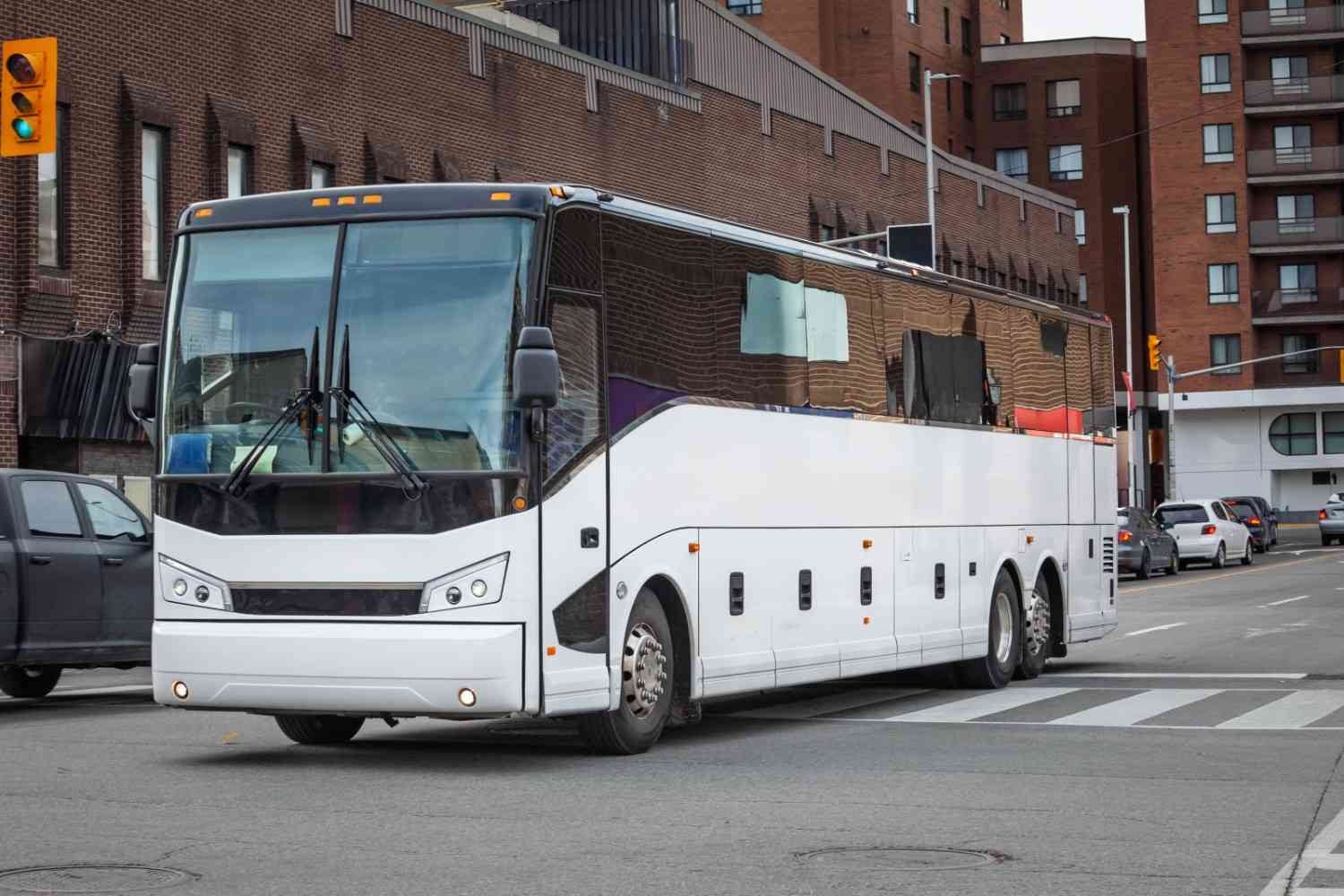
Several truck accidents in Maryland from years past, as well as a recent fatal Beltway accident in which a charter tour bus hit a guardrail and fell nearly 50 feet to Interstate 270, have drawn the close attention of various safety groups. They are questioning whether taller and stronger concrete traffic barriers should be constructed on overpasses, underpasses and bridges to prevent fatalities in vehicle falls from roads and to shield other motorists from plunging vehicles. Accidents that AAA Mid-Atlantic officials point to include: • A June 2009 incident in Anne Arundel County in which a man died when his truck fell 30 feet from a bridge • A 2008 accident in Queen Anne’s County in which a truck fell from the Bay Bridge into the Chesapeake, killing the driver • A 2004 incident in which a truck carrying flammable liquids drove off a lane of Interstate 895 in Maryland and exploded, killing several people AAA Spokesman John Townsend says that accidents such as those above can be avoided altogether in many instances, provided that road engineers factor in stronger traffic barriers at strategic locations. He states that AAA “takes exception” to the view of many highway engineers that a traffic barrier “should always be a last-resort effort to reduce the severity of a crash by containing and redirecting a vehicle that would otherwise have run off a road or bridge.” Townsend responds that bigger and stronger barriers “should be given greater consideration.” The Federal Highway Administration voices agreement with that notion, suggesting the use of taller and vertically faced concrete barriers. Related Resource: www2.insidenova.com “Fatal bus crash leads to safety inquiries” October 5, 2010

Contact Us

Fill out this form below and we'll contact you shortly
*Required Fields