Blog

All Workers' Compensation Car Accidents Workplace Accidents Workplace Injuries Construction Workers' Accidents Medical Malpractice Industrial Workers' Injuries Product Liability Personal Injury Truck Accidents Firm News Wrongful Death Uncategorized
Proper ventilation in the workplace is critical

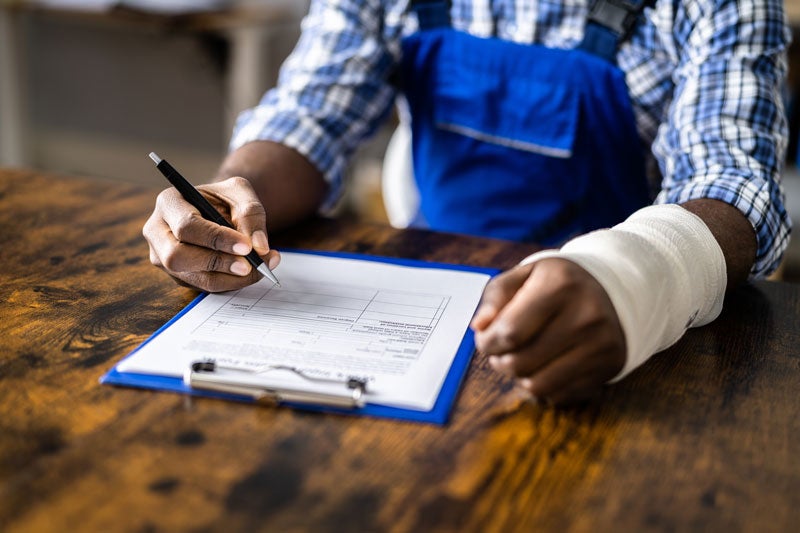
What must I prove to collect workers’ compensation?

Getting sick or hurt at your job could mean you are eligible to receive workers’ compensation benefits. These benefits, which can replace lost wages and cover medical expenses, can be crucial to the welfare of workers and their families. Thus, filing a successful workers’ comp claim is crucial. To do so, you will need to provide the following pieces of information. Evidence linking injury to your work For a person to be eligible for workers’ compensation, they must show that their injuries or illness happened at work or in the course of employment. In some cases, showing this is simple. For instance, if you fell off of a ladder while reaching for something in the supply closet at work, that would be easy to show as an injury suffered on the job. In other cases, the connection is not that straightforward. For example, you might have back pain that has gotten worse over time and isn’t solely the result of work, which can complicate things. Injured workers also will need a medical provider to indicate with a reasonable medical certainty or probability that the work need for medical care and injuries are causally related to the work-related accident. Meeting other eligibility requirements Per Maryland workers’ compensation benefits, you must be an employee to be eligible for workers’ compensation benefits. You may think you are an employee, but there are situations where employers will misclassify someone or hire them as a contractor instead of an employee. Whether you realize it or not, you may not be covered by your employer’s insurance. Further, benefits can be denied to people if they intentionally caused their injuries or if they were drunk or impaired at the time of an accident. And finally, even if an employee notifies an employer immediately following an accident, if an employee fails to file a proper Claim within two of the date of the accident or two years from actual knowledge of an occupational disease, the injured worker could be timed barred from receiving coverage. Preparing your claim – and yourself Collecting all this information can be daunting, and you may not know where to look for what you need. Because of this, it can be helpful to consult an attorney when you are preparing to file for benefits. Additionally, there is often an emphasis on documentation and specific documentation to ensure a Claim is supported. Experienced counsel are crucial to ensuring all necessary documentation is obtained to either resolve issues with an employer and its Insurer, or present an argument at a hearing. When you know what to expect when applying for workers’ compensation benefits, it can be easier to obtain the benefits you need for your recovery.

Employees pay the price when productivity trumps safety at work

Employees pay the price when productivity trumps safety at work

Employees pay the price when productivity trumps safety at work Employers can hold workers to strict standards. Many will set goals, enforce workplace policies and dictate acceptable behaviors with the intention of maximizing productivity and profits. However, some go too far in these pursuits and ultimately endanger the lives and safety of workers. A big problem at a big company A recent report on injuries at Amazon warehouses reveals what can happen when companies put profit over people. The report found that for every 100 workers, 5.9 experienced an injury that resulted in lost time or modified duty. This number is 80 percent higher than the number of injuries reported at other warehouses, including Walmart and other competitors. Claims of unsafe work conditions have long plagued Amazon. And for years, it has topped lists of the most dangerous places to work. Several tools, still no fix In response to these findings, spokespeople from Amazon maintain that they offer a wide range of options with worker safety in mind. The company reportedly provides: Ergonomic programs Guided exercises Mechanical assistance equipment Nutrition and mental health guidance However, despite the myriad programs it offers, the company continues to see high numbers of injured workers. Part of this stems from the fact that the business continues to enforce aggressive productivity quotas. To meet these numbers, workers may not take the time to protect themselves and observe safe practices. Without a more comprehensive approach to making Amazon warehouses safer places to work, workers will likely continue to face threats to their safety. This situation can serve as a reminder that employers who do not make workplace safety a top priority are endangering employees. When job-related accidents happen, workers should know what legal rights they have and what compensation they may be eligible to collect.  Workers remain eligible for worker’s compensation benefit, no matter how long they have worked for an employer or experience and understanding of a particular job.

Returning to work? How employers can protect against COVID-19

Returning to work? How employers can protect against COVID-19

Returning to work? How employers can protect against COVID-19 Whether workers are ready or not, businesses across Maryland are opening back up and returning to a new normal in terms of their operations. In many cases, this means welcoming workers back in person. If you are returning to work in the coming weeks and months, you should know the precautions your employer is taking (or should be taking) to keep workers safe from COVID-19. Mandated vaccines Employers can choose to require employees to be vaccinated before coming to work. If they do so, they should prepare to offer accommodations to workers who cannot be vaccinated and have a reason for why vaccination is essential to worker safety. Personal protective equipment Wearing protective clothing and gear can prevent the spread of all types of illnesses, including COVID-19. Therefore, workers may still wear face coverings on the job. Businesses can even require workers to wear masks to reduce the spread of COVID-10 in the workplace, despite Maryland lifting mask mandates. Changes to workplace operations The workplace could look different when you return. You may see protective dividers, social distancing measures or reduced capacity. These measures can make transmission of COVID-19 less likely and prevent workers from getting sick at work. Employers may also enforce new protocols for handwashing, staying home when sick and sanitization practices. And even if employers do not require these measures, individual employees may decide to do these things until they feel safe. What can employees do if they are worried about contracting COVID-19 at work? If none of these precautions are in place, or if some are, but you are still worried about getting sick at work, you can express your concerns to your employer. In some cases, they may approve remote opportunities and other arrangements to protect you from possible exposure risks. The fact is that, while the claims can be more complicated than other illnesses, COVID-19 can be an occupational disease eligible for workers’ compensation benefits in Maryland. Thus, employers should have measures in place to protect employees. Note that regulations and guidance regarding COVID-19 continue to change as we learn more and increase vaccination rates. Therefore, if you have questions about employer responsibilities and safe work environments, it can be wise to consult an attorney.

Heading out for a road trip? Beware these dangerous drivers

Heading out for a road trip? Beware these dangerous drivers

Heading out for a trip? Beware these dangerous drivers. Summer is a popular time to head out on road trips with family or friends. And, it could be especially enticing this summer, as people can still be hesitant to travel via other options like airlines or buses. With that in mind, there are some risks to consider when you are driving on a road trip. Students on break When students across are on summer break, they are eager to spend time with friends and take advantage of the long days and nights. Unfortunately, these young drivers can be dangerous behind the wheel. Too often, teen drivers cause accidents because they are: Easily distracted by their phones Driving with too many people in the car Speeding or driving recklessly Violating traffic laws Showing off to others These behaviors can make them a threat to  other road user. And in fact, the days between Memorial Day and Labor Day are known as the deadliest days for crashes involving teen drivers. Novice RV drivers One way to make road trips more comfortable and enjoyable is to take one in an RV or motorhome. And reports show that rentals and sales of RVs have skyrocketed in 2021. Thus, you may encounter several RVs on the road during your trip – many of whom are inexperienced with driving these vehicles. To stay safe around novice RV drivers, be sure to give them space and drive defensively. Watch for drifting or swerving, which can make a driver overcorrect and lose control. Impaired drivers Summertime is synonymous with barbecues, happy hours on patios and other celebrations. These events can increase the likelihood of people getting behind the wheel after drinking. Wherever you are driving, whether it’s across Maryland or the country, drunk driving is illegal. And while some states have legalized marijuana, driving while impaired by any drug is highly dangerous. Unfortunately, every state has drivers who are intoxicated or impaired. These drivers endanger the lives of everyone around them. Watching out for these drivers will be crucial for any driver on a road trip. Doing so can prevent catastrophic accidents. But, there are only so many precautions you can take. Thus, if a crash still occurs because of another person’s negligence, legal action can be worth considering.

Preventing slip-and-fall accidents: Focus on footwear

Preventing slip-and-fall accidents: Focus on footwear

Preventing slip-and-fall accidents: Focus on footwear One of the most common accidents people suffer on the job is a slip-and-fall accident. These incidents can happen to just about anyone and in virtually any environment, and they often result in painful injuries that can prevent a person from working at full capacity. Fortunately, preventing these accidents can be as simple as making sure workers have appropriate footwear. What to look for in work shoes If you work in jobs like food service, manufacturing or construction, having the proper footwear can keep you safe from slipping, tripping and falling on slick or unsafe surfaces. Thus, workers would be wise to have shoes that: Do not have high heels Are not completely flat Do not slip off your heels Fit well Have proper support Lace-up Have rubber soles Are closed at the toe Shoes that fit these criteria can help a person stay safe on the job by keeping them on their feet. An easy test to measure wear One thing to keep in mind is that shoes can become worn out quickly when you wear them every day. When this happens, replacing or repairing them can be crucial. For instance, tread thresholds can show just how much protection a shoe has in terms of slipping. If your shoes or boots have tread marks, which they should, you can test whether they are too worn to be effective. As this article notes, one easy way to test is to use a AA battery on the worn patches of your shoe. If the patch is wider than the base of the battery, the shoe will not provide as much traction and protection. Thus, replacing them can keep wearers safe. Having the right footwear can prevent serious slipping and tripping accidents on the job. Not only does this help reduce the cost of workplace accidents, which soared over $170 billion in 2018, but it also keeps workers safer on the job.

Could working too hard be bad for your health?

Could working too hard be bad for your health?

There are countless hazards workers encounter on the job. Construction workers face risks associated with heavy machinery and falls from heights; office workers can struggle with repetitive stress injuries and back pain; industrial workers may encounter crushing injuries or explosions. But no matter what job you work in, studies suggest that putting in too many hours can be bad for your health. The risks of overworking A global study by the World Health Organization linked working more than 55 hours a week to increases in heart disease and stroke. In fact, workers in this group can be at a 17 percent increase of developing fatal heart disease and 35 percent more likely to have a stroke. These increases stem from findings that overworking can result in: Excessive stress hormone releases Structural lesions Cardiovascular system dysregulation Substance abuse Physical inactivity Unhealthy eating habits Tobacco use These can all cause physical problems for workers, putting them at a higher risk of suffering a fatal condition. Protecting yourself on the job It may seem easy to say that individuals should just refrain from working more than 55 hours a week to minimize their risk for these conditions; however, this may simply not be an option for people with multiple jobs or demanding occupations. Thus, if you cannot reduce your working hours, you might consider other ways to improve your health. Visit the doctor regularly; quit or cut back on harmful habits like smoking; practice stress-relieving activities like meditation and yoga. It can also be crucial to call attention to any avoidably stressful or dangerous conditions in the workplace. Earning a living should not come at the expense of a person’s health. However, every day, workers struggle with unsafe work environments and employment expectations that can be harmful. Anyone experiencing illnesses or injuries should do their best improve their overall health, but should an accident arise, they should be sure contact legal counsel for assistance in obtaining coverage for their injuries.

Staying safe on Maryland waterways this season

Staying safe on Maryland waterways this season

Staying safe on Maryland waterways this season Boating season is upon us, which means people are getting out on the waterways more and more across Maryland. Whether you work on the water in your profession or you are a recreational boater, now is an excellent time to revisit some crucial safety tips. Safety first to prevent boat accidents Being in or near the water can come with several risks, including drowning and getting injured by boating mechanisms. Thus, some of the ways you can stay safe this season include: Having and wearing appropriate floating devices and life jackets Refraining from using drugs or alcohol while on or around the water Performing regular boat maintenance Using lights and reflective clothing to ensure you are visible to others Obeying speed limits and wake restrictions Having the proper training to operate commercial or recreational vessels Avoiding distractions when navigating or directing a boat These tips can be crucial for everyone to remember, from seasoned marina workers to recreational boaters who occasionally head out to fish or ski. Working on the water If boating or working near the water is part of your job, you will also want to review your employer’s safety policies. If you are worried that your employer is not complying with water-related regulations or enforcing safe practices, you might file a complaint or take legal action if you suffer damages resulting from unsafe workplace conditions. Further, if you do suffer an accident on the job, know that there may be financial compensation available to help you recover. These benefits can be crucial for people who suffer brain injuries, slipping accidents and mechanical burns and for families of drowning victims. Practicing safety on Maryland waterways is vital for everyone, and now can be an excellent time to make sure you – and your boats – are ready. However, it should be noted that accidents on the water may be covered by different types of law, relating to the maritime issues.

5 of the most dangerous types of landscaping equipment

5 of the most dangerous types of landscaping equipment

During the warm months, people across Maryland are eager to get their lawns looking good. Whether business owners and homeowners do this work themselves or hire professionals, it is essential to know that there are serious hazards that can come with landscaping. For instance, often, powerful equipment and machines are necessary to complete the work. And, when they break or malfunction or when someone does not operate them properly, severe accidents can happen. Some of the most dangerous examples of landscaping equipment include: Lawnmowers Hedge trimmers Chain saws Nail guns String trimmers These machines can be powerful and sharp. They are designed to do things like chop, cut and drive, and often they use electricity or gas-powered engines. These elements make them capable of causing catastrophic injuries in the event of an accident. If you use this equipment, or if someone working on your lawn uses them, it can be crucial to use safety precautions. Such measures can include: Having equipment inspected and repaired by professionals Wearing protective gear like gloves, goggles and hardhats Reading the manual to operate the machine Participating in available training before operating the equipment Giving operators plenty of space when they are using a machine Stop using equipment with faulty electrical cords immediately Too often, people fail to realize just how dangerous these machines can be. They might overestimate their abilities or minimize the risk of injury, particularly if they use the equipment all the time or they have been using it for years. However, every time you operate landscaping equipment, there is the potential for an accident to occur. Whether that accident occurs in your front yard or while you are on a job site, it can result in burns, severe lacerations or even amputation. Rather than put yourself and others at risk, it can be crucial to prioritize safe equipment practices when working on a landscaping project.

3 things you may not know about distracted driving

3 things you may not know about distracted driving

For years, state and federal groups have poured resources into raising awareness discouraging distracted driving and enforcing state laws prohibiting specific types of distraction.  These efforts have fortunately paid off because most drivers in Maryland know that distraction behind the wheel could be deadly. However, there are still things people may not understand about distracted driving. It’s about more than your phone One of the most distracting things people do behind the wheel is to operate a smart phone while driving, including texting, using social media or taking pictures. However, it’s not just using a phone that is distracting. There is a wide range of activities that make a driver unsafe, including: Eating Grooming Reaching for something in the backseat Reading a map or using GPS Arguing with a passenger Trying to find music or a podcast to listen These actions can mean a driver’s attention and eyes are off the road, and their hands are off the wheel. Thus, they can be slow to react and may swerve out of their lane, increasing their chances of losing control of their vehicle. There is a “hangover effect” Distraction does not disappear just because you put something away that is making it hard to concentrate. In fact, a recent AAA Foundation for Traffic Safety study found that drivers can remain distracted for nearly 30 seconds after sending a text, using in-dash infotainment systems or making a phone call. Researchers call this the “hangover effect” and note that most drivers are not aware of this. As such, even if you pull over to make a call or send a text, you may still be unfocused on driving once you get back on the road. Safety features can’t do it all Drivers have more technological tools in their cars than ever before. Cars have systems that can apply brakes in an emergency and warn drivers of lane departures; some vehicles even have autopilot features. However, these systems are no replacement for a focused, attentive driver. Overreliance on them can make drivers more likely to engage in unsafe behaviors, including distracted driving. Distracted driving remains a serious issue in Maryland: 26,000 people in this state suffer injuries in distracted driving crashes every year. The more informed drivers can be about the risks they take when they lose focus, the safer everyone can be on the road.

Extreme weather poses threat to construction workers

Extreme weather poses threat to construction workers

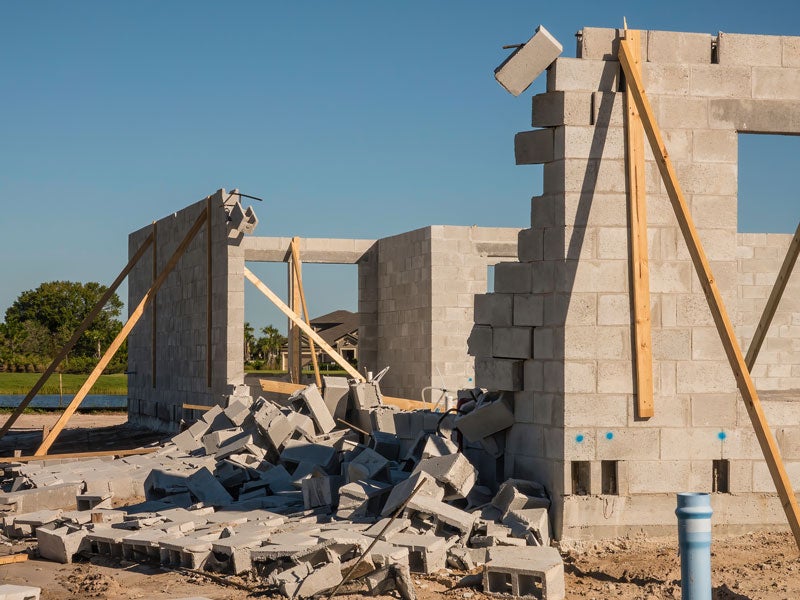
Extreme weather poses threat to construction workers Working outside in the elements can be a significant draw for people who prefer to work in the fresh air than in an office behind a desk. However, Mother Nature can prove to be quite dangerous to people working outside when the weather gets bad. For instance, if you work in construction, you can face several threats to your safety in extreme weather. High winds High winds can cause catastrophic damage during a storm. For instance, winds in a Maryland storm uprooted a tree that fell on top of a house. Elsewhere, the high winds led to a collapsed building on a construction site, injuring four workers. In the event of high winds, it can be extremely dangerous to work near unstable structures or in equipment like cranes. Wet conditions Rain can make surfaces slippery; it can reduce visibility; it may render electrical equipment inoperable. There can also be risks of flooding as well as hypothermia and other cold- or moisture-related illnesses. If rain is in the forecast, construction crews can take precautions like covering equipment and open-air projects, wearing footwear to minimize slipping or sinking into mud and working on projects inside instead of outside. Power outages and electrical events Storms can cause severe electrical events like downed power lines and lightning strikes. Workers and others who are outside in these conditions can run the risk of being electrocuted or burned. They can also be crushed by falling structures and equipment. To avoid these devastating accidents, workers can seek shelter and stay away from bodies of water. Individuals would also be wise to refrain from using any electrical equipment. We cannot control the weather, but we can keep ourselves safe should it become dangerous. On a construction site, this can involve suspending work, staying inside, and wearing protective gear. However, if an accident still occurs while a person is on the job, injured construction workers may want to explore their options for relief through workers’ compensation benefits, and should seek counsel from an experienced attorney

Challenges with proving an injury is related to your work

Challenges with proving an injury is related to your work

One obstacle people might encounter when they are pursuing workers’ compensation benefits is establishing that their condition occurred out of and in the course of their employment. In situations where there is a single accident, witnesses and an injury that is a direct result of the incident, proving it is related to work can be straightforward. However, there are several scenarios where it is more complicated. Chronic conditions Conditions like carpal tunnel syndrome, rotator cuff injuries, and spine conditions can develop over time.  It is possible that the conditions may not be strictly related to a person’s job. Thus, making the connection between an illness or injury and work can be difficult when other factors unrelated to an occupation could be involved. Critical to compensability is whether or not a physician can provide an opinion indicating that the condition is at least in part related to the injured worker’s occupation. Injuries off the clock or off-site An injury does not necessarily need to happen on a job site or during work hours to be compensable. However, those that do not can be more complicated to prove for the sake of workers’ compensation benefits. Per state laws, an accidental injury must arise out of and in the course of employment. These are different metrics, but essentially they mean that a person must show that work conditions exposed them to a risk of an accident. And, the injury must occur while a person was at work and at a place where work was being performed. These can be challenging requirements for people who work odd hours, off the clock or in multiple locations. That considered, accidents on employer designated parking lots before or after work hours, or accidents while on a business trip, even when business is not being conducted, are often considered compensable under Maryland law. Employee’s actions While an employee need not prove negligence or fault to receive workers’ compensation benefits, an Employer/Insurer may raise the defense of willful misconduct. Willful misconduct occurs when workers who were intoxicated, roughhouse, impaired or acting recklessly in situation they were trained not to engage in . Overcoming these obstacles These situations can make it more difficult to secure workers’ compensation benefits in Maryland. Employers/Insurers will conduct their own investigation, especially in unique situations as listed above. Therefore, recording details of your work environment and any correspondence between you and your employer are often important. However, most beneficial to an injured worker, is consulting an experienced attorneys who is aware of the exceptions to these defenses and issues and can assist an injured worker in obtaining benefits rightfully deserved.

Is there a risk of dust explosion at your job?

Is there a risk of dust explosion at your job?

Explosions in the workplace can be catastrophic for workers. They can cause disfiguring scars, traumatic brain injuries, lung damage and fatal injuries. Thus, every precaution should be in place to protect them. Unfortunately, accidents causing an explosion still happen when the right elements are in place. When it comes to dust explosions on the job, you may not even realize they are in place. Components of a dust explosion The following elements are necessary for a combustible dust explosion to occur: Oxygen Heat Dust (the fuel) Dispersion of dust Enclosed spaces When these components combine, an explosion can occur. In some cases, these trigger additional explosions that prove to be far worse than the initial event. Therefore, to reduce or eliminate the risk of a combustible dust explosion, at least one of these components must be prevented. Workers can utilize filters and vacuums to clear away the dust before it accumulates. They can strictly comply with regulations for safe venting, electrical wiring and open flame mitigation. The more precautions a person takes to prevent these explosions, the more effective their efforts can be. However, having just one or two control methods can still put workers in danger if they fail. Industries at risk Not every job is going to put workers in danger of a combustible dust explosion. Generally, the industries where these devastating accidents occurring include: Agriculture Manufacturing Food facilities Recycling Pharmaceuticals Metal processing Fossil fuel generation These industries are more likely to be environments where the five components necessary for a dust explosion are present. Administrative, operational and engineering controls can effectively reduce the risk of these disastrous events. But too often, employers and workers are unaware that these measures are even necessary. Fires and explosions are among the most severe events that threaten Maryland workers. Every business should take these risks seriously and do their part to prevent them and protect employees.

Contact Us

Fill out this form below and we'll contact you shortly
*Required Fields