Blog / Industrial Workers' Injuries

New emphasis on loading dock safety

New emphasis on loading dock safety

The loading dock is often the busiest place in many industrial plants and warehouses. With deliveries coming in and workers all about, it can quickly become very hectic.

Unfortunately, such a hectic atmosphere often creates dangerous circumstances that increase the risk of industrial accidents.

Loading dock accidents happen too often

It makes sense that the center of the action in these workplaces also carries a higher chance of injuries, but that does not mean workers should be any less cautious.

It is easy to focus less on safety when workers grow accustomed to the job, but loading dock workers must always be on their guard. According to a 2017 report from Industrial Safety & Hygiene News (ISHN), 25% of industrial accidents happen at the loading dock. In particular, loading dock workers face a significant risk of injury from:

  • Forklift accidents
  • Collisions
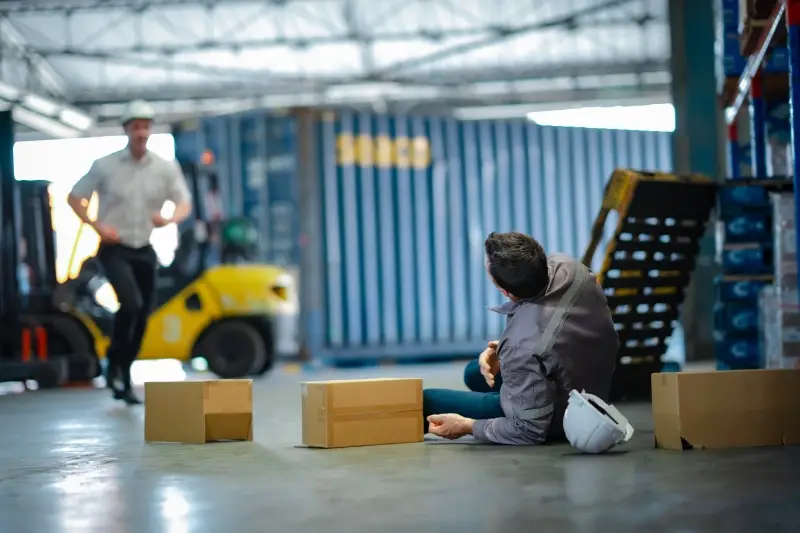
  • Slips and falls
  • Even carbon monoxide poisoning

The injuries resulting from struck-by accidents or falls can often be serious, leading to several days away from work and a long recovery.

How can workers stay safe?

Recent reports indicate that there is a renewed focus on safety measures at the loading dock to prevent serious accidents, such as:

  • Revamping training to improve safety
  • Finding ways to increase visibility
  • Adding safety technology to the loading dock
  • Adjusting workplace safety standards

On top of these much-needed safety measures, workers must make sure they are putting safety first every day on the loading dock. Each day, workers should take time to inspect the loading dock according to their employer’s safety checklist. Even so, workers cannot control all aspects of the workplace. That is why it is essential to increase their awareness.
Posted in:

Related Posts

3 dangers of working in a warehouse

3 dangers of working in a warehouse

Warehouse work can be inherently dangerous. Receiving proper training and carefully following safety protocols can greatly reduce the risks warehouse workers face. However, accidents can still occur and being mindful of some of the greatest dangers can be helpful. If you are a warehouse worker, beware of three of the most common dangers workers face: 1. Slip, trips and falls There are a lot of moving parts on the floors of a warehouse. Forklifts can spill fuel or oil, shipping containers that contain liquids may leak and weather (such as rain or snow) could cause a warehouse floor to quickly become slick or icy. Slip-and-fall accidents because of a slick floor can cause serious injuries to a hapless worker’s spine and head. 2. Falling shipping containers If crates were incorrectly loaded or quickly moved during their delivery, then they could fall over onto unsuspecting workers. The weight of a shipping container could be enough to break bones, cause internal bleeding or even lead to amputations of crushed limbs. 3. Forklift accidents Many employees who work at warehouses go through little to no training before setting foot on a forklift. Inexperienced forklift users can be extremely dangerous behind the wheel. Not only can forklifts get into wrecks, but their pronged equipment can be lethal on the warehouse floor. If a forklift driver does not correctly angle their prongs before use, they could send the vehicle flipping. Reckless drivers could even impale these prongs into shipping containers, trucks or other employees. If you’ve suffered serious injuries that prevent you from continuing to work, you have every reason to expect workers’ compensation benefits to provide for your medical care and other costs while you are unable to work. If your workers’ compensation claim seems stalled or delayed in any way, don’t hesitate to seek legal assistance from an attorney whose practice has a concentration in Workers’ Compensation law.

Why two hand controls are safer when operating industrial machinery

Why two hand controls are safer when operating industrial machinery

If you work with heavy pieces of machinery, such as a hydraulic press, you theoretically just need to push one button to start the machine. However, many manufacturers actually include two controls, which must be pressed simultaneously in order to activate the machine. This is not just done with hydraulic presses, but with many other types of heavy machinery. Why are these devices seemingly over-engineered by putting two controls that the operator must use at the same time? Preventing amputation injuries is the objective The main reason for the two-handed controls is that these prevent very serious injuries, including amputation or crush injuries. These were common when workers just had to push a single button because someone could absentmindedly leave their hand in the area where the machine would be working. For instance, a press could come down and crush the worker’s hand if it was sitting on the material’s surface. By forcing the workers to use both hands just to activate the machine, it guarantees that they can never do this accidentally. Workers may find this to be somewhat tedious. They may believe that it is overly complicated and makes it harder to do their job quickly – but it does work very well in preventing these significant injuries. Machines are designed specifically in a way that removes a lot of the risk. Risks are still present when working with heavy machinery Of course, nothing can ever remove all of the risks surrounding any industrial job. Any time that you work around heavy machinery, there is a chance that you could suffer serious injuries. If this does happen to you, make sure that you understand all of the legal options available to you to obtain the workers’ compensation benefits you and your family need while you recover.

Beware these forklift hazards

Beware these forklift hazards

Forklifts revolutionized warehouse and construction work. They improved efficiency and eased at least some of the physical duties of workers. Despite their many advantages, forklifts bring a lot of risks to both those operating them and those surrounding them. Driving forklifts comes with some dangers, as does merely being in the same space as them. Here are some key risks to be aware of: Poor or improper training According to OSHA, only trained and certified workers are able to operate a forklift. Untrained or poorly trained workers can pose a significant risk in the workplace. Speeding Any kind of reckless operation of the forklift can lead to danger and one of the biggest risks is speeding. Forklift operators must adhere to the proper speed limit of the machine and maintain constant vigilance of their surroundings. Blind spots Blind spots can pose a risk to forklift operators and those around them. Operators should always have clear visibility of the area around them. A clear understanding of the layout of the workplace is important, so operators must understand areas where visibility may be lower and extra caution is required. Tipping risk It is sometimes necessary to travel with a load high off the ground to move past an obstacle. If the ground is uneven or the operator turns or brakes too sharply, it could put the load off balance and tip the machine. Forklifts can also pose a tipping risk if the load is too heavy or unevenly balanced on the machine. Improper maintenance Lastly, ensuring the forklift is clean, properly maintained and in safe operating condition is critical. Any forklift found to be in poor condition should be removed from service and either repaired or replaced. If you are injured by a forklift, you could face considerable time off work and significant medical bills. Understanding how to claim workers’ compensation benefits will be crucial.