Blog / Personal Injury

Preventing slip-and-fall accidents: Focus on footwear

Preventing slip-and-fall accidents: Focus on footwear

Preventing slip-and-fall accidents: Focus on footwear

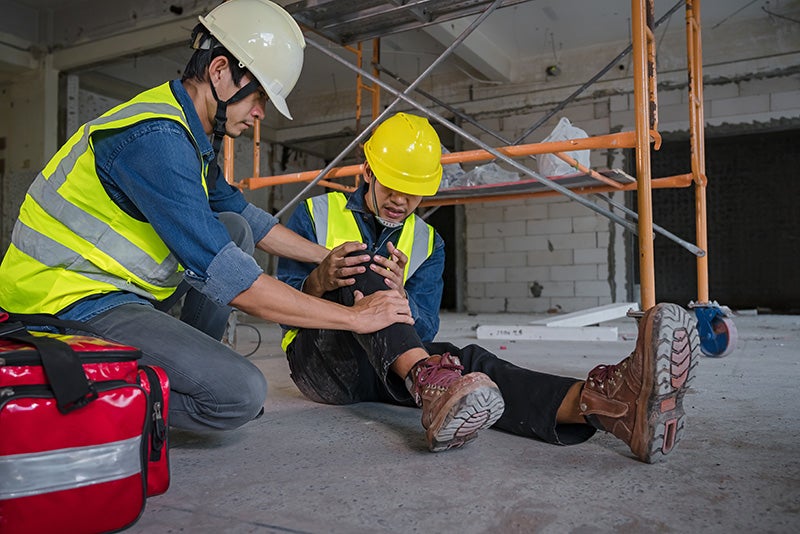
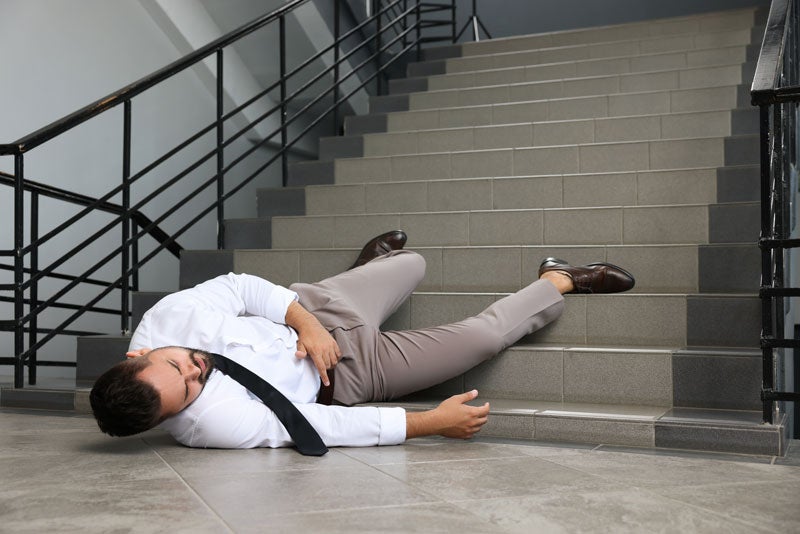
One of the most common accidents people suffer on the job is a slip-and-fall accident. These incidents can happen to just about anyone and in virtually any environment, and they often result in painful injuries that can prevent a person from working at full capacity.

Fortunately, preventing these accidents can be as simple as making sure workers have appropriate footwear.

What to look for in work shoes

If you work in jobs like food service, manufacturing or construction, having the proper footwear can keep you safe from slipping, tripping and falling on slick or unsafe surfaces. Thus, workers would be wise to have shoes that:

  • Do not have high heels
  • Are not completely flat
  • Do not slip off your heels
  • Fit well
  • Have proper support
  • Lace-up
  • Have rubber soles
  • Are closed at the toe

Shoes that fit these criteria can help a person stay safe on the job by keeping them on their feet.

An easy test to measure wear

One thing to keep in mind is that shoes can become worn out quickly when you wear them every day. When this happens, replacing or repairing them can be crucial.

For instance, tread thresholds can show just how much protection a shoe has in terms of slipping. If your shoes or boots have tread marks, which they should, you can test whether they are too worn to be effective.

As this article notes, one easy way to test is to use a AA battery on the worn patches of your shoe. If the patch is wider than the base of the battery, the shoe will not provide as much traction and protection. Thus, replacing them can keep wearers safe.

Having the right footwear can prevent serious slipping and tripping accidents on the job. Not only does this help reduce the cost of workplace accidents, which soared over $170 billion in 2018, but it also keeps workers safer on the job.

Posted in:

Related Posts

Third-party liability in workers’ compensation claims

Third-party liability in workers’ compensation claims

Workers’ compensation has long replaced the old system of filing lawsuits against employers after an accident at work. This provides a statutory solution and offers greater protection to injured employees. However, this does not mean that a lawsuit might be completely off the table following a workplace accident. If someone else was involved in your accident, it is possible to file a “third-party liability” claim against them to pursue damages. Third-party liability can extend to any individual or entity that is not your employer, such as a private individual, co-worker, the manufacturer of a defective product or even an independent contractor. Why should you pursue a third-party claim? While workers’ compensation benefits provide workers with the compensation they need while they recover, it does not cover all damages arising from an accident. For instance, if you experienced significant pain and suffering or emotional anguish from the injuries you sustained, workers’ compensation does not address this. Additionally, the amount of medical or lost wages benefits may be insufficient to meet you and your family’s needs. This is where a third-party claim might come in. It is possible to pursue the full amount of damages you are entitled to through a personal injury claim if the other party’s negligence caused the accident. Proving fault is an important part of third-party liability claims Negligence is a significant aspect of third-party claims. Unlike in workers’ compensation claims, the other party’s fault must first be established. They must have owed you a duty of care which they breached and caused your injuries for you to claim any damages. In Maryland, the Claimant must be free of any actions that may have contributed to the accident and resulting injuries. How much can you claim in a third liability claim? Your claim on non-economic damages will be subject to damage caps, as defined by Maryland law. Currently, the maximum amount allowed for pain and suffering is limited to slightly over $900,000. However, the law does not place a limit on the amount of recoverable economic and punitive damages. It is crucial to make yourself aware of the law and what to expect in your claim to ensure you receive the maximum compensation for your injuries. An attorney who understands both workers’ compensation and personal injury law can help you understand your next steps.

Damages that may be available after accidents

Damages that may be available after accidents

When someone gets hurt in an accident, they may wish to pursue legal action against a negligent party. Doing so can result in financial compensation and the acknowledgment of all the ways improper, unsafe acts have hurt you. Too often, people underestimate all the ways that an accident and injury has affected their lives. And they may not realize that, while a lawsuit can’t turn back the clock, it can make recovery much easier. This is due to the various types of damages that may be available after an accident. Special and general damages Per Maryland laws, victims can pursue special and general damages after an accident caused by a negligent or reckless party. Special damages, or economic damages, can include: Current medical expenses Future medical costs Lost wages Loss of future earnings Home modifications Ongoing care services Property damage These types of damages are calculable. In other words, parties can assign a price to them, which may or may not require the assistance of medical or financial professionals. There are also general damages, or non-economic damages. These refer to more abstract losses, including: Pain and suffering Loss of support Loss of consortium Chronic or disfiguring conditions These damages are more subjective than economic damages, but they are often just as significant, if not more so. It should be noted that claims for both non-economic and economic losses are based on what is fair, reasonable, and necessary.  Damages that are speculative in nature – what may be required or occur in the future – are regularly challenged. Even in accidents where a party accepts liability or fault, the parties may disagree regarding the calculation of the damages. Punitive damages If an accident was the result of egregious misconduct or malice, courts might also order punitive damages. Note that courts do not award punitive damages in every case; in fact, cases involving punitive damages in Maryland are rare. However, they are an option that serves specifically to punish wrongdoing and deter others from similar actions. Collecting what you deserve People hurt in an accident may not always realize the full extent of damages. If you get hurt, it is imperative that you seek medical attention and report the accident. You can then consult an attorney to discuss your options. These steps can help you make informed decisions about your legal rights and pursue maximum compensation for your injuries.

5 of the most dangerous types of landscaping equipment

5 of the most dangerous types of landscaping equipment

During the warm months, people across Maryland are eager to get their lawns looking good. Whether business owners and homeowners do this work themselves or hire professionals, it is essential to know that there are serious hazards that can come with landscaping. For instance, often, powerful equipment and machines are necessary to complete the work. And, when they break or malfunction or when someone does not operate them properly, severe accidents can happen. Some of the most dangerous examples of landscaping equipment include: Lawnmowers Hedge trimmers Chain saws Nail guns String trimmers These machines can be powerful and sharp. They are designed to do things like chop, cut and drive, and often they use electricity or gas-powered engines. These elements make them capable of causing catastrophic injuries in the event of an accident. If you use this equipment, or if someone working on your lawn uses them, it can be crucial to use safety precautions. Such measures can include: Having equipment inspected and repaired by professionals Wearing protective gear like gloves, goggles and hardhats Reading the manual to operate the machine Participating in available training before operating the equipment Giving operators plenty of space when they are using a machine Stop using equipment with faulty electrical cords immediately Too often, people fail to realize just how dangerous these machines can be. They might overestimate their abilities or minimize the risk of injury, particularly if they use the equipment all the time or they have been using it for years. However, every time you operate landscaping equipment, there is the potential for an accident to occur. Whether that accident occurs in your front yard or while you are on a job site, it can result in burns, severe lacerations or even amputation. Rather than put yourself and others at risk, it can be crucial to prioritize safe equipment practices when working on a landscaping project.