Blog

All Workers' Compensation Car Accidents Workplace Accidents Workplace Injuries Construction Workers' Accidents Medical Malpractice Industrial Workers' Injuries Product Liability Personal Injury Truck Accidents Firm News Wrongful Death Uncategorized
New federal laws proposed to protect workers in the outdoors

New federal laws proposed to protect workers in the outdoors

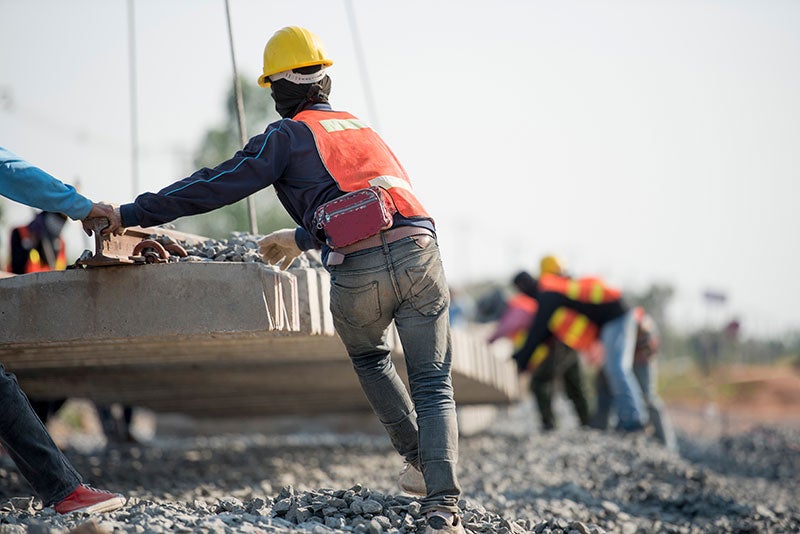
Extreme temperatures–both hot and cold–can be incredibly dangerous for employees who work in the outdoors. There are often devastating consequences, particularly if workers are exposed to extreme heat without proper attire, hydration or rest. Most of the time, those consequences involve tragic fatalities. There are new federal bills seeking to put an end to these preventable workplace deaths and illnesses. Employees who work outdoors already have some protections The Occupational Safety and Health Administration (OSHA) already has some regulations to protect those who work in the summer heat. The Maryland Department of Labor also maintains similar regulations that advise workers to: Take regular breaks in cool places Stay hydrated throughout the workday Stay alert for signs of heat illness These simple efforts can help prevent workers from suffering dangerous heat illnesses on the job. However, worker fatalities and illnesses related to heat have only increased over the years. Laws proposed to help workers in extreme weather National lawmakers recently introduced new bills to create heat stress standards for all workplaces that require workers to be outdoors for long periods. While the article and both of the incidents originated in California, the resulting bills could have a national impact on all workers, including here in Maryland. An incident where a California worker died after working for 10 hours in 105-degree heat inspired the Asuncion Valdivia Heat Illness and Fatality Act. This bill would require OSHA to create standards and plans that would include: Paid breaks for employees to rest on hot days Training for maintaining health in heat Plans for medical emergencies Maryland Rep. Jamie Raskin also co-sponsored a bill called the Peggy Frank Memorial Act. Frank was a mail delivery worker who died of hyperthermia in extreme heat. This bill would require all Postal Service delivery trucks–and potentially other delivery trucks–to install air conditioning systems. If they pass, these two bills could help keep workers safer in extreme temperatures. And as our summers seem to grow hotter each year, these safety measures and protections are more important than ever.

Compensation is critical: How much could an accident cost you?

Compensation is critical: How much could an accident cost you?

The aftermath of an accident can leave individuals facing severe and even life-changing injuries. And recovering from those injuries can be painful and detrimental to one’s mental health as well. However, the hope of recovery after the accident can suddenly feel sour after all of the bills start to arrive. The financial cost of an accident can hurt an individual and their family almost as much as their injuries do. If the individual was not at fault for an accident, they might have a right to recover compensation to cover these expenses. 1. Repairing damage to your vehicle Purchasing a car is a significant investment. Repairing one after an accident is not inexpensive either. Common repair costs after an accident often include: Dented bumpers, up to $450 Scratches, ranging from $300 to $3,500 Ruined car doors, up to $1,500 An accident could involve a variety of damages that need repair. And if the car is totaled in the accident, it might be necessary to replace the vehicle. 2. Receiving medical treatment The financial cost also adds up for necessary medical treatment after an accident. According to the National Highway Traffic Safety Administration, these costs can fall anywhere between $2,000 to more than $50,000 per accident. These costs could include: An ambulance ride Surgeries or medication Physical therapy Even if individuals have health insurance to cover medical costs, that does not mean that they should have to pay these significant expenses. Additionally, most private health insurance policy have a right of subrogation. This means that they have a right to be paid back for any medical treatment related to your accident. 3. Missing work and losing income Recovering from an accident might force individuals to stay out of work. And even once they can return to work, their injuries might limit their hours or ability to work at all. Missing work or reduced productivity could result in little or no income. Meanwhile, lost wages could make it extremely difficult for individuals to cover their vehicle repairs and medical costs. According to the Centers for Disease Control and Prevention, the total cost of medical bills plus missed work across the country was more than $63 billion for one year. That is a significant amount of financial costs for families across the country, considering the fact that an average of three million individuals suffer serious injuries in car accidents every year. This is why compensation is available-and important A traumatic car accident can leave a family facing serious physical and emotional costs. But they should only have to worry about their recovery-not paying the financial costs on top of that. That is why Maryland law protects an individual’s right to recover compensation that pays for these substantial costs.

What recent crane accidents mean for construction workers

What recent crane accidents mean for construction workers

Several construction accidents involving cranes across the country have rattled the nation and filled national news stories for a few weeks now. Although none of these accidents have occurred in Maryland, these most recent stories are raising concerns for all construction workers in the U.S. as well as here in our state. Accidents across the country drawing national concern Crane accidents might not be the most common of all construction incidents. However, they often result in catastrophic injuries or fatalities for construction workers. Improper crane operation can also contribute to the most common accidents involving falls or falling debris. And three separate crane accidents in Seattle, Dallas and Kansas City are generating scrutiny regarding the safety of the public and construction workers themselves. There were no worker fatalities in the Dallas incident. However, the Seattle accident killed two ironworkers and falling debris from a crane struck the worker in Kansas City, leaving him severely injured. What should Maryland workers draw from these accidents? If none of these accidents occurred in Maryland, then many construction workers might wonder why they should worry about these accidents. The fact that there have been so many crane accidents that ranged far across the country should be a cause for concern for every construction worker. After all, the Bureau of Labor Statistics determined that an average of 44 construction workers were killed in crane accidents each year between 2011 and 2015. That average is on the rise, but it also does not include the number of injuries workers suffered in these accidents. So, the main takeaway for Maryland construction workers should be preventing these accidents here in our state. Take extra safety measures to prevent accidents and injuries Operating cranes requires an extensive amount of training and precision. And the Occupational Safety and Health Administration (OSHA) has a wide variety of rules that both employers and operators must follow. However, the most common cause of crane accidents–and the resulting injuries and fatalities–is human error. And most of these accidents are completely preventable. There are a few steps that construction workers can take to avoid injuries, including: Asking the employer when the last crane inspection was Requesting additional training for workplace safety Following OSHA’s regulations for crane operation closely Wearing proper protective gear at all times Staying alert on the work site Construction workers understand the dangers they face every time they clock in. However, those dangers only increase the standard for maintaining a safe workplace and following proper work practices. It is important for all construction workers to remember that if they suffer an injury on the job, the law could entitle them to recover workers’ compensation.

Maryland at the top for the number of at-fault car accidents

Maryland at the top for the number of at-fault car accidents

Every Maryland driver understands that there is a risk of a crash every time they get into their car. Despite that fact, no one actually expects to be in a life-changing acciden t. It is always a shock. However, it seems that Maryland drivers may face a higher risk than they previously thought. Maryland places first for at-fault drivers in a new study According to WDVM News, a new study by Insurify determined that Maryland had the most reports of at-fault car accidents than any other state. The study calculates that Maryland drivers have the second-longest commute to work in the country, which can significantly impact the number of accidents. And they believe that more time on the road is one factor that led to 16% of drivers causing an accident on Maryland roads. What does this mean? Drivers who cause an accident report fault in the accident report and in their statement to their insurance company. And if these people make up 16% of Maryland drivers, that averages out to around 315,000 people. So, nearly 315,000 drivers have been at fault for a collision. And the higher the number of at-fault drivers, the higher the risk other drivers face. What can drivers do? With greater risk, it is more important than ever for drivers to: Drive defensively: The most common at-fault accidents range from rear-end collisions to distracted or drunk driving accidents. Driving defensively can help drivers see threats on the road and avoid severe accidents. Report accidents accurately: In the event of an accident, it is critical for individuals to seek medical attention for injuries immediately. However, it is also essential to collect information such as: The at-fault driver’s insurance information and license plate number The at-fault driver’s name and address Photographs of the damage from the accident Simply because Maryland has many at-fault drivers who report an accident, does not mean that their insurance companies offer the individuals who are not at-fault proper compensation. With more at-fault drivers, it is even more crucial for others to remain vigilant in the event of an accident. It is not always possible to prevent these accidents. Even when people drive defensively, there is barely time to react. However, understanding the risk these kinds of accidents pose to drivers can help them protect themselves on the road.

Understanding employees’ rights to a safe workplace

Understanding employees’ rights to a safe workplace

Employers must ensure their workplace conditions are up to par. They have to protect their employees from preventable work accidents. This duty falls under every employee’s right to a safe workplace. The Occupational Safety and Health Administration (OSHA) outlines various specific rights, but here is a summary of the most important protections employees have to safe working conditions. Employees have a right to information One of the most important rights to highlight is an employee’s right-to-know. Employees have the right to know the dangers they face in their place of work. Employers should inform their employees up front about these dangers. However, if they do not, employees have the right to that information. For example, many manufacturing plants in Maryland require employees to work with hazardous chemicals. In situations like these, the employer is responsible for: Warning employees about the risks Installing reminders and warnings in the workplace Training employees properly Providing extensive safety measures Employees can also request that OSHA inspect the workplace if they suspect such negligence. Employees have a right to protective gear Employers should provide employees with protective wear if the job requires it. Many industrial jobs have loud machinery that could result in hearing loss. However, if the employer is aware of this risk, they should provide ear plugs as a safeguard. Additionally, employers should provide safety equipment without charging the employees. Right to receive injury records Maryland employers also must keep a detailed record of any work injuries that occur. And all employees have the right to review these injury reports. Injured workers can also obtain their record of injury from their employer for a workers’ compensation claim. How do these rights apply to workers’ compensation rights? OSHA regulations generally apply before an employee suffers an injury from a workplace accident. The primary purpose of their health and safety standards is to prevent accidents in the first place. The federal law that created OSHA prevents the agency from imposing on state workers’ compensation laws. Employers usually must report workplace injuries to OSHA, but OSHA does not directly influence workers’ compensation rights. However, these rights can still have a significant impact on an employee’s workers’ compensation claim. Many employers deny that injuries occurred at work to get out of covering compensation. These denials are often in question if the employer does not meet OSHA standards. Sources: The Occupational Safety and Health Administration, “Access to Medical and Exposure Records,” 2001. The Occupational Safety and Health Administration, “ Hazard Communication,” 2019. The Occupational Safety and Health Administration, “ Personal Protective Equipment,” 2004. The Occupational Safety and Health Administration, “ Workers’ Rights,” 2017.

Reasons why your workers comp claim might be denied

Reasons why your workers comp claim might be denied

Being injured at work and losing your ability to generate income can be devastating. Even more devastating can be when your workers’ compensation claim has been denied. If your claim is denied, the insurance company will notify you by letter and that letter will list the reason for the denial. Your claim can be turned down for many reasons. Some of these include: Injury didn’t happen at work – You must be on the job or on another location performing your job for your claim to count. If you weren’t on the clock – even if you were on the job site – your claim can be denied. You didn’t tell your employer soon enough – If you are injured at work, first you should seek medical treatment. Next, you should tell your employer about the injury. If you wait too long to tell your employer, your benefit claim could be denied. You didn’t fill out the form correctly – If the description of the accident is inaccurate about what happened, where it happened, what you were doing or what body parts were injured in the accident, an insurance adjustor is likely to deny the claim. You have made too many workers’ compensation claims – If you have a history of filing claims, the insurance adjustor might think you are trying to game the system. You weren’t treated by an approved provider – Your employer and their insurance company can give you a list of approved medical providers, and you are required to see one of them. The injury isn’t treatable – Claims for stress-related injuries are not covered in many states. You don’t have medical records – If you want to file a workers’ compensation claim, you need to have medical records to back it up. Your injury was the result of horseplay – Even if it happened on the job site, injuries that are the result of roughhousing are not acceptable for a workers’ comp claim. You have a pre-existing condition – If your insurance company can show that your injury is the result of a pre-existing condition, it is unlikely to cover the claim. If you believe the claim denial was incorrect, you can appeal the decision with the Maryland Workers’ Compensation Commission. This body can countermand an insurance adjustor’s decision and approve benefits. Finally, if you disagree with a ruling by both the insurance adjustor and the Workers’ Compensation Commission, you can appeal the decisions to the Circuit Court of Maryland. Workers’ compensation claims can be tricky. The advice of a qualified, experienced attorney is your best bet to make sure your workers’ compensation claim is approved.

Maryland expands cancer coverage for firefighters

Maryland expands cancer coverage for firefighters

The Maryland General Assembly recently passed a bill that expands workers’ compensation protection for first responders. The bill, which will likely be signed by Gov. Larry Hogan, will expand workers compensation coverage for firefighters to include leukemia, prostate cancer, rectal cancer, throat cancer, multiple myeloma, non-Hodgkin’s lymphoma, brain cancer, testicular cancer and breast cancer that is presumed to be caused by contact with a toxic substance in the line of duty. Hogan has pledged to sign the bill, which would take effect Oct. 1, 2019. Other workers’ compensation bills The bill joins two other similar bills in the nation: North Carolina is considering a bill to allow workers’ compensation for law enforcement, first responders and emergency management personnel to treat mental or nervous injuries Indiana is considering a bill to expand workers’ compensation protections to volunteer firefighters and hike the amount allowed for burial expenses to $10,000. Bill named for Jessie McCullough In February, Hogan called for the passage of the Maryland bill while speaking of Prince George’s County firefighter Jessie McCullough, who died after being diagnosed with colon cancer in 2017. He said coverage for firefighters battling cancer is relatively new because the link between firefighting activities and cancer wasn’t known years ago. Union and department chiefs had vowed to get the bill passed. If you or someone you love is a firefighter who has been diagnosed with cancer, you could receive workers’ compensation benefits under this bill. Contact an experienced, qualified attorney to see if you can receive benefits.

Can medical marijuana be claimed for workers comp?

Can medical marijuana be claimed for workers comp?

While the saying goes that there’s nothing new under the sun, there are new ways of looking at old things. While marijuana has been around for many centuries, only now is it being used as legalized medicine in the U.S. Can it be claimed as medicinal for the purposes of workers compensation in Maryland? The answer is yes and no, and the answer is evolving. Legalized marijuana State lawmakers voted to allow medical marijuana in 2012. It took years to create the legal and business infrastructure to accommodate the new industry, which became operational in late 2017. The active ingredient in marijuana is THC. It is usually prescribed for problems such as anorexia, wasting syndrome, pain, nausea, seizures, muscle spasms, glaucoma or PTSD. Therefore, other than pain relief, the uses for medical marijuana do not fit neatly into the typical workers compensation claims. Marijuana also remains classified as a Schedule I drug in the eyes of the federal government, and the Trump administration has been vocal about pursuing marijuana possession and purchase as a serious crime. Also, while most drugs are prescribed by doctors and distributed at pharmacies, registered medical marijuana users can receive written certification from anyone who meets the definition of a “bona fide provider-patient relationship,” which includes any provider who reviews the patient’s medical records, completes an in-person assessment, creates and maintains standardized records, monitors and follows up on the patient’s care. The drug is distributed not at pharmacies but via licensed dispensaries. For these reasons, insurance companies have at times rejected workers’ compensation claims for medical marijuana. Where the law currently stands Some states, such as Arizona, explicitly claim that workers’ compensation insurers do not have to pay for medical marijuana while other states, such as New Mexico, have allowed such claims. There are cases presently pending before the Maryland Appellate Courts to determine whether insurers for workers’ compensation injuries are responsible for payment of marijuana prescriptions. Experts say courts are usually loathe to get between a doctor-patient relationship and that until a national consensus is reached, the decisions are likely to be on a case-by-case basis. If you have or think you may qualify for a workers’ compensation claim that includes medical marijuana, contact a qualified, experienced attorney to make sure you are following all the laws in this new gray area of medicine.

Fatalities serve as reminder of construction site danger

Fatalities serve as reminder of construction site danger

The death of two construction workers who were building the JW Marriott Hotel in Orlando, Florida has resulted in citations for their employers and a renewed call for workplace safety. The workers were among a crew pouring concrete on the building’s seventh floor when the support structure collapsed, according to the federal Occupational Safety and Health Administration (OSHA). OSHA citations An OSHA investigation found the contractors – PCL Construction Services and Universal Engineering Sciences – didn’t properly inspect shoring, formwork, decks and scaffolding before the work started. In addition, OSHA issued a citation to PCL Construction Services for failing to design and erect the framework so that it was capable of supporting sufficient loads. The three citations to the two contractors totaled $157,792 in penalties. OSHA also issued hazard alert letters to the construction workers’ employers – Puleo’s Concrete and C&C Pumping Services – recommending they work with the general contractor to ensure proper shoring equipment installation. A dangerous profession OSHA reports that 5,147 workers were killed while on the job in 2017 – more than 98 deaths for every week. Of those, 20 percent were in construction. Excluding highway collisions, the OSHA “Fatal Four” construction accidents are: Falls – 39 percent Struck by object – 8 percent Electrocution – 7 percent Caught in or between objects – 5 percent Each year, OSHA, the National Institute for Occupational Safety and Health (NIOSH) and the Center for Construction Research and Training presents the National Safety Stand-down to Prevent Falls in Construction. The event, on March 22, 2019, encourages construction workers to stop during the workday and listen to a safety workshop.

I’m a nanny. Do I have workers’ comp?

I’m a nanny. Do I have workers’ comp?

If you are hired to work in and around another person’s home you may be considered an employee. This can hold true whether you are a nanny, housekeeper, caregiver or lawn maintenance technician. Being a household employee means your employer has a responsibility to you. Some of these responsibilities are obvious while some might not occur to the average person. For example, qualify as an employee for purposes of Worker’s Compensation, should you get injured on the job and unable to return to that position, you may be entitled to vocational rehabilitation that includes job retraining. What household employees should know about workers’ compensation insurance If you qualify as a household employee who earns more than $1,000 in a calendar year, Maryland requires your employer to carry a workers’ compensation insurance policy on you. This means that as a worker in a household, it may feel like a more intimate and informal type of employment, but you have the same entitlements for compensation as a worker in any other industry. And so, you must understand that: If you are injured at work, you can receive compensation for time missed and medical treatment. You have rights regarding what you do and do not disclose to your employer about your injury. Employees who accept benefits often forgo their right to sue the employer. Workers compensation protects employers by protecting their workers from the effects of on-the-job injuries. But, due to certain rules regarding minors – such as the need for work permits and the different standards for payouts in the event of injury or death – it can be more challenging to find work as a household employee if you are under 18. Get the information you need A usual pitfall with household employees is being considered an independent contractor. Should a worker qualify as an independent contractor, rather than employee pursuant to the Maryland Worker’s Compensation Act, that worker would not be covered and be entitled to benefits. If you plan to work in someone’s home or are injured while working at residential property, it’s best to get advice from an experienced worker’s compensation attorney to understand if you are covered and what compensation you may be entitled to.

Here are the Top 10 causes of injury at work

Here are the Top 10 causes of injury at work

Insurance carrier Liberty Mutual has compiled public and proprietary statistics to develop the Top 10 causes of disabling injuries at work. It’s main finding: Despite a drop in serious accidents of 1.5 percent in the past year, workplace injuries cost U.S. businesses more than $58 billion per year, up 3 percent from 2017. The Top 10 Overexertion is the top cause of workplace injuries, including injuries related to lifting, pushing, pulling, holding, carrying and throwing. These injuries cost businesses $13.7 billion per year. These account for roughly 23.4 percent of the total number of accidents. Falls on the same level, such as trips or slips, account for costs of $11.2 billion per year and are 19.2 percent of total accidents. Falls to a lower level cost $5.9 billion per year, or about 10 percent of the total. Being struck by equipment or other object costs $5.3 billion per year for about 9.1 percent of total accidents. Injuries from other exertions such as bending, reaching, twisting or climbing cost $4.2 billion – about 7.2 percent of the accidents. Roadway incidents involving vehicles accounts for $3.2 billion – about 5.5 percent. Slips or trips without falling or resisting a fall cost $2.3 billion, or 3.9 percent of the accident total. Getting caught in equipment such as gears or rollers costs $2.1 billion, or 3.6 percent of the total. Striking an object such as an open drawer while walking costs $2 billion, or 3.5 percent of the total. Repetitive motion injuries cost $1.5 billion, or 2.6 percent of the total. The remaining causes cost U.S. businesses $20.3 billion per year. To gather this information, Liberty Mutual used data from its own database, the U.S. Bureau of Labor Statistics and the National Academy of Social Insurance. Researchers looked at Bureau of Labor Statistics data that showed how many employees missed work for six or more days, then ranked the events by total workers’ compensation costs. Workplace accidents can cost you tens of thousands of dollars in hospital bills, physical therapy and lost wages as well as many other costs. If you or a loved one have an accident in the workplace, you may be eligible for workers’ compensation benefits. Contact a qualified workers’ compensation attorney to be made aware of all your options.

Gov. calls for expanded workers’ comp for firefighters

Gov. calls for expanded workers’ comp for firefighters

Eyeing the threat of occupational cancers among firefighters, Gov. Larry Hogan announced on Feb. 6 that he is supporting bills in the state legislature that would allow firefighters to claim workers’ compensation for certain types of cancer. Research has shown that firefighters are exposed nearly every day to toxic chemicals and smoke that can increase the chances of thyroid, kidney and other types of cancer. These cancers can become apparent many years after the firefighter has left the profession. The bill proposed by Hogan would expand coverage for firefighters to kidney, bladder and renal cancer. A history of helping firefighters Maryland has a history of providing benefits for firefighters, paramedics and EMTs because those professionals are exposed to greater risk of accidental injuries and occupational diseases. Due to the nature of the job, firefighters suffer more burns and hernias. They also are exposed to unique exposure to chemicals and smoke that can lead to an occupational disease that is covered under Maryland’s workers’ compensation laws. The International Association of Firefighters says the increased benefits are necessary because of the nature of items firefighters encounter. Homes and businesses are now full of plastics and chemicals that burn faster and cover firefighters in toxic waste. The association says cancer is now the leading cause of death among its members, replacing the asbestos-related deaths of 30 years ago with leukemia, lymphoma or myeloma. Union officials, firefighters and politicians said that expanding workers’ compensation coverage was a shared goal during this legislative session. Stage IV colorectal cancer Hogan mentioned the battle endured by Prince George’s County firefighter Jesse McCulloch, who died in October 2018 after battling colorectal cancer. He was diagnosed with the disease in January 2017 and stayed on the job for more than a year. The cause of the cancer was toxins he was exposed to while fighting fires. He was a firefighter for more than 10 years and is survived by a wife and two daughters. In fact, the Centers for Disease Control and Prevention found higher rates of cancer among firefighters than the general population. Departments in Boston, Seattle, Chicago, New York, San Francisco, Houston and Toronto all report elevated cancer risks among firefighters. If you or a loved one is a firefighter, EMT or paramedic and you have been diagnosed with cancer, you may be able to receive more help than you realized. Contact a qualified, experienced attorney to help guide you through the workers’ compensation process.

Contact Us

Fill out this form below and we'll contact you shortly
*Required Fields