Blog

All Workers' Compensation Car Accidents Workplace Accidents Workplace Injuries Construction Workers' Accidents Medical Malpractice Industrial Workers' Injuries Product Liability Personal Injury Truck Accidents Firm News Wrongful Death Uncategorized
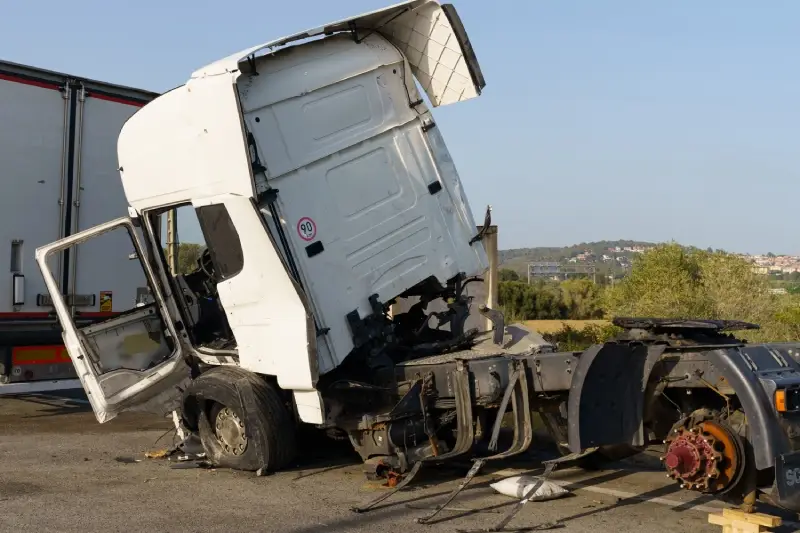
Maryland worker killed in fatal port accident

Maryland worker killed in fatal port accident

Unfortunately, Maryland workers who work around heavy equipment and vehicles are especially vulnerable to workplace injuries. Injuries can result from accidents as well as equipment failure. Supervisors and colleagues are now mourning the death of a state worker who lost his life in a tragic workplace accident at the Dundalk Marine Terminal. The man died while attempting to stop a truck that had gone out of control. According to police, the 46-year-old Maryland Environmental Service equipment operator noticed that his truck was rolling backwards after he’d put it in park at around 10:15 a.m. According to a representative from the Maryland Transportation Authority, the man tried to hop into the vehicle to prevent it from rolling. However, he was struck by the truck and killed in the process. The man was pronounced dead at the scene. The Dundalk resident had worked for over seven years for the Maryland Environmental Service, said an agency spokeswoman. He regularly operated various types of heavy machinery, such as trucks for waste containers, Bobcats and backhoes, and he had a valid commercial driver’s license. Employees working at the Maryland Environmental Service were shocked and saddened upon learning of the man’s death. Various employees said that he was highly regarded throughout the agency, and his supervisor described him as a friend and a good man who always finished the job. A spokesperson from the agency said that they conduct safety training sessions on a weekly basis, and that there were no records of other recent workplace fatalities. The spokesperson was waiting to see the police report before making a determination as to whether additional safety training was warranted. Source: Baltimore Sun, “ State worker killed in port accident remembered as dedicated colleague,” Yeganeh June Torbati, 4/13/2011

Car accident in a driveway kills Maryland infant

Car accident in a driveway kills Maryland infant

A tragic car accident occurred in a residential driveway in Laurel, Maryland, in late March. A mother pulled into the driveway of a babysitter to drop her children off shortly before 9 a.m. When she got out of the car, the vehicle began rolling backward down the driveway where the woman’s young son was standing. Running to get him out of the path of the car, she was struck by the open driver’s door and fell underneath the vehicle. Her 3-month-old daughter was still in her arms when the car rolled over all three of them. A near-by neighbor heard the mother’s screams and came quickly outside. He reportedly yelled to another bystander to call for emergency services while he went to work performing CPR on the little girl. The mother never let the baby girl out of her arms, but it was reported that there was nothing that could be done to save her. The young boy was apparently able to walk around while attempts were being made to save the baby. The Laurel residential driveway is said to be only very slightly inclined, but accident-recreation-specialists determined that the car would have gained considerable speed while rolling backward. Authorities presently believe that the mother left the vehicle’s transmission in gear when she exited the vehicle. However, similar accidents in the past have been caused by vehicle defects that allow a parked vehicle to slip back into gear and move unexpectedly. The accident is still under investigation as to what caused the accident and whether any charges will be pressed as a result of the tragedy. Source: Washington Post, “Maryland infant killed by car left in gear in driveway,” Matt Zapotosky, 3/25/2011

Medical wipes factory closes after U.S. Marshals seize products

Medical wipes factory closes after U.S. Marshals seize products

Every day, people in Maryland and across the country rely on medical products to be effective and clean. When medical products are contaminated with dangerous bacteria, these defective products can cause serious illness and death. The U.S. Food and Drug Administration is the government agency tasked with protecting the public from dangerous drugs and medical products and the agency has the authority to seize tainted or dangerous products in order to safeguard the public health. The FDA exercised its authority this week and sent U.S. Marshals to the factory of H&P Industries, a company accused of making contaminated medical pads and wipes. When the Marshals arrived to seize products, H&P closed its factory. Last week, the FDA requested that H&P voluntarily stop making and distributing products. However, it took the arrival of U.S. Marshals for H&P to close. The closure comes after multiple reports of contaminated products coming from the factory. Some of the reports of contamination are nearly two years old. Last week the FDA released the details of a recent inspection that found widespread problems. Bacterial contamination was allegedly found in H&P’s antiseptic towelettes and in the materials used to make over the counter drugs and laxatives. A different type of bacterial contamination was detected in the company’s iodine wipes on March 11 and this led to an immediate recall. H&P’s wipes have been cited in at least three separate lawsuits and have been blamed for the death of a 2-year-old boy. The products have been sold under the Triad Group label as well as under private labels of many stores, including Walgreens, CVS, and Wal-Mart. Product related injuries can be difficult to detect, but experienced attorneys know how to conduct a thorough investigation to determine the cause of injuries. If you or a loved one has been injured by a defective product, an experienced product liability attorney can advise you of your legal rights and help you seek compensation. Source: MSNBC.com, “Wipe-maker shuts doors after U.S. Marshals arrive on site,” JoNel Aleccia, 4/4/2011

Tom Tupa wins Maryland workers’ compensation case

Tom Tupa wins Maryland workers’ compensation case

Workers’ compensation is a system that is designed to compensate workers for workplace injuries. Professional athletes who are injured make the news all the time, but it is not very often that an injury to a professional athlete makes the news because of a workers’ compensation case. However, an injury to an NFL player has recently done just that. Tom Tupa was injured during warm-ups for a Washington Redskins preseason game in 2005. The 18-year NFL veteran injured his lower back and was unable to return to the field for the rest of the season. Additionally, Tupa was also unable to return to the NFL the following season as a result of his injury. According to the Washington Examiner, Tupa filed a Maryland workers’ compensation claim in 2007 in order to receive disability benefits from the Redskins. The state ordered Tupa’s former team to pay for his medical costs and provide him with disability benefits. However, the Redskins did not want to pay Tupa and challenged the ruling. The Redskins challenged the ruling by arguing that the Maryland Workers’ Compensation Commission had no jurisdiction because the team’s practice field is located outside of the state. This month, the Court of Appeals rejected the Redskins’ argument on the basis that Tupa was employed to play in games, which are played in Maryland, and not practices. The court ordered that the Redskins pay Tupa for more than a year of disability benefits, but the exact dollar amount remains unknown. According to USA Today, Tupa earned $1.4 million as the Redskins punter during the 2004 season. Tupa played for seven teams during his nearly 20-year career with the NFL. Currently, Tupa is working as a recreation director for the city of Brecksville, Ohio. Source: NBC, “ Ex-Redskins Punter Wins Disability Benefits,” 3/7/2011

The Triangle Shirtwaist fire and 100 years of workers’ rights

The Triangle Shirtwaist fire and 100 years of workers’ rights

One hundred years ago this week, a fire at the Triangle Shirtwaist textile factory proved to be one of the most devastating industrial accidents in American history. The fire began on March 25, 1911, when textile scraps stored on the factory floor caught fire. Without adequate fire protection and fire escapes, 146 workers, mainly young immigrant women, died in the fire. Newspaper readers were shocked to read accounts of some workers who leapt, holding hands, from the ninth story to certain death in order escape the inferno. As is often the case, great tragedy proved to bring about great change. This accident shocked America’s collective conscience and the Triangle Shirtwaist fire proved to be a catalyst for important changes in workplace safety and helped to lay the foundations for the modern workers’ compensation system we have today. In response to the fire, the New York Factory Investigating Commission launched an investigation into the causes of the fire and recommended more than 30 new labor laws designed to protect workers in mills and factories. Many of these laws were adopted across the country and these laws have formed the backbone of modern safety regulations. Most immediately, state and local governments took a hard look at fire safety. Previously, fire prevention efforts were focused on containing fires and preventing them from spreading from building to building. After the Triangle Shirtwaist fire, more emphasis was placed on helping people inside of burning buildings exit the buildings safely. The fire also established the political climate to enact workers’ compensation laws. Even business leaders were moved by the tragedy and it became increasingly recognized that workers’ compensation payments would have to be a cost of doing business. Since the Triangle Shirtwaist fire, we have seen vast improvement in the way injured workers are treated. Now workers who suffer a workplace injury have the legal right to seek compensation for their pain, suffering, and lost earning capacity. Source: BusinessInsurance.com, “ Triangle Shirtwaist fire brought safety changes,” Judy Greenwald, 3/13/2011

Moveable soccer goals can be dangerous

Moveable soccer goals can be dangerous

Reports are warning that movable soccer goals are potentially dangerous products that can cause injury or even death to young players. The Consumer Product Safety Commission (CPSC) has been warning parents about the risks associated with moveable soccer goals for years. Soccer goals that are not anchored to the ground can easily fall over and injure nearby children and adults alike. Some injuries result from a person climbing on the goal or hanging from the crossbar, but even a strong gust of wind can cause the goal to fall. A report by the CPSC stated that, from 1998 to 2008, soccer goal tip-overs resulted in the death of at least eight children. Approximately 2,000 children under the age of 16 were taken to the emergency room due to injuries from unanchored goals. According to Anchored for Safety, a soccer goal safety advocacy group, nearly 40 children have been killed and more than 55 injured due to the structural failures of movable soccer goals since the late 1970s. Their website reported that a 9-year-old boy from Arkansas was killed earlier this year after a soccer goal fell on top of him. The CPSC recommends that movable soccer goals be securely anchored at all times and only be used on level ground. Coaches are recommended to instruct their young players on the dangers of climbing on soccer goals and are prohibited from climbing on the goal’s frame and net. It is also recommended that moveable soccer goal manufacturers provide counterweights for the goals. These counterweights should be used even when the goals are not in use. Anchoring the goal to nearby fence posts or other strong fixtures also helps to prevent accidents and serious injuries. Source: ConsumerReports.org, “Soccer goals need to be anchored,” Desiree Ferenczi, 3/14/2011

Improved prenatal care can prevent cerebral palsy

Improved prenatal care can prevent cerebral palsy

A recent study has shown that the cerebral palsy rates have dropped and it appears improved prenatal care is having an effect. Cerebral palsy is a common health complication that is generally found in infants who are born prematurely. Additionally, medical malpractice that causes a birth injury is a common cause of cerebral palsy. However, there has been much debate in the medical community about how to best prevent cerebral palsy. Many doctors are still unsure of the appropriate steps that need to be taken to prevent the condition. The study was conducted by Dutch researchers who looked at the medical cases of nearly 3,000 infants. The infants were born prematurely during a 15-year period that began in 1990. The study found a 6.5 percent decrease in cerebral palsy cases from 2002 to 2005 and the cases that were reported appeared to be less serious than in previous years. Researchers said that a significant decline in white matter lesions brain injuries led to a decrease in the number of cases and the severity of those cases. However, it is not clear why white matter lesions have been on the decline. Linda de Vries, one of the study’s authors, believes that the decline is due to the fact that overall care during pregnancy has improved in recent years. According to De Vries, researchers were unable to find a single factor that led to the decrease. While techniques such as Cesarean delivery and the prescribing of various medications have been used in an attempt to lower the rates of cerebral palsy, De Vries says that making general improvements to prenatal care is the most likely path to future decreases in cerebral palsy rates. Los Angeles Times, “ Cerebral palsy cases have dropped,” Shari Roan, 3/3/2011

Semi-trailer bumpers prone to failure

Semi-trailer bumpers prone to failure

Whenever a car collides with a truck, the potential for serious bodily injury is great. Rear-end collisions involving a truck and a passenger vehicle pose the most significant risks of all. In this type of truck accident, the passenger vehicle’s hood can slide under the trailer and the trailer can crush the passenger compartment of the car. Truck underride accidents in the United States result in the death of more than 350 people per year and there is valid cause for concern that not enough has been done to prevent these deaths. The Insurance Institute for Highway Safety recently conducted a test of the rear impact guards that are fastened to the back of semi-trucks. These guards are intended to prevent cars from going underneath the trucks, which can lead to fatal and serious injuries, including the decapitation of the driver. The Institute used a 2010 Chevy Malibu for its study. The car traveled at the moderate speed of 35 miles per hour and was slammed into the rear end of a parked semi-truck trailer. The Institute found that the rear guard that meets U.S. minimum safety standards gave way, which allowed the car to slide under the trailer, completely crushing the vehicle. According to the Institute, any passengers in the front seat of the car during the truck accident would have been killed. Institute President, Adrian Lund, states that the government needs to implement stricter safety standards and believes that this will lead to fewer injuries and deaths as a result of truck accidents. Stronger rear impact guards, similar to those used in Canada, remained intact during the Institute’s testing and prevented the car from sliding underneath the truck trailer. The National Highway Traffic Safety Administration has stated that they are well aware of the issue regarding impact guards and that they have been studying the issue since 2009. They also stated that they hope to finish their review of the issue next year. However, the last time that rear underride standards were raised, it took 20 years to go into effect. Source: ABC News, “ Truck Underride Accidents: Drivers Endangered When Cars Slide Under Trailers,” 3/1/2011

Workers’ comp investigators are using Facebook, Social Media

Workers’ comp investigators are using Facebook, Social Media

All too often, injured workers seeking compensation are confronted with a confusing workers’ compensation system that they do not understand. The system can become even more frustrating when the employer or the workers’ compensation insurance company plays dirty tricks. The newest variety of dirty tricks involves using an injured worker’s blog, Facebook page and other social media in an attempt to disprove an injury. For attorneys representing workers’ compensation insurers and employers, the internet is a gold mine of information. Attorneys will routinely check major search engines for any information they can get on an adversary. Within the past few years, it has become increasingly common for workers’ compensation insurers and employers to use social networking sites like Facebook and MySpace to investigate a claim. What you post on Facebook can come back to haunt you. When seeking to disprove and injury, employers and workers’ comp insurers can use photos or posts that show a claimant participating in sports and other activities to demonstrate a claimant’s physical activity level. It is important to note that many social networking sites require a friend request to be approved before anyone else can view your information. Ethical rules prohibit attorneys from initiating contact with an opposing party when that person is represented by an attorney. This prohibition applies to any form of contact, including friend requests on social media websites. Even without a friend request, workers’ comp investigators will often attempt to access social media information through the discovery process. With a valid court order, most social networking sites will give up profile information and pictures. If you have questions about a Maryland workers’ compensation claim, an experienced workers’ comp attorney can help. Source: Risk & Insurance, “Social Media Is Becoming a Workers’ Comp Investigative Tool,” 2/14/2011

Driving with pets can be dangerous, experts warn

Driving with pets can be dangerous, experts warn

Many Maryland car accidents are caused by inattentive or distracted drivers. Thanks to public awareness efforts by the government and private organizations, many people now realize how dangerous driving while eating, on a cell phone or texting can be. However, a driving population that is becoming more aware of the dangers of distracted driving has thus far failed to recognize the danger of driving with an unrestrained pet, experts say. Although conclusive studies on the matter have yet to be conducted, auto safety experts claim that unrestrained pets are responsible for tens of thousands of potentially fatal car accidents each year. Katherine Miller, a representative from the American Society for the Prevention of Cruelty to Animals, warned of the dangers. Miller said that any unrestrained pet can be a serious distraction while driving when the pet begins to seek attention, climbs on the drivers lap or vomits as a result of motion sickness. Approximately 448,000 individuals were injured in car accidents resulting from distracted driving in 2009, while nearly 5,500 were killed that same year. According to the National Highway Traffic Safety Administration, the most common distractions were cell phones. However, the NHTSA said that pets might have been responsible for a significant portion of the deaths and injuries as well, despite being lumped into the same category as misbehaving children and drivers who apply makeup or read while driving. Hawaii is unique among the 50 states in that it forbids the operation of a vehicle by a driver with a pet on his or her lap. Oregon is considering the adoption of a similar law. Source: Los Angeles Times, “ Experts warn about the dangers of driving with unrestrained pets in the car,” 1/26/2011

CPSC recalls drop-side cribs because of suffocation concerns

CPSC recalls drop-side cribs because of suffocation concerns

This U.S. Consumer Product Safety Commission (CPSC), the agency responsible for recalling defective or dangerous products, announced yet another recall of drop-side cribs yesterday. The CPSC believes the SafetyCraft brand full size and portable drop-side cribs manufactured and distributed by Generation 2 Worldwide contain defective parts identical to the Generation 2 Worldwide ChildEsigns brand cribs recalled about one year ago. The CPSC is concerned that a SafetyCraft crib’s plastic drop-side hardware can break. This can cause the drop side of the crib to detach from the crib. When the side detaches, an infant or toddler can become wedged or trapped in the space that is created. There have been three reported suffocation deaths and 20 reported drop side incidents involving the plastic hardware on the ChildEsigns cribs that contain plastic hardware nearly identical to the plastic hardware contained in the Generation 2 Worldwide SafetyCraft cribs. The CPSC is urging anyone who has one of the cribs to stop using it immediately. The agency cautions against trying to fix the cribs. Generation 2 Worldwide went out of business in 2005. The rights to the “SafetyCraft” brand name were sold to Foundations Children’s Products, and the CPSC has noted SafetyCraft cribs made by Foundations Children’s Products are not a part of the recall. The cribs made by Foundations Children’s Products can be identified by the word “Foundations” printed on the mattress support assembly instructions label under the crib mattress. Because the original manufacturer has gone out of business, the CPSC has limited information about where the Generation 2 Worldwide SafetyCraft drop-side cribs were sold and the CPSC cannot identify any major retailers that sold the cribs. The name “SafetyCraft” appears on a label attached to the crib’s headboard or footboard and the product labels will identify the place of manufacture as Indonesia or Dothan, Alabama. The CPSC believes the dangerous cribs are being used in homes as well as childcare facilities. Source: U.S. Consumer Product Safety Commission, ” WARNING: Generation 2 Worldwide “SafetyCraft” Brand Drop-Side Cribs Pose Risks of Strangulation, Suffocation,” 2/3/2011

Department of Justice joins lawsuit over faulty medical devices

Department of Justice joins lawsuit over faulty medical devices

Medical device manufacturers are held to a high standard. The products they produce are expected to work properly. When their products are defective or fail, the results can be catastrophic to patients. This week, the U.S. Department of Justice joined a civil lawsuit against Boston Scientific Corporation and Guidant, one of its subsidiaries, alleging the company wrongfully sold faulty medical devices to the Medicare program. The government is intervening in a previously filed suit by a patient who was implanted with a Guidant implantable defibrillator device in 2002. Implantable defibrillators are battery-powered devices implanted in patients who are at risk for sudden death from heart problems. In the event a patient experiences a heart arrhythmia, or irregular heartbeat, the devices are designed to correct the arrhythmia by shocking the heart with a jolt of electricity. According to the lawsuits, Guidant knew as early as 2002 that its defibrillators might not deliver the jolts of electricity when needed, but it did not act quickly enough to correct the problem. According to the government, the flawed defibrillators are responsible for 13 known deaths and possibly more. Guidant did not issue a recall of the defibrillators until 2005, nearly three years after it allegedly became aware of the problems with its defibrillators. Although Guidant eventually fixed the problems with its defibrillators, the company is accused of selling defective devices it still had in stock. Recently, Guidant pleaded guilty to criminal charges for withholding information from the U.S. Food and Drug Administration and failing to inform regulators of catastrophic failures in its devices. As a result of the guilty plea, Guidant was sentenced to three years of probation and was ordered to pay $296 million in penalties. Sources: Minnesota Public Radio, “US sues Boston Scientific, alleging false claims by Guidant unit,” Martin Moylan, 1/28/2011 The Wall Street Journal, “US Justice Department Files Civil Lawsuit Over Guidant Defibrillators,” Brent Kendall, 1/27/2011

Contact Us

Fill out this form below and we'll contact you shortly
*Required Fields