Blog / Truck Accidents

Semi-trailer bumpers prone to failure

Semi-trailer bumpers prone to failure

Whenever a car collides with a truck, the potential for serious bodily injury is great. Rear-end collisions involving a truck and a passenger vehicle pose the most significant risks of all. In this type of truck accident, the passenger vehicle’s hood can slide under the trailer and the trailer can crush the passenger compartment of the car. Truck underride accidents in the United States result in the death of more than 350 people per year and there is valid cause for concern that not enough has been done to prevent these deaths.

The Insurance Institute for Highway Safety recently conducted a test of the rear impact guards that are fastened to the back of semi-trucks. These guards are intended to prevent cars from going underneath the trucks, which can lead to fatal and serious injuries, including the decapitation of the driver.

The Institute used a 2010 Chevy Malibu for its study. The car traveled at the moderate speed of 35 miles per hour and was slammed into the rear end of a parked semi-truck trailer. The Institute found that the rear guard that meets U.S. minimum safety standards gave way, which allowed the car to slide under the trailer, completely crushing the vehicle.

According to the Institute, any passengers in the front seat of the car during the truck accident would have been killed. Institute President, Adrian Lund, states that the government needs to implement stricter safety standards and believes that this will lead to fewer injuries and deaths as a result of truck accidents.

Stronger rear impact guards, similar to those used in Canada, remained intact during the Institute’s testing and prevented the car from sliding underneath the truck trailer.

The National Highway Traffic Safety Administration has stated that they are well aware of the issue regarding impact guards and that they have been studying the issue since 2009. They also stated that they hope to finish their review of the issue next year. However, the last time that rear underride standards were raised, it took 20 years to go into effect.

Source: ABC News, “Truck Underride Accidents: Drivers Endangered When Cars Slide Under Trailers,” 3/1/2011
Posted in:

Related Posts

Truck Accident with passenger vehicle.

5 common causes of semi-truck collisions

Collisions involving large commercial trucks and passenger vehicles are among the worst wrecks possible. The difference in size and weight often produces catastrophic damage to the smaller vehicle. While drivers generally want to avoid any type of collision, preventing crashes that carry the highest degree of risk should be a priority. Semi-truck collisions can cause debilitating or fatal injuries and may also total passenger vehicles. Drivers who are aware of what causes these collisions can be more proactive about preventing them. What are the leading causes of semi-truck collisions? 1. Mistakes by other drivers The Federal Motor Carrier Safety Administration (FMCSA) recognizes that large trucks are responsible for slightly more than half of the commercial crashes that occur. However, many of the collisions are the fault of other motorists. Drivers who stay in blind spots for too long or cut semi-trucks off in traffic could cause collisions with disastrous results. 2. Commercial driver mistakes When looking at the FMCSA’s analysis of collisions caused by commercial vehicles, mistakes by the commercial driver are the top cause of collisions. Exceeding the speed limit or failing to yield at an intersection are seemingly minor mistakes that could have catastrophic consequences for others. 3. Surveillance failures The second most common reason that commercial vehicles cause collisions involves insufficient observation of surroundings. The failure to check blind spots or the visual distraction of the truck driver could result in them overlooking key details in traffic and then causing a collision. 4. Driver non-performance When truck drivers spend hours on the road, they may have experiences that render them incapable of performing their jobs effectively. A commercial truck operator who falls asleep at the wheel cannot maintain control as they should. Drivers who have allergic reactions, heart attacks and other medical emergencies may also become incapable of operating a commercial truck safely. 5. Vehicle issues The FMCSA estimates that approximately 10% of commercial vehicle crashes occur due to issues with the vehicle itself. Tire blowouts, brake failures and improperly loaded trailers are all vehicle issues that could cause collisions. Motorists who are aware of the factors that are within their control and outside of their control can better focus their safety efforts in traffic. Understanding the underlying cause of a semi-truck collision can help people reduce their risk of a crash or handle the aftermath of a wreck. With that said, those involved in semi-truck crashes often need help handling a complex insurance claim or taking legal action in pursuit of financial compensation, and that’s okay.

Maryland man killed in truck accident with tractor-trailer

Maryland man killed in truck accident with tractor-trailer

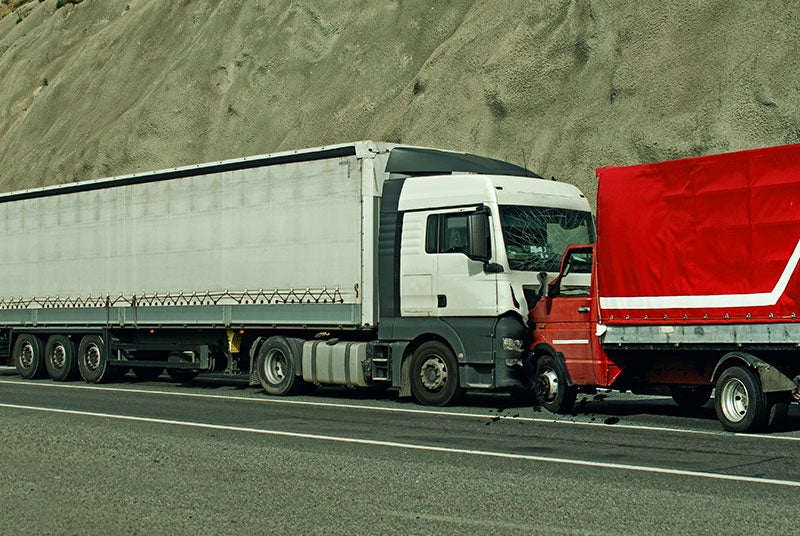
As we’ve previously discussed in this blog, truck accidents have the potential to be extremely dangerous. The force of an 18-wheeler can do significant damage to a smaller vehicle, and the time and distance it takes for a fully loaded truck to effectively slow down or stop may not be enough to avoid a collision. As a result, truck accidents are often fatal for drivers and passengers of any cars involved. But truck accidents can also be deadly when they involve other trucks. If two trucks come too close to each other, they might not be able to avoid a collision on time due to the difficulty of stopping, and swerving to avoid that collision tends to be much more difficult due to trucks’ poor handling ability. An accident between two trucks recently caused the death of a man from Greenbelt, Maryland. The man was driving a commercial box truck on Interstate 95 in the early-morning hours of Aug. 16 when his vehicle collided with a tractor-trailer. According to a Delaware State Police sergeant, the tractor-trailer was heading north on I-95 when the driver decided to make an illegal U-turn by using an emergency cross-over. As he pulled onto the southbound lanes of the interstate, he entered the path of the box truck, which was in the left lane. The box truck driver attempted to swerve around the 18-wheeler, but hit the back of it on the driver’s side. The box truck overturned onto its left side, causing the cargo box full of soiled laundry to separate from the frame and spill its load. With the driver trapped inside the cab, the wreckage of the truck came to a stop in the right-hand lane. Most commercial truck drivers are under intense pressure to deliver their goods in the shortest time possible, so it’s not entirely surprising that the tractor-trailer driver chose to make a U-turn, rather than continue until he found an exit that allowed him to turn around legally. But turning in front of traffic only added to the many risks that the tractor-trailer driver carried with him. Either he or his transportation company may end up having to compensate the family of the other truck driver, who had his own load to carry and was doing so safely and responsibly. Source: Delaware Online, “Md. man killed in predawn I-95 crash,” Robin Brown, Aug. 17, 2012 Our firm handles situations similar to the one described in this post. To learn more about our practice, please visit ourMaryland truck accidentspage.

Settlement OK’d for 3 killed in Baltimore fire truck collision

Settlement OK’d for 3 killed in Baltimore fire truck collision

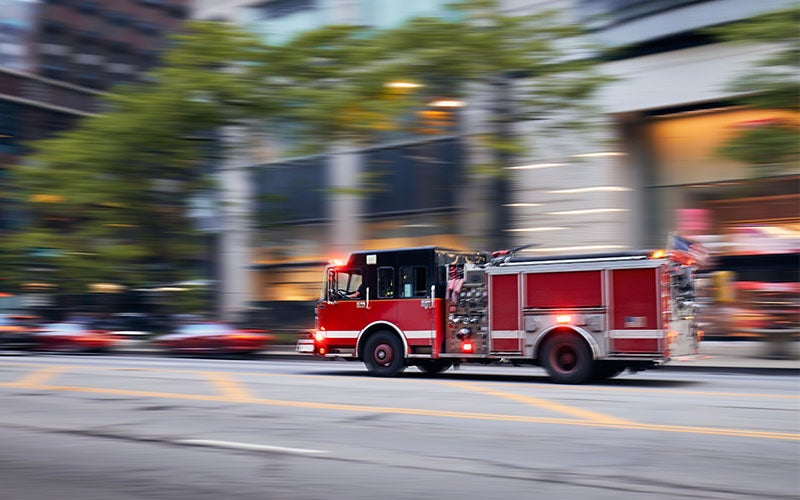
The family members of three people killed in a Baltimore fire truck accident will split a $40,000 settlement approved by the city’s spending board. The figure is the highest amount allowable for motor tort claims involving police and firefighters responding to emergencies. The December 2007 crash happened as a Baltimore County husband, wife and family friend were returning to the couple’s home around 3 a.m. A Baltimore City fire truck was responding to a report of an apartment building fire and had its lights and siren on as it sped through an intersection at 47 mph. The truck collided with the couple’s SUV, which was going about 23 mph. All three of its occupants died. The accident is thought to be the worst fatal collision between a fire truck and a civilian vehicle in the city in 50 years. No criminal charges were filed against the driver, who failed to stop at the intersection even though emergency vehicles are required to stop at all red lights when responding to emergencies. The 49-year-old woman who was driving the SUV left behind two grown children. She and her husband, who was 35, had been married for seven years. The 24-year-old man riding with them was engaged to be married. All were originally from Ukraine. The $40,000 settlement is a relatively small sum, but will help offset the funeral and burial costs their families paid more than four years ago. They also received some compensation in insurance, but needed to rely on donations from other family members and friends for financial support. What makes this case all the more tragic is that it was one of three civil lawsuits that the city recently settled involving its vehicles. One of the other crashes happened when a woman waiting for a bus was run down by a city Health Department worker who had either passed out or fallen asleep at the wheel. No one expects to suffer serious injuries or be killed by a public safety vehicle, but when it happens, it’s often up to the victims and their loved ones to pursue compensation and hold the municipality responsible. Source: The Baltimore Sun, “ City settles civil suits, one involving deaths in fire truck accident,” Peter Hermann, May 8, 2012