Blog

All Workers' Compensation Car Accidents Workplace Accidents Workplace Injuries Construction Workers' Accidents Medical Malpractice Industrial Workers' Injuries Product Liability Personal Injury Truck Accidents Firm News Wrongful Death Uncategorized
First Responders Train for Electric Vehicle Accidents

First Responders Train for Electric Vehicle Accidents

During his State of the Union address Tuesday night, the President discussed his commitment to electric vehicles and stated his goal is to have 1 million of the vehicles on the road by 2015. While electric vehicles do not harm the environment with emissions, they are definitely not immune to car accidents. Often, emergency personnel responding to a serious car accident need to dismantle a vehicle to rescue an accident victim. Because electric vehicles differ significantly in construction from traditional internal combustion vehicles, a car accident involving an electric vehicle poses unique challenges to first responders. With those concerns in mind, the National Fire Protection Association (NFPA) established a training tour for first responders on how to work with electric vehicles that have been involved in an accident. Approximately 2,000 emergency service trainers and leaders have participated in the electric vehicle training so far. The training tour made stops in Los Angeles, San Francisco, Austin, Washington D.C., New York and Detroit. The training focuses on topics that are unique to electric vehicles, including procedures to shut off the power, details on lithium ion batteries, and locations of high-strength steel and cut points for getting to injured and trapped passengers. Chevrolet has participated in training the first responders, and has provided a Chevy Volt for hands-on training. With greater emphasis on alternate fuel sources for our vehicles, it appears inevitable that there will be more electric vehicles on the road in the future. The NFPA’s training is an important step towards preparing the brave men and women who serve as our first responders to be as comfortable and as familiar with electric vehicles as they are with the traditional vehicles on the road today. Source: National Fire Protection Association, “Chevrolet, OnStar and NFPA host Electric Vehicle Safety Training for Detroit’s First Responders,” 12/2010

Maryland Study: Nurses’ Long Hours Linked to Risks to Patients

Maryland Study: Nurses’ Long Hours Linked to Risks to Patients

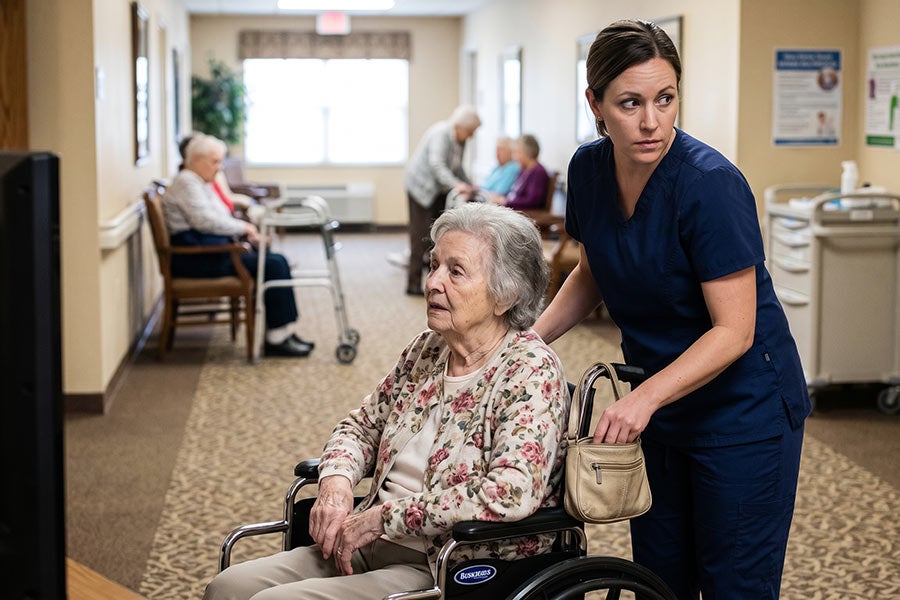
Medical malpractice can have terrible consequences for a patient. While many medical mistakes can be reversed, many medical errors result in permanent injury or death. There are many types of medical malpractice and medical malpractice has many causes including physician errors, surgical errors, and medication errors. Often times, medication result from mistakes made by hospital workers who are fatigued. While the medical profession has taken steps to limit the number of hours a physician in training can work, the same cannot be said for nurses. A recent study by the University of Maryland School of Nursing and The Johns Hopkins University School of Medicine in Baltimore has found that patients in hospitals where nurses work long hours are much more likely to die from pneumonia and heart attack. The researchers found that the patient mortality was most frequently related to long work hours and lack of time off the job. The study, which will be published in the January-February issue of the journal Nursing Research, found that most U.S. hospitals use 12-hour shifts for nurses. This began in the 1980s amid a nationwide shortage of nurses. Additionally, the 12-hour shift affects both the quality and duration of nurses’ sleep and this affects the alertness and vigilance that are so necessary to prevent medical mistakes. “Although many nurses like these schedules because of the compressed nature of the work week, the long schedule, as well as shift work in general, leads to sleep deprivation,” said Alison Trinkoff, a professor at the University of Maryland School of Nursing and co-author of the study. Trinkoff added, “The finding that work schedule can impact patient outcomes is important and should lead to further study and examination of nursing work schedules.” Sources: Bloomberg Businessweek, “Nurses’ Long Shifts May Put Hospital Patients at Risk: Study,” Robert Preidt, 1/19/2011 Infection Control Today, “Nurses’ Long Work Hours, Scheduling Can Increase Patient Mortality,” 1/17/2011

The Cases Against Doctor Conrad Murray Move Forward

The Cases Against Doctor Conrad Murray Move Forward

Many of our readers will be familiar with the notion that medical malpractice can lead to a civil lawsuit for damages. In egregious cases however, medical malpractice can also lead to criminal prosecution. The civil and criminal cases against Dr. Conrad Murray illustrate this principle. Dr. Murray was Michael Jackson’s physician in 2009 as the singer rehearsed and trained for his comeback tour. Unfortunately, Michael Jackson’s comeback tour never came to fruition as he died of a drug overdose in June 2009. He was 50 years old. Dr. Murray has been at the heart of controversy surrounding Michael Jackson’s death and is facing both a civil suit and a criminal prosecution for his actions while Michael Jackson was in his care. Coroners ruled that Jackson died of an overdose of a combination propofol, a drug used to relieve anxiety and to induce anesthesia, and sedatives including lorazepam. Propofol is most commonly used in hospitals, but Dr. Murray has admitted to giving it to Jackson to help him sleep. Dr. Murray’s attorneys have suggested that Michael Jackson delivered the fatal dose to himself. However, medical experts testified that even if that were true, Dr. Murray still might be responsible because he supplied Jackson with the drug. Deputy District Attorney David Walgren argued, “The standard of care was breached, unfortunately and tragically, over and over again because of Dr. Murray’s actions. That is why Michael Jackson is no longer here.” This week, the judge handling a preliminary hearing in the criminal case against Dr. Murray ruled that the prosecution will go forward. Because of this week’s ruling, Dr. Murray will stand trial for manslaughter. At the same time, Michael Jackson’s family has filed a separate wrongful death lawsuit for damages, which is presently pending in Los Angeles Superior Court. Although there are differing standards of proof in civil and criminal cases, the outcome of the criminal prosecution will likely have a significant influence on how the civil case proceeds. Source: Westlaw News and Insight, “Michael Jackson doctor ordered to stand trial for manslaughter,” Alex Dobuzinskis, Bob Tourtellotte, and Jeff Roberts, 1/12/2011

Parents Sue Crib Retailer After Baby’s Death

Parents Sue Crib Retailer After Baby’s Death

The parents of a 1-year-old boy who died in his crib in January 2008 are suing the retailer that sold them the crib. According to the complaint filed in federal court last month, the boy died from asphyxiation when he suffocated in a Simplicity Ellis Deluxe 4-in-1 Convertible Sleep System crib. The complaint alleges that Hayneedle Inc., the retailer that sold the crib, was grossly negligent in failing to warn the boy’s parents of the crib’s “dangerous and defective characteristics” and failing to inform them of the safe method of assembling, using and maintaining the crib. The boy’s death contributed to a nationwide recall of Simplicity cribs by the Consumer Product Safety Commission in April 2010. According to the recall notice, he suffocated when he was trapped between the crib mattress and the crib frame. In the recall notice, the CPSC noted 13 additional incidents of the cribs collapsing due to the metal frame that supported the mattress bending or detaching. “Simplicity cribs are one of the deadliest products that we’ve dealt with in recent years,” said CPSC spokesman Scott Wolfson. More than 2 million cribs have been recalled, but the exact amount of the cribs that have been sold is unknown because the manufacturer has gone out of business. “We believe that thousands, if not hundreds of thousands, of these cribs could still be out there,” Wolfson said. The CPSC advises parents to take heed of the dangers of the Simplicity cribs. “There are many cribs that Simplicity made and sold that do not have a remedy available, and we urgently ask parents to throw them away,” said Wolfson. Sources: Boston Herald, “‘Deadliest’ crib seller sued,” Donna Goodison, 1/7/2011 Consumer Product Safety Commission, Recall Notice For Simplicity Cribs (retrieved from http://www.cpsc.gov/cpscpub/prerel/prhtml10/10211.html)

Maryland Worker Killed, Others Injured in Car Wash Accident

Maryland Worker Killed, Others Injured in Car Wash Accident

On December 29, a tragic accident claimed the life of one Rockville, Maryland car wash worker and injured two other employees. The accident occurred as one employee was driving a 1998 Jeep Grand Cherokee out of the washing bays when it suddenly accelerated. The vehicle raced out of control and struck two employees, pinning them beneath the vehicle. The two men were dragged beneath the Jeep until it crashed into a utility pole. They remained pinned until fire and rescue workers could free them. Both men were rushed to Suburban Hospital in Bethesda. One of the struck employees, a 48-year-old Hyattsville man died shortly after reaching the hospital. The other man who was pinned suffered a fractured pelvis and had to be hospitalized. The accident injured a third man, who suffered three broken ribs when the Jeep Grand Cherokee struck a second vehicle, which in turn hit him. Maryland Occupational Safety and Health and the Montgomery County Police Collision Reconstruction Unit are investigating the accident to determine if it was caused by a vehicle malfunction or by human error. The employee who was driving the Jeep remained at the accident scene to help rescue his injured coworkers. He has not been charged with a crime and is cooperating with the investigation. The accident is cause for increased concern for car wash managers and employees who work with the Jeep Grand Cherokee. In 2006, the International Carwash Association issued a warning that the Jeep Cherokee and Jeep Grand Cherokee can experience “sudden unintended acceleration” and cautioned car wash employees to be cautious when handling the vehicles. Source: The Gazette, “Rockville car wash employees still coping with death, injuries,” Nesa Nourmohammadi, 1/5/2011

Federal Study Highlights Drug Use in Vehicle Fatalities

Federal Study Highlights Drug Use in Vehicle Fatalities

A new study that was released by the National Highway Transportation Safety Administration (NHTSA) last week departs from the usual focus on alcohol use as a contributing factor in fatal car accidents and scrutinizes, for the first time, the role that drugs play in motor vehicle fatalities. Although studies on drunk drivers abound, there is a dearth of existing research that examines how many motorists on the road have some type of drug in their system. Information also lacks concerning what kinds of drugs are routinely being ingested, how often drivers’ drug use contributes to vehicle crashes – especially fatal accidents – and how many drivers who die in automobile crashes test positive for drugs in autopsies. The NHTSA report probes into all of these areas. It notes, for example, that drugs were found in about 18 percent of drivers nationwide who were involved in fatal accidents over a recent five-year period. (In Maryland, that number was comparatively high, being 25 percent). It notes additionally that drug use has increased over that period, as well. Nearly 4,000 deceased drivers last year tested positive for drugs, as reported by states across the country. Those drugs indicate use across a broad spectrum, ranging from narcotics and depressants to stimulants, hallucinogens, steroids and various inhalants. The NHTSA stops short of drawing conclusions from its study, noting that it is simply too difficult to know in many cases whether drug use was a proximate cause of a roadway death. Although drugs such as cocaine and marijuana were found in the bodies of many fatal accident victims, so, too, were prescription medications not commonly associated with driver impairment. The agency also cites a flaw deriving from reporting inconsistencies. Some states routinely test for drugs, while others don’t. Related Resource: www.washingtonpost.com “Drug use increasingly common in driver deaths” November 30, 2010

Complaints Rising Against DePuy Hip Replacement Implants

Complaints Rising Against DePuy Hip Replacement Implants

Hip replacements generally last a decade, sometimes even two. What is presently happening with multiple hip replacement systems made by DePuy, a subsidiary of Johnson & Johnson, is unprecedented and spells potentially huge product liability trouble for the manufacturer and its parent company. A case in point is the DePuy metal-on-metal implant – called the ASR XL Acetabular System – placed into Annie O’Neill, a 67-year-old New York resident in May 2009. Shortly after implant, the product began detaching from her acetabulum and then began emitting successively louder noises from her hip. The pain became severe, and O-Neill underwent hip revision surgery in July 2010, not much more than a year after her DePuy implant was first inserted. Then, one month later, DePuy recalled the product, along with the ASR Hip Resurfacing System. The implants were reported as having a 13 percent and a 12 percent failure rate, respectively. Prior to the recall, more than 90,000 of DePuy’s artificial hip systems were sold, and a steadily rising number of people – like O’Neill, alleging extreme pain – have now brought suit against the manufacturer for faulty design. Many of them are also citing the exorbitant costs they are shouldering as a result of the second remedial surgery, as well as a diminished quality of life resulting from the defective implant. Persons with questions about personal injuries related to DePuy’s hip replacement implants or the recall should contact an experienced product liability attorney. Related Resource: www.aboutlawsuits.com “ Metal-on-Metal Hip Lawsuit Filed Against Johnson & Johnson and DePuy” November 17, 2010

Vehicle Seat Strength Questioned in Product Liability Case

Vehicle Seat Strength Questioned in Product Liability Case

A federal vehicle safety standard that went into effect more than four decades ago and is still the baseline for manufacturers in the car industry is at the center of controversy in scores of alleged cases in which back-seat passengers – most often children – have been seriously injured. The operative regulation is Federal Motor Vehicle Safety Standard 207, which engineer Lou D’Aurelio and other automotive experts say is sorely outdated. While testifying in a recent product liability case, D’Aurelio said that the standard, which sets forth requirements for seat back strength, is not nearly exacting enough, and has resulted in many accidents where a driver’s or passenger’s front seat doesn’t hold up in a collision. Instead, it slams backward, with its occupant hitting the rear-seat passenger at high impact. When that is a child, the resulting injuries can be devastating. In the case where D’Aurelio was speaking as an expert witness, a Virginia jury awarded $8 million to a 5-year-old girl who suffered serious brain juries after being struck in such a manner when her family’s car was rear ended by another vehicle. A spokesperson for the National Highway Traffic Safety Administration says that the agency is considering updating the standard. The defendant in the Virginia case, a seat supplier for Chrysler, is appealing the verdict, saying that, “It is undisputed that the seat in question was in compliance with the car manufacturer’s safety requirements, which are more stringent than the Federal Motor Vehicle Safety Standards.” Related Resource: www.nbcchicago.com “ Collapsing Car Seats Blamed for Injuring Passengers” November 10, 2010

U.S. Supreme Court Hears Seat Belt Product Liability Lawsuit

U.S. Supreme Court Hears Seat Belt Product Liability Lawsuit

A motor vehicle accident in California in 2002 killed a rear-seat passenger in a minivan who was wearing a lap-only seat belt, the only type of safety belt provided by Mazda at that time. The victim’s family brought a product liability lawsuit against the auto maker, alleging that a lap-and-shoulder belt would have saved her life. The case has now slowly worked its way up to the U.S. Supreme Court, following California appellate court and state Supreme Court rulings that the lawsuit was preempted by federal law. The Justices are apparently split on whether the suit should be allowed to proceed. One of them is not participating in the case because of a conflict. If the Court splits 4-4, Mazda will win the case, but no legal precedent would be established. The argument favoring preemption was stated by Chief Justice John Roberts, who noted that federal law at the time did not require auto manufacturers to install shoulder-and-lap belts because of their added costs. He stated that allowing cases to proceed in instances where car makers installed only lap belts – legal at the time – would be illogical and unjust and would substitute later judgment for that of regulators at the time. A Justice Department lawyer argued that the suit should be allowed to go forward, noting that, while car makers were given the choice at the time to install lap-only belts, “they are not exempted from the consequences of that choice.” The plaintiff’s attorney argued that not preempting such lawsuits would give manufacturers “an incentive to develop safer vehicles.” The Court is expected to announce its decision in June 2011. Related Resource: online.wsj.com “US Supreme Court Appears Split on Seat Belt Lawsuit” November 3, 2010

Deadly Car Crash on U.S. 113 Involves 10 People, Four Vehicles

Deadly Car Crash on U.S. 113 Involves 10 People, Four Vehicles

The driver of a car termed the “at-fault vehicle” by Maryland State Police caused a chain collision Monday on U.S. 113 in Newark about 13 miles south of the Delaware state line that involved three other vehicles and 10 people. The driver of the car, which was passing other cars on a double yellow line, was killed in the accident, along with three passengers. The deadly car accident occurred shortly before the afternoon rush hour, with the area where the driver sought to pass in a no-pass zone being a two-lane undivided highway with a speed limit of 55 mph. There was no indication from state troopers that speed was a factor in the crash. The aftermath of the accident was chaotic, and police closed the highway locally in both directions for several hours. There were seven people in the at-fault car. Three of them survived and were airlifted to the Peninsula Regional Medical Center in Salisbury. The drivers of two other cars that were struck in the crash were also sent to that facility. In addition to the three cars that collided, a tractor-trailer was also involved. That vehicle was struck by debris, but did not have direct contact with any of the other vehicles. Sgt. Christopher M. Davala, a trooper at the site, said that the drivers of the other two cars and the driver of the tractor-trailer were “in good shape.” He added that very little remained structurally of the at-fault vehicle. Related Resource: www.delawareonline.com “4 dead in crash on US 113 in Md.” November 2, 2010

Fatal Truck, Bus Crashes Put Focus on Stronger Traffic Barriers

Fatal Truck, Bus Crashes Put Focus on Stronger Traffic Barriers

Several truck accidents in Maryland from years past, as well as a recent fatal Beltway accident in which a charter tour bus hit a guardrail and fell nearly 50 feet to Interstate 270, have drawn the close attention of various safety groups. They are questioning whether taller and stronger concrete traffic barriers should be constructed on overpasses, underpasses and bridges to prevent fatalities in vehicle falls from roads and to shield other motorists from plunging vehicles. Accidents that AAA Mid-Atlantic officials point to include: • A June 2009 incident in Anne Arundel County in which a man died when his truck fell 30 feet from a bridge • A 2008 accident in Queen Anne’s County in which a truck fell from the Bay Bridge into the Chesapeake, killing the driver • A 2004 incident in which a truck carrying flammable liquids drove off a lane of Interstate 895 in Maryland and exploded, killing several people AAA Spokesman John Townsend says that accidents such as those above can be avoided altogether in many instances, provided that road engineers factor in stronger traffic barriers at strategic locations. He states that AAA “takes exception” to the view of many highway engineers that a traffic barrier “should always be a last-resort effort to reduce the severity of a crash by containing and redirecting a vehicle that would otherwise have run off a road or bridge.” Townsend responds that bigger and stronger barriers “should be given greater consideration.” The Federal Highway Administration voices agreement with that notion, suggesting the use of taller and vertically faced concrete barriers. Related Resource: www2.insidenova.com “Fatal bus crash leads to safety inquiries” October 5, 2010

DOT Looking at NTSB Findings on Sleep-Deprived Drivers

DOT Looking at NTSB Findings on Sleep-Deprived Drivers

Our immediately preceding blog post discussed the second annual U.S. Transportation Department summit on distracted driving. The present blog might reasonably be regarded as a tandem piece. It takes a look at what National Transportation Safety Board (“NTSB”) traffic experts have learned over the years in studies focusing on driver fatigue and their recommendations for loosening the tight nexus between sleep-deprived motorists and car accidents. The NTSB was established in 1967, and is more typically seen in the news in connection with its investigation of airplane crashes. Many of its studies, though, apply with equal vigor to drivers out on the road. One of the agency’s central conclusions is that a sleep-deprived driver is equally as dangerous as most drunk drivers. That finding is confirmed by a host of domestic and foreign studies, which find that a person who has been awake for 24 hours is operating at about the same level as a person with a 0.10 blood-alcohol level, which is the standard for being legally drunk in all 50 states. Results from a John Hopkins University study show that a person that sleep deprived suffers from an inability to maintain attention, takes undue risks, has a narrowed focus that undermines the ability to monitor more than one thing at a time, and often can’t even comprehend that he or she is unduly tired. It is truly a recipe for disaster on the road. In one of its studies, the NTSB was focused on the effects of alcohol and drugs on trucking accidents. Surprisingly, it found that driver fatigue was a much larger problem, with up to 40 percent of fatal accidents owing to a simple lack of sleep. Jim Hall, a former NTSB head, says that U.S. agencies overseeing highway safety have been slow to enact regulations that reflect strong and growing scientific evidence regarding sleep deprivation in drivers and the attendant devastation across national roadways. In response, the U.S. Transportation Department has recently established a Safety Council, which has examined and approved more NTSB regulations just within 2010 than the DOT did in any of the previous five years. Related Resource: https://www.msn.com/ “Driving While Tired: Safety officials are slow to react to operator fatigue” September 27, 2010

Contact Us

Fill out this form below and we'll contact you shortly
*Required Fields