Blog

All Workers' Compensation Car Accidents Workplace Accidents Workplace Injuries Construction Workers' Accidents Medical Malpractice Industrial Workers' Injuries Product Liability Personal Injury Truck Accidents Firm News Wrongful Death Uncategorized
Maryland teens killed in car accident on way home from prom

Maryland teens killed in car accident on way home from prom

Late spring is an exciting time of year, especially for those who are still in school. Kids of all ages begin counting down the days left in the year before summer vacation, graduation preparation is well under way, and many high school students spend every penny they have on getting ready for the prom. With so much activity going on, there’s a tendency for young people to get impatient, live fast and feel invincible. Sometimes, unfortunately, this can lead to taking risks that result in accidents. A tragic example is the death of two teens in Hagerstown, Maryland, earlier this month. The couple, both 17 years old, had just left their high school prom in the boy’s sports car and were headed back to the girl’s home so she could change before they met up with friends. But the boy lost control of his car at a curve in the road and it crashed into a tree, killing both of them. Police haven’t released many details on the crash, but speed seems to have played a significant role. Both students were standout athletes — she was an All-State volleyball player and the No. 1 singles tennis player, and he was an All-State baseball player who had just signed on to play for Salisbury University. Both were also honor roll students. The fact that they had such promising futures makes their deaths all the more tragic to their families and friends, one of whom summed it up this way: “I think just like any other teen after prom, he was excited and accidents happen.” Accidents do happen, but they aren’t inevitable. Distracted driving, careless driving and simply going too fast are fairly common among teen drivers, but if you’re riding in a car with someone engaging in one of these habits, there’s no reason not to speak up. With so much yet to live for and experience, it’s better to get where you’re going a little later than not get there at all. Source: NBC Washington, “ Teens Remembered After Prom Night Crash,” Chris Gordon, May 8, 2012

Report: Drivers who don’t use turn signals pose danger on roads

Report: Drivers who don’t use turn signals pose danger on roads

A new study suggests that drivers are repeatedly breaking a traffic law that leads to 2 million car accidents a year. Traffic police tend to overlook it and drivers forget or ignore it. But a new engineering study says the “epidemic” failure to use turn signals is a major American road problem. The Society of Automobile Engineers found alarming data in what the report’s author says is the first study of its kind. Drivers are not using or improperly using turn signals, in some cases almost half the time. Drivers engaged in a traffic lane change are the worst offenders. Forty-eight percent of lane changers either skip flipping on a turn signal or forget to switch it off. About 25 percent do not use a signal when making a turn. The engineers added up the number of faulty drivers and estimated that there are 2 billion turn signal violations every day. The study also found that drivers who ignored the “extremely effective” indicators were responsible for more than twice as many crashes each year as distracted drivers. The engineering report recommends an electronic solution to the problem. A so-called “Smart Turn Signal” would perform the duties a driver is supposed to do. The smarter-than-the-driver signal would shut off a turn signal that was left on too long. A “Smart Turn Signal” would be more proactive and less expensive that the mechanical device that flips off a turn signal after a driver makes a hard turn. The electronically intelligent signal could time out and shut off after a successful lane change or switch off after sensing when a vehicle has moved into the proper position. Another function of the “Smart Turn Signal” would detect whether a motor vehicle operator was repeatedly lax about using signals. A neglectful driver would receive a flash warning as a reminder that he was not using the signals sufficiently. Absent this technology, drivers should be diligent about operating turn signals manually to avoid furthering the increase of a dangerous habit that can cause accidents that injure other motorists. Source: Bottom Line on MSNBC, “Turn signal neglect a real danger, study shows,” Paul A. Eisenstein, May 1, 2012

Simple scanning technique prevents surgical sponge errors

Simple scanning technique prevents surgical sponge errors

Approximately one in 6,000 surgical procedures carried out in the U.S. involves the type of medical malpractice in which a surgical sponge is left inside the patient after the procedure is over. This can lead to serious and even life-threatening consequences, often from infection. But patients in Maryland and nationwide should be pleased to learn that a simple and inexpensive method has been developed which may help prevent such errors. The new technique involves the use of a simple bar code reader. Packages of sponges to be used in surgeries or childbirth are routinely scanned. But the beauty of the new technique involves scanning every sponge in the package, each of which has its own unique bar code. Medical personnel double check this by manually counting the number of sponges. In this manner, doctors, nurses and other operating room personnel have the information they need to make sure that every sponge is accounted for. In operating rooms where the method has been tried out, it has already greatly reduced the number of incidents in which a sponge was left inside a patient, enhancing patient safety. Any concern that the new procedure would be too time-consuming seems to have been alleviated, and the benefits in saving patients from injuries or death are clearly worth the few extra moments involved. Trials of the system in one area since 2009 resulted in not a single incident of a sponge being left inside a patient following the scanning of more than 1 million surgical sponges. The technology produces easily traceable information and helps to reduce possible human error in the hurried and stressful atmosphere of the operating room. Source: Mankato Free Press, “Bar coding sponges safeguards against surgery mishaps,” Robb Murray, March 16, 2012

Malpractice lawsuit follows girl’s death during oral surgery

Malpractice lawsuit follows girl’s death during oral surgery

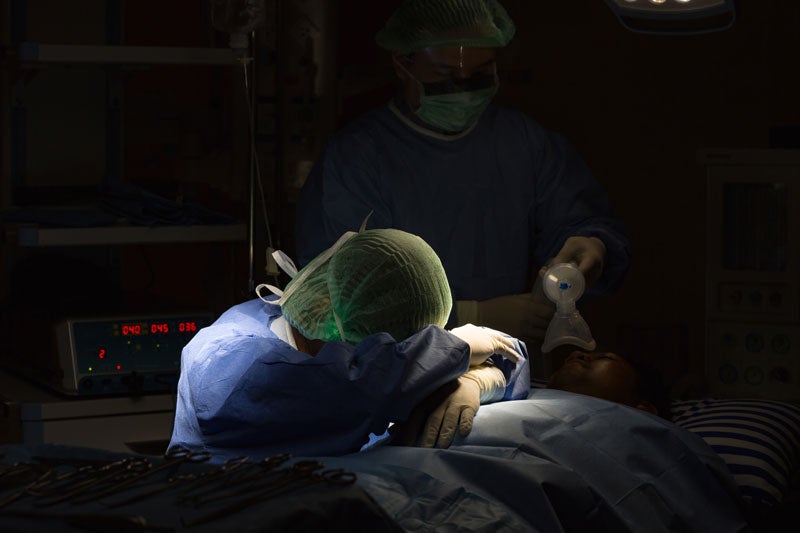
A Maryland teenager’s death as a result of “routine” oral surgery has led her family to file a medical malpractice lawsuit against the surgeons. The 17-year-old girl underwent surgery to have her wisdom teeth pulled, a procedure her parents weren’t worried about when they dropped her off at the clinic in March 2011. But they received an emergency call 15 minutes later, and soon they were at a hospital, taking in the details of the condition that caused their daughter to die 10 days later. The surgeons explained that the girl, who was otherwise healthy, had suffered from hypoxia, or a deprivation of oxygen so severe that her brain was left severely damaged. It happened as her heart rate slowed to a dangerous degree while under anesthesia. The autopsy ruled her death an accident. Such deaths are rare during oral surgery, though not entirely unheard of. Despite its usage in millions of operations every year, anesthesia carries risks that patients often don’t consider. People scheduled for surgery or their family members should never hesitate to ask questions about the anesthesia and the overall procedure. For instance, find out if someone other than the surgeon will be monitoring the patient’s heart rate, blood pressure and breathing. You may also want to ask about the monitoring equipment and what the plan is in the event something goes wrong. Although the girl’s oral surgeon said he was “deeply saddened” by her death and that everyone involved in her case worked hard to offer the best possible medical care, her parents weren’t satisfied. They’ve filed a lawsuit against both the surgeon and the anesthesiologist. Her mother said she hopes the lawsuit and her daughter’s story sends a message about the risks of anesthesia and the importance of diligent monitoring during surgery, whether it’s considered routine or not. Source: Today, “Teen dies after ‘routine’ wisdom tooth surgery,” Linda Carroll, April 6, 2012

Aggressive driving and speeding cause many fatalities

Aggressive driving and speeding cause many fatalities

Recent statistics indicate the number of fatal car accidents in the U.S. is at a historic low, with only 1.1 deaths per 100 million vehicle miles recorded in 2010. Still, that amounts to 32,885 people who died that year, and the low rate is of little comfort to those whose family members were among the dead. Even more troubling, those who study the statistics say, is the fact that aggressive driving and speeding were responsible for approximately a third of the fatalities, or 10,530 deaths in 2010. And yet more measures to aggressively curb speeding may be unheeded. Only two of the 50 states enacted any enhanced penalties for speeding in the last seven years, and one of those states limited the increased fines to drivers of commercial vehicles. Progress has been made on other fronts, however, such as a 23 percent decrease in the number of those killed in car accidents since 2000 while not wearing safety belts. Additionally, in the same time period, there has been a 3 percent reduction in the number of car accidents in which use of alcohol was found to have played a role. The thousands of people who continue to die each year in such accidents, however, are more than just statistics. They are somebody’s parent, spouse, child, sibling, grandparent, neighbor or friend. If drivers and traffic safety officials would only try to remember that and perhaps take speeding and aggressive driving more seriously, traffic accident deaths could be still further reduced. Then fewer people would face the trauma of burying a loved one whose life was suddenly cut short by an untimely auto accident. Source: The Car Connection, “ Speeding, Aggressive Driving Still Cause 1/3 Of Fatal Accidents,” Richard Read, March 9, 2012

Simple traffic violation leads to injuries for 2 Maryland drivers

Simple traffic violation leads to injuries for 2 Maryland drivers

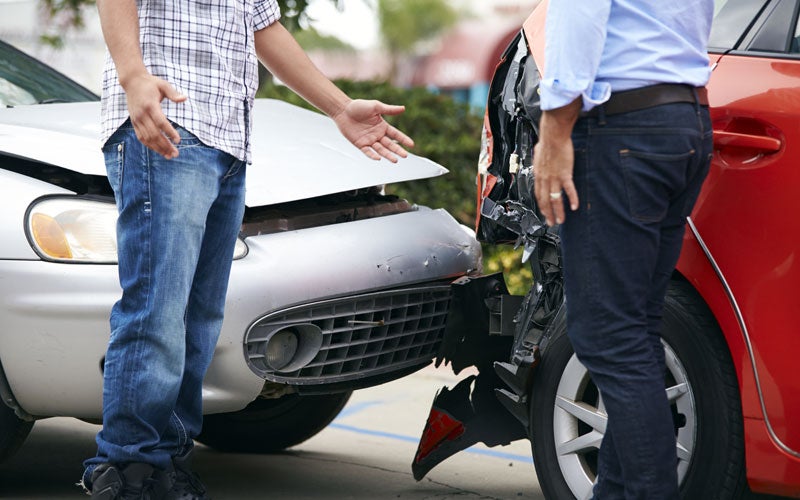
Some Maryland drivers may believe that there are varying degrees of seriousness when it comes to traffic infractions. For example, failing to signal when changing lanes is often viewed as less serious than running a red light, but running a red light might be considered less of a problem than driving drunk. Are these mere perceptions by motorists, or is there a real hierarchy when it comes to moving violations? The answer may lie in the consequences of these violations. Take for example the car accident that happened last weekend in Fallston, Maryland. According to Maryland State Police, a woman driving an SUV was traveling south on Route 152 when she ran a red light at an intersection. Her vehicle collided with the front driver’s side of a Chevy Trailblazer that had the right of way. The crash caused the Trailblazer to spin around and collide with a pickup truck. At some point during the collision the 17-year-old driver of the Trailblazer was ejected in the crash. She was flown to a hospital and listed in serious condition. The driver of the SUV that caused the accident was also rushed to a hospital. The driver of the pickup truck wasn’t injured, but his vehicle sustained some damage. Many drivers fail to stop at a red light, whether it happens due to a distraction or because they speed up before reaching the intersection when the light is yellow, and they don’t make it through before it changes to red. Running a red light may seem insignificant to drivers in a hurry, but when cars collide as a result, serious injuries or even fatalities often follow. It’s then up to the driver who ran the red light to pay for the consequences. Source: The Baltimore Sun, “ Two injured in Fallston crash Sunday evening,” April 3, 2012

Cash windfall may be lucky for drivers – until reality hits

Cash windfall may be lucky for drivers – until reality hits

Imagine driving along the highway and suddenly noticing little bits of green sailing through the air. Upon closer inspection, you realize that those bits of green are wads of cash, sailing out of an armored truck and into the air for drivers to grab. That’s exactly what happened this week on Interstate 270 in Maryland. While many drivers considered it their lucky day, the literal cash windfall could have resulted in more than one serious car accident. With so many pedestrians running around frantically, their eyes on the cash in the air and on the road, it’s a wonder no one was hit by the cars speeding by. The money went flying after the unlatched back door of an armored truck allowed two plastic bags filled with cash and coins to fly out of the vehicle. One witness said she saw about 30 cars pulled over on the side of the road, their drivers running around picking up cash as other vehicles continued to fly by. It’s not the first time precious cargo has been dropped on a highway, but it’s very rare for so many drivers to get out of their cars at once and start running all over the road. What’s not unusual is for drivers to be seriously injured or killed after their vehicles have stalled. When they step out to pop the hood or change a tire, they put themselves at great risk of being hit by another vehicle. These accidents happen frequently, in Maryland and all over the country. It’s the reason highway patrol troopers advise motorists stuck on the highway to stay in their vehicles until help arrives. Even if a passing car hits yours, you’ll be protected, unlike if you were hit while standing in the road. In that case, no amount of flying money will make up for it. Source: The Spokesman-Review, “ Crash sends cash fluttering across Md. highway,” March 23, 2012

Maryland Ag Dept.: Be patient with farm equipment on roads

Maryland Ag Dept.: Be patient with farm equipment on roads

With spring planting season nearly upon us, Maryland’s farmers are heading back to their fields. And their large machinery is going with them. That means the state’s drivers will start to see tractors and other large equipment on the roads surrounding farms. The Maryland Department of Agriculture is putting out a reminder to motorists that they should be patient and cautious while sharing the road with farmers using the roads to avoid a serious accident. Farmers often have to drive oversized equipment from one field to another. One Maryland farmer says he tries to be respectful of other drivers when he has to use the road, but that many don’t return the favor. Instead, they act as though they have blinders on and don’t see the equipment, speeding past it dangerously close. “They don’t even realize this is something that can take your life,” he said. Another farmer says he tries to use a warning truck in front or behind his farm equipment when it’s on the road. But even in those cases, there have been some close calls. Many farmers have been hit and injured by other vehicles. It’s not surprising, considering that farmers are less protected when riding atop a tractor or similar machinery. Passing farm equipment safely and cautiously also helps prevent collisions with other cars. When farm machinery takes up an entire lane, many cars must cross the center line of the road to pass. Doing so on a hill or in a no-passing zone creates the risk of colliding head-on with another vehicle. The MDA also says drivers shouldn’t assume it’s safe to pass farm equipment just because it pulls to the right. Very often this is necessary to make a wide left turn. Watch for the driver’s hand signals and keep an eye out on the left side of the road for gates, driveways or roads where a farm vehicle might turn. And when in doubt, do not pass. They may be an inconvenience to other drivers, but the vehicles farmers use to get their work done are no less important than an office worker’s laptop or phone. A little extra caution can go a long way toward preventing a deadly crash. Source: Carroll County Times, “MDA warns motorists to be cautious, patient with farm equipment on roads,” Carrie Ann Knauer, March 14, 2012

Maryland man wins malpractice lawsuit after unsuccessful surgery

Maryland man wins malpractice lawsuit after unsuccessful surgery

A surgeon who insisted he had removed a patient’s tumor, despite tests and reports to the contrary, was sued for medical malpractice by a Maryland man who lost his hearing as a result of the unsuccessful surgery. The man had a benign tumor in a very hard-to-reach area of his ear canal. The tumor was pushing against his auditory nerves and would cause him to go deaf if it wasn’t removed. A surgeon recommended a conventional surgery that had a 30 to 40 percent chance of failure. But the patient decided to try an alternative endoscopic procedure called retrosigmoid surgery, which was being performed by a doctor across the country who claimed a 98 percent success rate. The doctor did the surgery and believed he had removed the tumor, but according to his attorney, ear tumors are so tiny that it was hard to know for sure. A post-op MRI scan showed the tumor was still present, but the surgeon told his patient that what the radiologist reading the scan actually saw was normal post-surgical scarring. The patient was mailed two nearly identical pathology reports from the surgeon’s office that described the surgical procedure. One report read “No tumor seen,” but in the other report, “No” had been whited out to read “tumor seen.” The doctor denied altering the report, but the patient ordered a new MRI from his original doctor, who determined the tumor was still there and removed it. The patient, who ultimately did go deaf, would likely have retained his hearing if he’d had the proper surgery done earlier, according to an expert witness’ testimony. The lawsuit against the surgeon accused him of medical malpractice, fraud and intentional infliction of emotional distress. The judge ruled the surgeon had used the wrong kind of surgery, failed to find the tumor, misled the patient into thinking the surgery had worked, misinterpreted the post-op MRI and misreported the pathology finding. The surgeon’s appeal was denied and his attorney said the finding of fraud could prompt a medical board investigation. Surgeons who fail to complete a surgery are not always guilty of malpractice. But using the wrong methods, misleading patients and altering their reports are very serious offenses with long-term consequences. People subjected to these types of malpractice have every right to seek compensation for their resulting medical problems. Source: Outpatient Surgery Magazine, “ Did Surgeon Cover Up His Failure to Remove Patient’s Tumor?” Leigh Page, March 6, 2012

Companies accept responsibility in train crash

Companies accept responsibility in train crash

Several companies took rightful responsibility for their roles in a deadly 2009 train crash that claimed the lives of nine people. The admission of guilt brought to rest seven of nine wrongful death lawsuits stemming from the accident, which left many others injured. The details of the settlement were not disclosed to the public. But based upon settlements in similar accidents, the total likely reached into millions of dollars. The settlement came on the heels of Metro, the transit agency in charge of operating the train system, accepting responsibility for a crash that has been called the deadliest in the agency’s history. Businesses that produced some of the equipment that malfunctioned just before the crash also accepted blame for their roles. One of these companies is based in Maryland. The company was responsible for developing a warning system to help Metro officials track the trains. This system apparently did not work correctly, contributing to the events of the crash. Two other companies from outside of the United States admitted to fault in the incident. Both companies produced equipment that is used in the train system. No officials from either the companies or Metro were willing to speak about the recent development in the case. A spokesperson for Metro said the company was forbidden from discussing it because the case is ongoing. After a thorough investigation, officials determined the crash was caused by malfunctioning equipment. One of the trains had stopped on the tracks, but the program did not alert supervisors to it. This allowed another train to collide with it. The National Transportation Safety Board also called into question Metro’s attitude over safety, citing an unwillingness to correct reoccurring safety issues. The last two remaining wrongful death cases will go to trial in March. With Metro accepting responsibility, the trial should not last long and will likely be decided in favor of the plaintiffs. Source: The Washington Post, “DC transit agency Metro settles 7 wrongful death suits from 2009 train crash that killed 9,” The Associated Press, Feb. 15, 2012

Mother talks about underage drinking after Maryland teen’s death

Mother talks about underage drinking after Maryland teen’s death

A woman whose son died after drinking an alcoholic energy drink says that parents need to be more aware of how their kids are spending their time. The car accident that caused his death happened just after he’d spent the day with friends, drinking a beverage that another adult had purchased for them. The 13-year-old’s parents said he typically spent Saturday afternoons hanging out with friends, eating fast food and shooting hoops at a park in Parkville, Maryland, so nothing seemed unusual when he texted his mother for a ride home. But when her fiancé went to pick up the boy and his friends, the teen said he felt sick. On the way home, he opened the front passenger door, fell out of the car and was hit by an SUV passing by. He died that evening at a hospital. His parents discovered the boy had been drinking Four Loko, a caffeine-infused energy drink that an adult had purchased for him and his friends, who said the boy had already thrown up twice before getting into the car. The drinks have grown increasingly popular with underage drinkers for their high amounts of caffeine, sugar and alcohol. One drink can contain the equivalent of four beers. The makers of Four Loko say on their website that the company exceeds federal labeling requirements and works to ensure its products stay out of the hands of minors. “Four Loko contains seven different warnings about the product’s alcohol content and the necessity of an ID for purchase,” the website says. The person who supplied the drink to the boy and his friends hasn’t been identified, but the boy’s mother urged parents to communicate with their children about the dangers of underage drinking. She worries that many parents are in denial, as she was, about their habits and experimentation with alcohol. Many parents also offer kids and their friends alcohol to score popularity points. But adults who encourage teens to drink could be held liable for injuries or fatalities that happen as a result, which won’t make them seem very cool in the end. Source: The Baltimore Sun, “Mother speaks out about underage drinking after son’s death,” Mary Gail Hare, Feb. 21, 2012

Are doctors’ white lies for our own good?

Are doctors’ white lies for our own good?

Is anyone immune from telling a lie every now and then? According to a recently published study, even doctors lie to patients; 11 percent said they’ve told a patient or a child’s guardian something that wasn’t true in the past year, and about 20 percent said they haven’t fully disclosed a mistake because they were afraid of being sued for medical malpractice. The researchers from Harvard Medical School who conducted the study said that while it’s hard to know what the effects are of these untruths, they could make patients “less able to make health care decisions that reflect their values and goals.” Of course, the doctors who participated in the study weren’t given the opportunity to specify what types of cases they lied about, and it’s possible to give a patient more complex medical information than they know what to do with. Not only that, but giving a patient information that turns out not to be true might not be helpful anyway. But a medical ethicist at the University of Pennsylvania says withholding a mistake from a patient is inexcusable and affects the way a doctor provides care to a patient. A separate poll of 100 doctors — including neurosurgeons, cardiologists and family physicians — asked whether they had ever kept a serious mistake from a patient. Of the 34 doctors in family practice, 5 percent said they’d made a mistake they didn’t reveal, 47 percent said they disclosed it and another 47 percent said they’d never made a mistake. About 5 percent of the 33 neurosurgeons said they’d never made an error, while 25 percent said they didn’t disclose a mistake and 69 percent said they did tell the patient. Among the 33 cardiologists, 33 percent said they didn’t tell the patient about a mistake, 50 percent said they did, and 17 percent reported they’d never made one. In the Harvard study, 55 percent said they’d “described a patient’s prognosis in a more positive manner than warranted,” while about 28 percent said they had revealed health information about a patient to an unauthorized person. Aside from a fear of being sued, some doctors avoid sharing the whole truth because they don’t want to upset their patients or cause them to lose hope. This at least provides a reminder that doctors are human beings, not flawless miracle workers. Still, the researchers said, telling patients about medical errors or the whole truth about their prognosis “can reduce anger and lessen patients’ interest in bringing malpractice suits.” Source: MSNBC, “Many docs tell white lies, study finds,” MyHealthNewsDaily, Feb. 8, 2012

Contact Us

Fill out this form below and we'll contact you shortly
*Required Fields