Blog

All Workers' Compensation Car Accidents Workplace Accidents Workplace Injuries Construction Workers' Accidents Medical Malpractice Industrial Workers' Injuries Product Liability Personal Injury Truck Accidents Firm News Wrongful Death Uncategorized
Mental disability not enough for Maryland officer’s retirement

Mental disability not enough for Maryland officer’s retirement

When you’re hurt at work in Maryland, you expect to receive compensation so that you can take the time you need to get better. In this case, a deputy who suffered a workplace injury wants to be allowed to work again, so he can retire can collect his retirement benefits. He claims that he has not returned to work due to post-traumatic stress disorder related to a fatal shooting on the job, which has caused his mental on the job injury. Post-traumatic stress injuries are not commonly accepted as an injury in many states, although this is now changing. The April 4 news talks about an interesting point reflecting that mental pain should also be considered an injury. According to the story, the deputy claims he was fired during his recovery from post-traumatic stress disorder after he had to shoot and kill a man. Now, he wants to get his job back. If he is re-employed, he will be able to complete his treatment until he reaches his highest level of medical improvement. Once he reaches that level of recovery, the doctor can decide if he can return to duty. This path to returning to work would also open up doors to medical disability retirement. The man had previously returned to work following the shooting of a man two years ago. However, after returning to work, he reported that his police dog bit him, and he asked for time off due to a stomach condition. After that, he won a compensation award of fourth months worth of wages and medical expenses. Because the man has now moved on to opening his own trophy and awards shop, it’s argued that he doesn’t have the total and permanent disability required to seek a medical disability retirement. The officer was allowed to take a full year to recover, according to the story, but he claims it wasn’t enough time to allow him to recover from killing someone. The time it takes a person to heal may vary, and it poses the question whether a time limit should — or can — be placed on the healing process. It may be worth the legal battle for this deputy to continue his fight for regaining employment or possibly collecting an early medical retirement. He is a younger individual Source: SoMdNews, “Fired St. Mary’s deputy wants job back, then to retire” John Wharton, Apr. 04, 2014


Maryland woman extracted with Jaws of Life after accident

Maryland woman extracted with Jaws of Life after accident

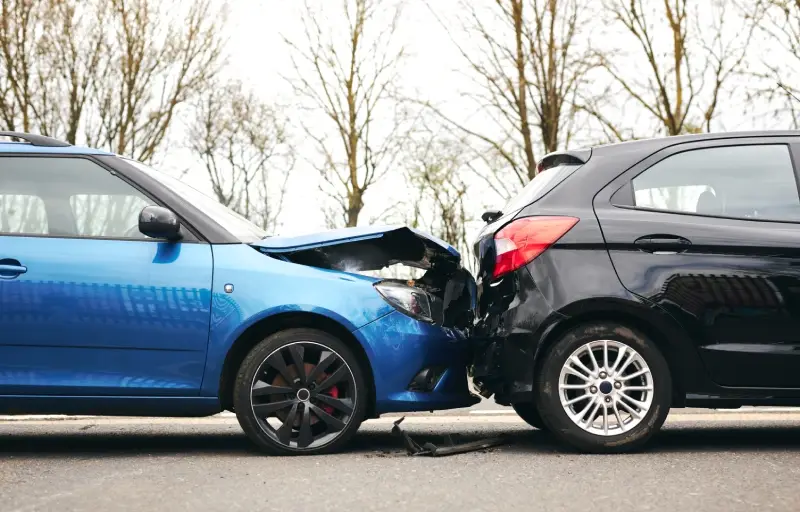
In today’s busy world, a distracted driver or someone who is texting and driving can cause an accident in the blink of an eye. Unfortunately minor and major car accidents happen everyday, and sometimes people suffer serious injuries. A Maryland woman was flown by Medevac helicopter to Baltimore’s Maryland Shock Trauma Center after a car accident on Feb. 12. The accident occurred in nearby Joppatowne at the corner of Joppa Farm Road and Route 40. According to the Joppa-Magnolia Volunteer Fire Company, the accident occurred a little bit before 2 p.m. The two-car accident left the 57-year-old woman trapped in her vehicle, and the Jaws of Life had to be used to extract her. According to reports, responders managed to get the woman out of the vehicle at 2:13 p.m. She was then sent on the helicopter to the trauma center, but her condition was not immediately available. Maryland State Police are still investigating the accident to determine what happened, and the westbound lanes of Route 40 were closed for a short time. According to reports, the driver of the other vehicle did not sustain any injuries. In cases like this, the investigation of the events leading up to and during the crash is vital. If a negligent driver is found to be at fault, the injured party may be able to receive compensation for medical expenses sustained in the wreck or lost wages from missed work. Talking through the situation and legal possibilities with someone who understands how the court system works can be a first step forward for injured victims. Source: The Baltimore Sun, “ Woman, 57, injured in Joppatowne car acciden t” No author given, Feb. 12, 2014

Cars of the near future might avoid crashes on their own

Cars of the near future might avoid crashes on their own

Ever since the automobile was invented, there have been calls to make cars safer. Motor vehicles today truly are technological wonders that would have been inconceivable a century ago — but folks today still aren’t immune from car accidents. Advancements in car safety features have led to seat belts, air bags and other improvements; awareness about the dangers of drinking and driving — and laws with more teeth to punish drunk drivers — have cut down on innocent people being injured or killed in Maryland and all over the country. And yet, accidents still happen. All the focus on safer cars and safer drivers can only do so much; car accidents are still a regular occurrence in this country. It may be that the best way — perhaps the only way — to prevent them altogether. And emerging technology is aiming to do just that. One way to accomplish that is to rely less on the human element — drivers — and put more reliance on the vehicles themselves to prevent accidents from happening in the first place. The federal Transportation Department recently announced that it plans to require new vehicles sold in the U.S. to include what’s being called V2V technology — that’s “vehicle to vehicle.” Basically, cars on the road would be able to communicate with one another, calculating where they are going and how fast they’re traveling. In this way, cars can alert drivers to potentially dangerous situations. Estimates are that this could decrease the number of accidents by up to 80 percent — a staggering number — and prevent 20,000 road accident deaths every year. Until we reach that point, of course, Baltimore residents will continue to be involved in car accidents — and suffer injuries as a result. Finding the right legal representation can be crucial for people who need to recover compensation from at-fault parties. Source: ABC News, “New Cars to Be Required to ‘Talk to Each Other’,” David Kerley and Alexander Mallin, Feb. 3, 2014

A famous case of chronic back pain: JFK, part 1

A famous case of chronic back pain: JFK, part 1

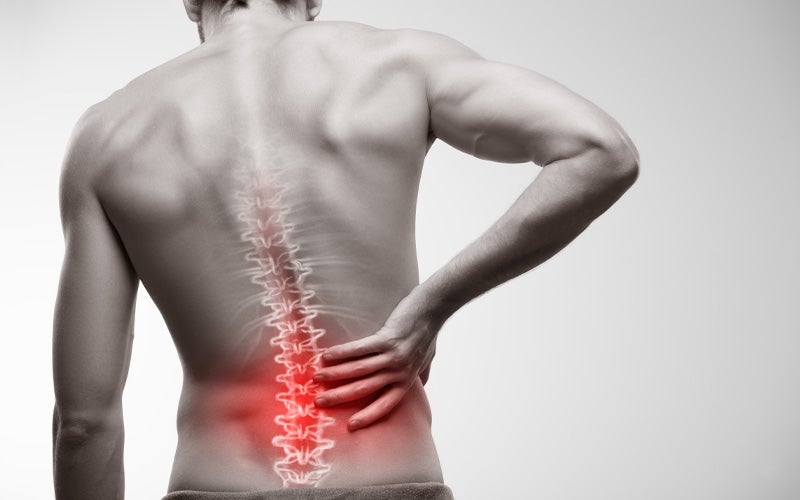
One of the important threads we’re following in this blog is chronic back pain. Millions of people across the country and around the world face this type of pain. And sometimes the pain arises in contexts where workers’ compensation or Social Security disability issues may be involved. In our May 31 post, we wrote about continuing research regarding ways of responding to chronic back pain without excessive reliance on potentially-addictive prescription drugs. In this two-part post, we will discuss the case of one of the most famous sufferers from back pain in American history: President John F. Kennedy. Last month of course marked the 50th anniversary of the assassination of President Kennedy. National interest in this inspiring yet complicated man, often referred to as JFK, has never waned. The anniversary of his death is an occasion to take note of the role that back pain played in his rather tortuous medical history. Two researchers recently published an article in the journal Regional Anesthesia and Pain Medicine about JFK’s chronic back pain. They concluded that though JFK appeared to exude vibrant health, his back pain was very nearly incapacitating. The pain in his lower was practically constant. It was also longstanding, dating perhaps as far back as 1940. He tried several surgical procedures over the years, trying to address the pain, but surgery did not provide a workable solution. Eventually JFK took to wearing a back brace. And he often used crutches to walk when he was out of the public eye. In part two of this post, we will discuss how doctors might try to address chronic back pain conditions such as JFK’s today. Source: University of Michigan Health System, “ Reconceptualizing JFK’s chronic back pain,” Nov. 26, 2013

Carpenter killed in accident on slippery construction site

Carpenter killed in accident on slippery construction site

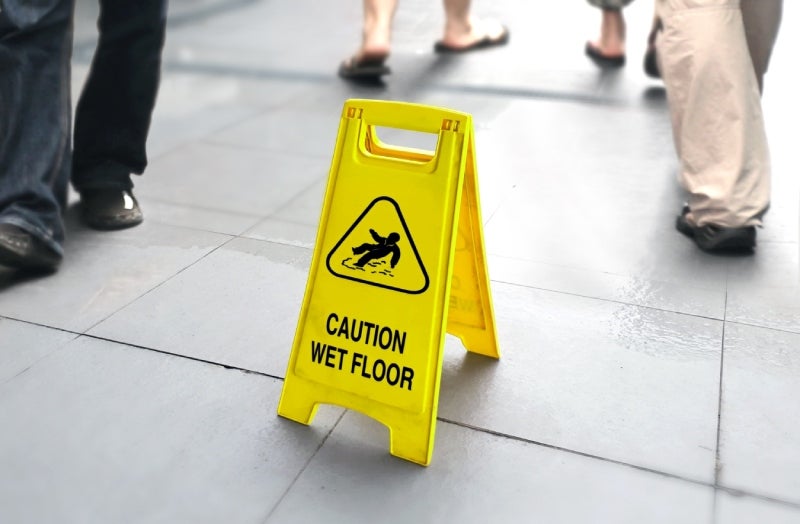
It’s been a little over a month since we last wrote about construction accidents. In our November 1 post, we took note of evidence that immigrant workers tend to be affected at disproportionate rates by fatal workplace accidents. Though the evidence was from the New York City area, the issue it calls attention to broadly affects workers in the Baltimore area and across the nation. In today’s post, let’s look close to home again and discuss a recent fatal construction accident in Maryland. The accident occurred in Silver Spring on Thanksgiving morning. A 56-year-old worker died at a construction job site after a fall. A police officer with knowledge of the accident scene said that the accident seemed to be freakish one. The construction worker apparently slipped on an ice patch on the floor and fell. A hard hat was later found near his body, but the worker apparently hit his head in the fall. Sadly, the blow proved to be fatal. The man who died was a carpenter and the job involved working on some unfinished townhomes. Even though a police officer described the accident as freakish, the case is still a stark reminder of how dangerous construction work can be. That is why we continue to follow the issue of construction accidents so closely in this blog. As we pointed out in our September 20 post, there is often a serious lack of compliance with fall protection standards on residential construction sites. This is the case despite the fact that nearly two-thirds of fatal accidents on these sites are from falls. Source: WJLA, “ Silver Spring fatal construction accident on Thanksgiving,” Kris Van Cleave, Nov. 28, 2013

Digital tools and workplace accident prevention, part 2

Digital tools and workplace accident prevention, part 2

In the first part of this post, we raised the question of how the application of enhanced technology could make for a safer and smarter workplace. The types of applications we are talking about go far beyond traditional tools like personal protective equipment. These new applications could conceivably integrate data streams and human perceptions in a way that would make the workplace safer. In this part of the post, we will look at a specific example of how this might be able to reduce the number of workplace injuries in the Baltimore area and across the nation. Last year, a suspicious noise in a steel mill’s oxygen furnace in Northwest Indiana needed to be checked out. The job fell to a 53-year-old man who died from terrible burns caused by the busting of a steam hose that had been under excessive pressure. In a smarter mill of the future, it would probably not be necessary to send a human worker as a canary into that kind of coal mine. Instead, pipes and other equipment could be fitted with sensors that could communicate key safety information to workers. In a sophisticated system of safety sensors, workers would be less likely to be blindsided by dangerous conditions. Instead, the system could even potentially communicate alerts of dangerous conditions. There is also the possibility that wearable technological tools could help humans interact with new streams of real-time data. This doesn’t mean every worker would be Iron Man, the comic book hero with a suit of armor connected to an interactive computer. What it means, in simple terms, is that technology holds out the hope of much safer workplaces in the future compared to today. Source: Wired, “ Forget the Smart City . . . Start With the Smart Workplace,” Chris Chasty, Nov. 1, 2013

Digital tools and workplace accident prevention, part 1

Digital tools and workplace accident prevention, part 1

The technological revolution we are living through now has already transformed the way millions of people communicate and conduct many aspects of their daily lives. After all, the fabulous capacities of smartphones would have been the stuff of science fiction not that long ago. But when a worker enters a typical industrial setting, the same old dangers of fires, falls and explosions await. In this post, we will discuss some of what technology may have to offer in preventing workplace accidents and injuries in the Baltimore area and across the nation. To be sure, technology cannot cure all illnesses or prevent all accidents. But it is possible that one of the next waves of the digital revolution will be improved use of technology to promote workplace safety. Consider, for example, personal protective equipment (PPE) such as goggles, helmets and clothing that can shield a worker from some forms of harm on the job. There is no question that PPE is useful in guarding workers against many types of workplace injuries. But what if instead of traditional goggles, a worker were wearing goggles equipped with Google Glass, the emerging wearable computer? In an environment known to be hazardous, the enhanced awareness of dangers provided by the computer could help a worker detect chemical spills, fires or other dangers sooner. Such a worker would conceivably be better able to take protective action. We’re not suggesting that every industrial worker should be fitted with a cyborg suit, like the character played by Matt Damon in the film “Elysium.” What we’re saying is that there are surely ways that the smart-data revolution can be applied to the creation of smarter, safer workplaces. Source: Wired, “ Forget the Smart City. . . Start With the Smart Workplace,” Chris Chasty, Nov. 1, 2013

Fatal construction accidents: are immigrants more at risk?

Fatal construction accidents: are immigrants more at risk?

Issues relating to the eligibility for workers’ compensation of construction employees who are injured in on-the-job accidents are one of the themes of this blog. In our September 20 post, for example, we discussed the lag in compliance with fall protection standards among many construction employers. Scaffolding collapses are also a significant source of danger for construction workers. Such collapses can lead to fatal accidents, as can falls from heights and other conditions. Because construction is such dangerous work, all construction workers are at risk of fatal construction accidents. But does the risk tend to be higher for immigrant workers and U.S.-born Hispanics than for other workers? In this post, we will discuss that issue. Of course, the percentage of construction workers who are immigrants varies from place to place around the country. Immigration and employment patterns in the Baltimore area are part of a larger national data set. But is it true that an elevated death rate for construction workers may be closely connected to immigration status? This appears to be the case in at least one area of the country. Consider the data from New York City. The federal Occupational Safety and Health Administration (OSHA) was the source of data for a recent analysis of fatal falls in the New York City area from 2003 to 2011. The analysis, conducted by a nonprofit group called the Center for Popular Democracy, found that nearly three-fourths (74 percent) of fatal construction falls in the New York City area involved either immigrants or U.S.-born Latino workers. The next question, of course, is why immigrant workers were so disproportionately affected by fatal workplace accidents. It may be that immigrant workers are more likely to work for smaller contractors who fail to maintain adequate workplace protections. Clearly, however, lack of attention to safety protections comes at great cost in loss of life. Source: Safety + Health, “” New York construction death rates highest among Latinos; immigrants: report,” Oct. 30, 2013

Athletes and workers’ comp: California changes its law

Athletes and workers’ comp: California changes its law

Workers’ compensation systems operate at the state level. A partial federal government shutdown certainly provides a suitable occasion for a reminder of this. A state-based system means that Maryland has its own system for distributing compensation to workers injured on the job. Other states have their own systems as well. In this post, let’s look at how budget problems and political dynamics in a given state can influence specific aspects of the state’s workers’ compensation system. More specifically, we will discuss the new law in California this week limiting workers’ compensation claims by out-of-state professional athletes who were injured in California. The bill was the product of an intensive lobbying campaign by major sports leagues, particularly the National Football League (NFL). The NFL recently settled a lawsuit brought by former players who suffered serious head injuries while playing in the league. That suit, however, was in some ways the tip of a head-injury iceberg. Every day, evidence mounts about the serious health consequences of concussions and other serious head injuries.And in the last seven years, more than 3,400 people who were injured playing in the NFL have filed for workers’ comp in California, citing brain injuries or other neurological disorders. Of course, football isn’t the only sport where head injuries can occur. Major league baseball was also a strong supporter of the California workers’ comp limitation. So were other pro sports leagues, as well as insurance companies who provide workers’ compensation insurance to employers. For our purposes, the significance of California’s law is not merely that a Baltimore Ravens player who was injured in California will be prevented from seeking workers’ compensation there. The point is that workers’ comp laws vary by state. And their terms and conditions can sometimes reflect political pressures. Source: Los Angeles Times, “ California limits workers’ comp sports injury claims,” Ken Bensinger and Marc Lifsher, Oct. 8, 2013

Serious safety violations cause fatal forklift accident

Serious safety violations cause fatal forklift accident

It’s been awhile since we last wrote about forklift injuries. In our March 1 post, we discussed the issue of safety training and how the lack of it can cause workers to be injured in forklift accidents. This week, let’s look at a fatal accident that recently occured in another state in which a worker was struck and killed by a forklift. The accident occurred in New York, not Maryland. But given how commonly used forklifts are in warehouse and industrial settings, forklift accidents care common occurrences in Maryland and across the country as well. The workplace where the acciddent occurred was a pipe-producing plant. A truck driver who worked for another company was picking up a load. A forklift driver ran into the truck driver and the truck driver was killed. The Occupational Safety and Health Administration (OSHA) investigated the accident. OSHA found that the pipe-producing plant, National Pipe, had committed 16 serious safety violations. As defined by OSHA, a serious violation is a violation in which the employer knows or should know that there is a “substantial probability” of a hazard causing death or physical harm. In this case, two of the serious violations related directly to the fatal accident. OSHA inspectors found that the backup alarm on the forklift hadn’t been working. In addition, the forklift driver at National Pipe lacked a clear view of where he was backing. Inspectors found other safety violations as well at the manufacturing plant. OSHA has proposed penalties in the amount of $67,000 — an amount that is obviously a pittance compared to the loss of a human life. Source: WBNG, ” OSHA cites National Pipe and Plastics following fatal accident,” Candace Chapman, September 30, 2013

Super Pond, serious safety violations: OSHA’s investigation

Super Pond, serious safety violations: OSHA’s investigation

Military facilities in Maryland and other states are by no means immune from laws that regulate workplace safety. And so when a civilian technician died at the Aberdeen Test Center while conducting routine maintenance, the federal Occupational Safety and Health Investigation (OSHA) began an investigation. The civilian technician died in the so-called “Super Pond” at the Aberdeen Test Center. Super Pond is the popular name for the area formally called the Underwater Explosion Test Facility. It is used to test various underwater systems, and this involves sending divers down into the pond. The death of the civilian technician that OSHA was investigating occurred in the pond on January 30. Within a month, two other people – this time sailors – had drowned there. In this post, we will look at the findings from OSHA’s investigation. OSHA found several serious safety violations at the Super Pond – a total of seven in all. The violations included: Failure to provide proper training for divers Permitting dives without a standby diver Insufficient supervision of dives Though the Super Pond is a very specialized facility, the similarity of these violations to those that occur in more common work settings is unmistakable. Failure to train employees, after all, is one of the most frequent sources of workplace safety violations.  Similarly, insufficient supervision can happen in all sorts of workplaces. But under OSHA regulations, serious safety violations are defined to be those that go beyond employer negligence. Serious violations involve conscious choices by employers causing conditions in which serious injury or death is a “substantial probability.” “Substantial probability” does not necessarily mean workplace injury or death is more likely than not. It means, rather, an undue risk of those occurrences. Source: Army Times, “Army not contesting violations in civilian diver’s death,” August 28, 2013

Personal protective equipment and electrical safety at the USPS

Personal protective equipment and electrical safety at the USPS

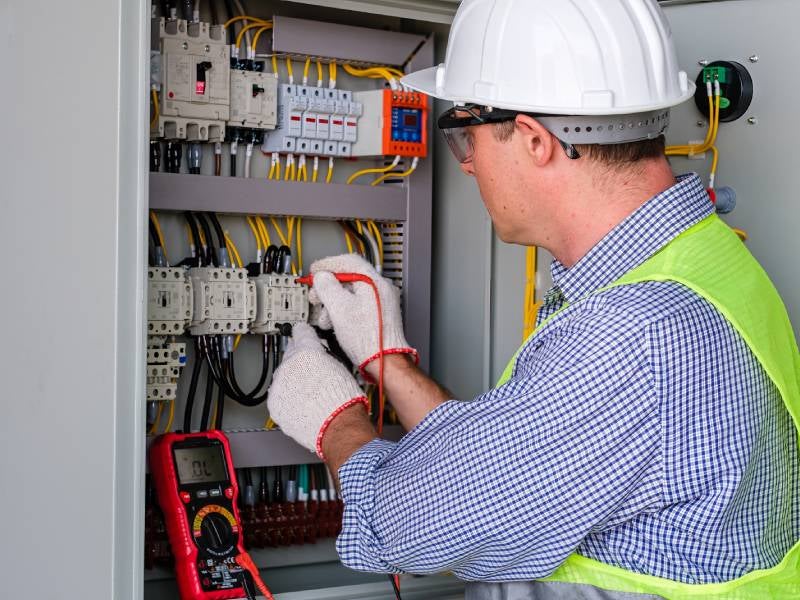
Personal protective equipment (PPE) is an essential part of many workplace environments. Federal law imposes duties on employers to take certain steps to make sure employees have what they need. In the Baltimore area and across the nation, this begins with conducting hazard assessments. Once hazards are identified, employers must also provide any necessary PPE and train employees in how to use it. Sometimes, however, employers fail to live up to their duties to adequately protect employees. One of those employers is the United States Postal Service (USPS). Federal safety regulators have cited the USPS for serious electrical safety violations. The Occupational Safety and Health Administration (OSHA) has proposed $6 million in fines for these violations. Obviously that is a lot of money, especially for an entity like the USPS that has had such financial struggles. But financial struggles do not excuse workplace safety violations. Employees who are harmed by these violations may be eligible for workers’ compensation and other remedies. But the goals of workplace safety laws are not merely to compensate workers for injuries, but also to prevent such injuries wherever reasonably possible. So what types of PPE must the USPS make sure to provide its employees in order to bring electrical safety standards into compliance? The equipment to be provided includes such items as gloves with electrical protection. Under an agreement with the postal workers union and OSHA, the USPS is also required to retrain employees who do electrical work. The USPS must also relabel electrical equipment with appropriate safety warnings and take other steps to ensure improved electrical safety. Source: Workplace Safety News, “ Postal Service improving electrical safety; should you do the same?” July 11, 2013

Contact Us

Fill out this form below and we'll contact you shortly
*Required Fields