Blog

All Workers' Compensation Car Accidents Workplace Accidents Workplace Injuries Construction Workers' Accidents Medical Malpractice Industrial Workers' Injuries Product Liability Personal Injury Truck Accidents Firm News Wrongful Death Uncategorized
Maryland workers’ compensation: injury from physical altercation

Maryland workers’ compensation: injury from physical altercation

Here at Cohen, Snyder & Eisenberg, P.A., we fight for the workers’ compensation rights of injured workers. As we say on our website, while you do not need to hire a lawyer to pursue your workers’ compensation claim, it can be of great benefit. Maryland workers’ compensation law is complicated and an injured or sick employee may not understand that a denial of benefits may be wrong or that a complex legal issue may be involved. Willful misconduct and physical altercations Business Insurance recently published an article about workers’ compensation claims involving injuries from physical fights in the workplace. Maryland is one of the states discussed. The author cites a Maryland case involving a school bus driver injured by a physical attack by another employee that occurred after an earlier verbal disagreement in the break room, the details of which were disputed. In the 2005 Court of Special Appeals of Maryland case of Board of Education of Montgomery County v. Spradlin, the court looked at (in addition to several confusing procedural issues) relevant provisions of Maryland law that can apply when a claimant is injured in an altercation with a co-employee: Maryland law provides that a covered accidental personal injury includes an injury “caused by a willful or negligent act of a third person directed against a covered employee in the course of the employment.” The court said that a coworker could be such a third person, potentially in the context of a physical altercation. An issue can arise as to whether an assault or fight occurred “in the course of the employment.” In Spradlin, the court agreed that the claimant was in the course of employment when she was assaulted while boarding the school bus she was going to drive to pick up children. Maryland statute also provides a defense to an employer when an injury was the result of the claimant’s “willful misconduct,” which disallows benefits. The employer normally has the burden to prove this defense. The court agreed with an earlier finding that the employer did not establish that any willful misconduct of the claimant caused the fight that caused the injury, where the details of the earlier verbal exchange were in dispute. Anyone with an injury from a work-related assault should speak with a lawyer as soon as possible. The legal and factual issues are likely to be complex and disputed.
Personal injury verdict may not prevent wrongful death suit

Personal injury verdict may not prevent wrongful death suit

At Cohen, Snyder & Eisenberg, P.A., we represent people in Maryland injured by the negligent, reckless or aggressive actions of others in personal injury and medical malpractice lawsuits. We also help the surviving relatives of victims who die because of these kinds of injuries bring wrongful death claims. Wrongful death an independent, new claim Last year, the Court of Appeals of Maryland, our state’s highest court, handed down an important opinion about whether surviving loved ones can file a wrongful death lawsuit after their family member dies if the victim had already recovered damages in a personal injury suit during his or her lifetime for the same injury. The court held that the personal injury judgment does not necessarily preclude the later wrongful death suit, emphasizing that in Maryland, the wrongful death claim is considered an independent and new cause of action that is not normally prevented by the earlier personal injury judgment (with some exception). The medical malpractice lawsuit The case was Spangler v. McQuitty, a complex case that grew out of a medical malpractice lawsuit for a birth injury. The parents filed suit against the obstetrician, his medical practice (and others who settled) for not getting proper informed consent from the mother for the treatment given, allegedly resulting in a condition that caused severe injury to the child at birth, culminating in cerebral palsy. A jury awarded more than $13 million in damages, which was eventually reduced to just over $5 million. During the legal proceedings, the child died from his injuries and the parents were substituted as plaintiffs in their capacity as personal representatives of the child’s estate. The wrongful death claim After the damages were paid, the parents filed a wrongful death suit based on the same injuries that eventually caused death. The case eventually ended up at the Maryland high court, which held that: The state wrongful death statute establishes the right to a new, independent suit that is not precluded by the original personal injury suit, a minority view among the states. The personal injury suit was brought by the victim for his damages during life, while the wrongful death suit was by his survivors for their losses from the death. This is a broad overview of a very detailed opinion. Anyone with questions about a wrongful death should seek legal advice from an experienced attorney as soon as possible.

State employees: Workers’ Comp offset against similar benefits

State employees: Workers’ Comp offset against similar benefits

At Cohen, Snyder & Eisenberg, P.A., we represent employees in Workers’ Compensation claims when they are injured or become ill in the course of employment. We advocate for both private employees and public employees, like those who work in law enforcement, for government agencies and departments, as firefighters and others. The offset issue Maryland state, County and Municipal employees face a complex legal issue when they are awarded Workers’ Compensation like permanent partial disability benefits or permanent total disability benefits and simultaneously a second kind of benefit payment related to their government jobs. For example, an employee could get Workers’ Compensation benefits and also public pension or disability benefits based on his or her state employment status. If the two kinds of benefits are “similar,” the employee cannot collect the full amount of both. Rather, the non-Workers’ Compensation benefit is paid first, setting off (eliminating) that part of the Workers’ Compensation payment up to the amount of the other benefit amount. If the Workers’ Compensation payment is higher than the other payment, the employee is still entitled to that part of the Workers’ Comp payment that is in excess of the other payment. The setoff issue is complicated – there are certain exceptions and application of the law in individual situations can be difficult. For this reason, it is smart to consult an attorney about whether the offset is being appropriately applied. The offset provision was passed because the legislature did not want state employees to be compensated twice by public funds for the same injury. A February 2017 case shows that this has been broadly interpreted by Maryland courts. A recent example In Zakwieia v. Baltimore County, Board of Education, the Court of Special Appeals of Maryland said that for purposes of the setoff provision, the ordinary disability retirement benefits awarded to a Board of Ed. employee by the State Retirement Agency were “similar benefits” to the permanent partial disability Workers’ Compensation benefits she received. The claimant was awarded Workers’ Compensation for a work-related back injury. She was also approved to receive ordinary disability retirement benefits related in part to a pre-existing back problem. The court found that whether the benefits are “similar” is based on the “nature of the benefit” not the “nature of the underlying injury” or particular “medical condition.” Both benefits were for “physical incapacity” broadly – her “inability to work caused by her disability,” so the setoff applied.

Common anesthesia mistakes and errors

Common anesthesia mistakes and errors

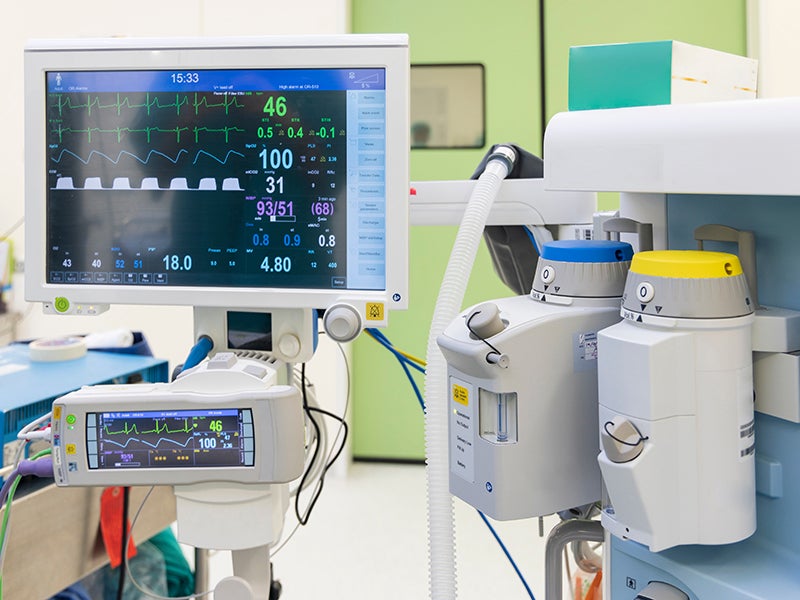
Anesthesia is an important part of the medical industry. It is used to sedate patients prior to a procedure or a surgery. It helps the patient’s body relax and calm down and the patient to sleep during the procedure. When anesthesia is incorrectly administered, or not administered at all, it could be the sign of medical malpractice in Maryland. One of the most common mistakes made with anesthesia occurs when improper training or experience is involved. Believe it or not, there are many technicians out there who do not receive the proper training for administering anesthesia. Many of these people receive on the job training that is not adequate enough to ensure that patients will not be harmed during their procedures or surgeries. Poor communication can also lead to anesthesia errors or mistakes in a doctor’s office or hospital. Poor communication occurs when an anesthesiologist does not receive clear instructions from a doctor or a nurse about what needs to be administered to a patient. It can also happen when personalities clash, leading to the anesthesiologist ignoring orders or even failing to hear what he or she is being told. Poor communication could also cause the anesthesiologist to miss the description of the patient, such as his or her weight and history with anesthesia. Many anesthesia errors occur when the anesthesiologist fails to read the patient’s chart or other medical paperwork. A patient’s chart includes important information that can prevent an allergic reaction or other medical condition from occurring. It lists medications that cannot be administered. It could also note if a patient should not be administered anesthesia because if he or she does receive it, it could cause a stroke or a heart attack. If you or a loved one has been injured by the medical malpractice of a doctor or nurse involving anesthesia, contact our firm in Baltimore, Maryland, to speak about your case and how you can obtain compensation for injuries incurred.

Steps to take following toxic exposure at work

Steps to take following toxic exposure at work

Working in a profession where toxic exposure is a possibility means that you must take extra precaution to protect yourself at all times. You don’t want to suffer toxic exposure when on the job, but sometimes even the most careful employees suffer such an injury. When this happens, you will want to be prepared for the exposure and how to care for it. The first thing you should do following toxic exposure in the workplace is seek medical assistance. Activate the emergency response procedure put in place by your company when toxic exposure occurs. This might include isolating yourself from other coworkers in an effort not to expose them to the same chemicals. This could mean waiting for a hazmat team to arrive that is also trained in first aid. Document exactly what happened that led to the incident and the steps you took immediately following. Never admit fault when documenting the accident. This could come back to hurt you should you pursue compensation for injuries suffered while on the job. Seek outside medical help as well. This can be done by seeing your family doctor after being released from the hospital or having the doctor visit you in the hospital. An independent medical evaluation can only help your case in the end. If there were coworkers with you when the toxic exposure occurred, be sure to have them provide statements to investigators about what happened. Their witness testimony could help your case. Collect records of everything that has happened since the accident. This includes any report issued by your employer, an investigative authority, your medical team and even law enforcement. If a team from the Occupational Safety and Health Administration (OSHA) was called for an investigation, acquire their report too. If you or a loved one has been injured in a toxic exposure at work, contact our firm in Baltimore, Maryland, to have all of your questions answered. We can guide you through a workers’ compensation case and advise how you can acquire compensation for your injuries.

What are the most common causes of forklift accidents?

What are the most common causes of forklift accidents?

Forklifts are used in a number of industries to improve efficiency and ensure that particular jobs are completed in a timely and accurate manner. Unfortunately, there are times when the use of a forklift leads to a serious accident that results in injury or even death. Here are some of the most common causes of forklift accidents: — Poor training. A poorly trained forklift driver may not know what he or she is doing in regards to safety and how to use the vehicle in a safe manner. — Speeding. It’s common for a forklift driver to be in a hurry, thus driving at a high rate of speed. This increases the likelihood of an accident. — Driving a forklift with an elevated load. It’s best to keep a load as low as possible, typically four inches from the floor, when the forklift is in motion. — Riding on a forklift. The operator should be the only person riding on the forklift. There is never a good time to transport a worker. — Design of the workplace. If a forklift will be in use, it’s important that the workplace is designed for this to happen in a safe manner. These are just a few of the most common causes of forklift accidents. If you find yourself injured in this type of accident, don’t wait to receive medical treatment. You should also report the accident and your injuries to your employer. Taking these steps will make it easier to file a claim for workers’ compensation benefits, thus allowing you to take the time you need to recover. Source: National Forklift Exchange, “ 7 Most Common Causes of Lift Truck Accidents,” accessed June 09, 2017

Construction site debris can cause an accident

Construction site debris can cause an accident

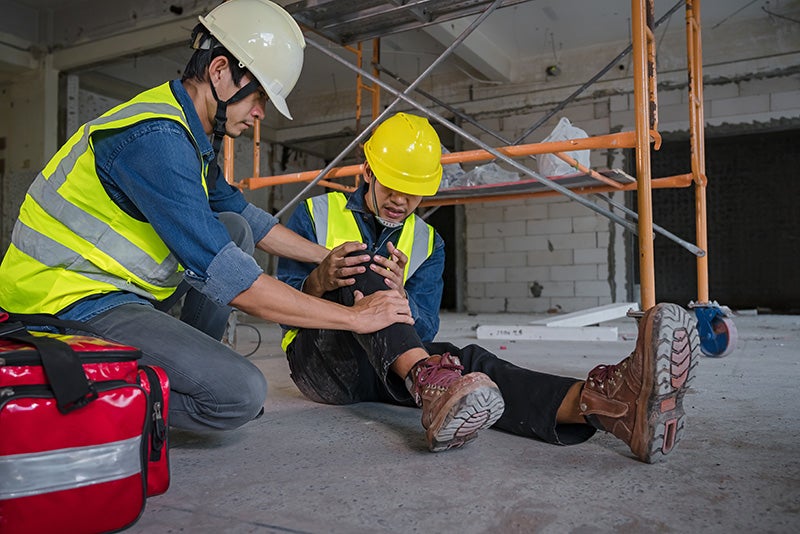
Do you work in the construction industry? Do you find yourself on construction sites almost every day of the week? If so, you know just how important it is for the site to remain as clean and organized as possible. Even though workers attempt to avoid clutter and debris, there are times when this becomes a problem. From tools to building materials, debris is often scattered from one side of the job site to the next. It may not sound like a big deal, but scattered debris or falling debris can cause a serious accident. Not only can this lead to the injury of a construction worker, but it could also result in a fatality. At our law firm, we assist people who have been injured by construction site debris. An example of this would be roofing shingles that are dropped on a person from above. When this happens, the victim is faced with a variety of challenges, including medical concerns and the potential of missing a lot of time at work. If you are injured on a construction site, don’t hesitate to take three key steps: — Report the accident to your employer — Receive medical attention — File a claim for workers’ compensation benefits Although your health should always be top priority, there will come a time when you also want to learn more about your legal rights. Since you may not be able to return to work right away, you should file a workers’ compensation claim. This allows you to receive payments until you are able to return to your job.

Operation Showboat to target aggressive and distracted drivers

Operation Showboat to target aggressive and distracted drivers

With Memorial Day weekend quickly approaching, the deputy secretary of the Maryland Department of Transportation (MDOT) says that travelers around the state need to expect massive amounts of travelers when they hit the roads. According to AAA Mid-Atlantic, 834,000 residents of Maryland will travel this upcoming holiday weekend. That’s an increase of 2.3 percent from last year and the highest number for Memorial Day weekend since 2005. About 250,000 people are expected to hit the town of Ocean City, according to its mayor. He said the weather looks good this weekend, and advance reservations are strong. The deputy secretary of MDOT says that patience is of utmost importance this weekend. Tailgating, he said, is the main reason for motor vehicle accidents on the bay bridge. Operation Showboat is the Maryland State Police’s name for their increased presence on the roadways this week and into the weekend. They are targeting distracted and aggressive drivers. In addition, speeding is high on their list of offenses to watch for while on patrol. Routes 301, 50 and 13 are areas where enforcement will be high. Work zones should also be areas where drivers are paying close attention to what is going on around them. There are more than 900 road construction projects in effect right now. That is largest in the history of the state. All road work that is considered non-emergency will be suspended this weekend. However, there will still be construction workers performing their hazardous duties in the remaining projects. If you are on a road construction crew and are injured due to a driver’s aggressive, distracted or intoxicated behavior, you have a right to seek compensation through workers’ compensation. An experienced attorney can provide more information about how to file a claim or approach a denied claim with an appeal. Source: wmdt.com, “ Increased Md. travel volume mirrors nat’l trend for holiday weekend,” accessed May 24, 2017

Teen drivers: Safest state for driving is Maryland

Teen drivers: Safest state for driving is Maryland

Parents of teenagers in Maryland may breathe a bit easier since Carinsurance.com released information stating that Maryland is the safest state for teens drivers. Teen drivers have a high risk of being involved in car crashes. Teens — just like adults — drive distracted, under the influence or while fatigued. These are common reasons for crashes involving teenagers. There is another reason why they are often involved in motor vehicle accidents, including inexperience.The Carinsurance.com study looked at at Maryland’s car crash statistics, along with practice time, the graduated license program and law enforcement. That is what helped Maryland come out on top as the safety state for teen drivers. According to a spokesperson with the Maryland Department of Transportation Motor Vehicle Administration, “We won’t be satisfied until we have zero young driver fatalities, and that’s truly our goal in Maryland.” Teens must follow the rules for the “Rookie Driver” program developed by the MVA. The program awards teens driving eligibility in different stages. They must complete requirements for a learner’s permit and training. Then they must take a skills test. The whole process is said to be stricter than those found in other parts of the U.S. More than 500 people were killed on the state’s roads last year. Twenty-one of those fatalities were teenagers. If your teenage son or daughter has been injured in an accident that wasn’t his or her fault, you may be able to seek compensation for medical expenses, pain and suffering, emotional distress and more. An experienced attorney can help you learn more about your legal options. Source: CBS Baltimore, “ Maryland Named Safest State In The U.S. For Teen Drivers,” Amy Yensi, May 08, 2017

How can you prevent accidents at work?

How can you prevent accidents at work?

Workplace safety is an important part of keeping employees healthy. As a new employee, it’s your employer’s job to make sure you understand the best ways to stay safe in the workplace, whether that is through training you to work with machinery or tools or by providing you with informational pamphlets on acceptable behavior in the office. No accident can be avoided all of the time, but that doesn’t mean that you shouldn’t work to prevent incidents at work. According to the National Council for Occupational Safety and Health, around 4,585 people were killed in 2013 due to work-related accidents. That doesn’t even begin to factor in the number of people who suffered debilitating injuries. So what can you do to help prevent accidents? First, keep yourself safe. Don’t be afraid to mention a hazard or issue that is making it more dangerous for you to be in the workplace. If your employer has you working with machinery or vehicles, make sure those items are maintained. Check for maintenance records, and recommend maintenance if it’s been several months or years since the last check. Usually, it’s a good idea to do visual maintenance each time you use a tool, vehicle or piece of machinery. Finally, your employer should always have proper signage posted around the workplace. It should have information on what to do if you’re exposed to hazards and the steps to take if you need to file a workers’ compensation claim after an injury. Your attorney can help you if you are struggling to file a claim or if your employer doesn’t have workers’ compensation insurance. You have the right to compensation for your injuries. Source: Business.com, “ Workplace Accidents: How to Avoid Them and What to Do When They Happen,” Simon Brisk, accessed March 03, 2017

Does stress increase risk for a workplace accident?

Does stress increase risk for a workplace accident?

Stressful situations often mean that the people involved in them aren’t able to keep their minds on what they are doing. Whether you’re dealing with stress that comes from a family or personal financial situation or the workplace itself is stressful, if your mind is occupied, it stands to reason that you are more likely to make an error. Errors on the job can lead to workplace accidents — that’s true for everyone on the team. A study published by the U.S. Library of Medicine and National Institutes of Health says that this conclusion isn’t just common sense. After reviewing the results of surveys to over 60,000 participants at 58 different companies, researchers were able to conclude that mental distress was a factor in the risk for a workplace accident. In fact, either moderate or high levels of psychological stress increased the odds ratio that an injury might occur by a factor of 1.4. The researchers also noted that moderate levels of psychological distress were a bigger impact on workplace safety than higher levels of distress simply because they were more predominate. First, situations that cause moderate stress occur more often; second, workers who experience a high level of psychological distress are more likely to recognize they aren’t functioning fully and might call in sick or take other action to reduce the risks of accidents. The link between stress and workplace injuries is important to understand. It lets employers better train and safeguard staff, and it lets workers know when they should back away from certain tasks. Regardless of the mental or psychological stresses involved, though, if you are hurt in an on-the-job injury, you do have options for seeking compensation through workers compensation. Source: US National Library of Medicine, “ Associations between psychological distress, workplace accidents, workplace failures and workplace successes,” M.F. Hilton and H.A. Whiteford, accessed March 01, 2017

The intricacies of pro athletes’ sports injury coverage

The intricacies of pro athletes’ sports injury coverage

Have you ever wondered about the compensation professional athletes like baseball players get when they suffer career-limiting injuries? Many will be surprised to learn that pro sports teams must provide workers’ compensation coverage to their players just like other employers. There is one caveat, however. Collective bargaining agreements like the ones in place for Major League Baseball players can override the protections offered under workers’ compensation benefits. The collective bargaining agreement of the MLB requires the pro team to foot the bills under most circumstances for treatment of players injured while training for or playing professional baseball. As such, the players still draw their high salaries while on the injured list, so they don’t need those temporary disability payments provided by workers’ compensation benefits. However, the MLB teams that are picking up the tab for injured players’ short-term disability and medical costs can recover the equivalent amount of WC monies that players would otherwise have received for on-the-job injuries. Prior to 2003, league teams had to secure their WC insurance. In that year, the league set up its own group insurance policy for all teams in the league and its franchises. Doing so nearly halved the collective WC exposure of the MLB. But despite this change and the CBA in place for the MLB, those players suffering from injuries that wind up ending their professional sports careers can still turn to workers’ compensation for long-term disability benefits. Most injured workers will never need to deal with the special agreements that are in place for professional athletes. They must rely on the provisions and coverage of the workers’ compensation system. If you were injured on the job and are getting the runaround from your employer about workers’ compensation benefits, a Baltimore workers’ comp attorney can provide advice and guidance. Source: fangraphs.com, “ Major League Baseball and Workers’ Comp,” Nathaniel Grow, Feb. 08, 2017

Contact Us

Fill out this form below and we'll contact you shortly
*Required Fields