Blog

All Workers' Compensation Car Accidents Workplace Accidents Workplace Injuries Construction Workers' Accidents Medical Malpractice Industrial Workers' Injuries Product Liability Personal Injury Truck Accidents Firm News Wrongful Death Uncategorized
What is the most dangerous intersection in Maryland?

What is the most dangerous intersection in Maryland?

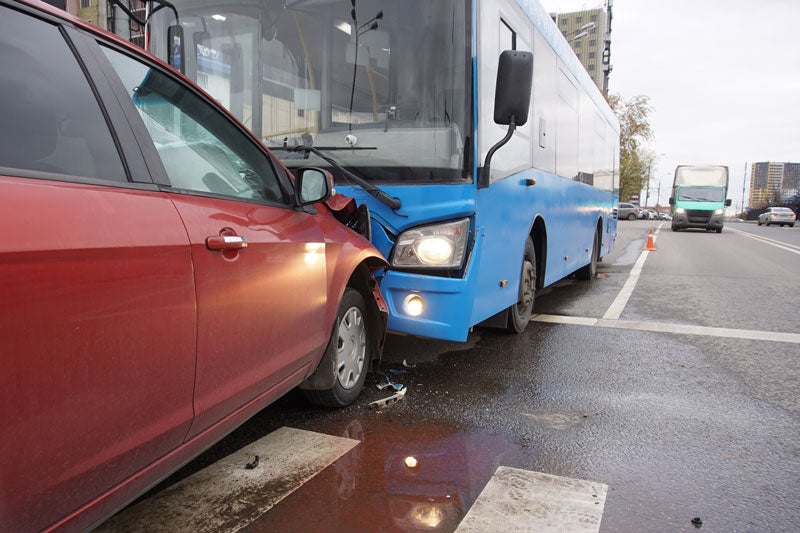
Based on a federal study, Time magazine says it is where Gwynns Falls Parkway and Reisterstown Road cross in Baltimore, according to Baltimore Patch. The second-most dangerous is in close proximity too, just outside of Philadelphia. Precarious by nature Of course, intersections increase the risk of motor vehicle collisions. When two or more roads cross, drivers need to use additional skills to stay safe. Whether the crossing is controlled by lights, or by stop or yield signs, or by traffic rules that kick in if the intersection is uncontrolled, drivers need to understand and follow these control mechanisms. Add to the need for a driver’s higher level thinking the possibility of pedestrians, bicycles or motorcycles and you have the potential for confusion. The Federal Highway Administration or FHA, part of the U.S. Department of Transportation or DOT, calls intersections “planned points of conflict” that naturally present safety concerns. Intersection accidents are common too, with the agency attributing about one-quarter of all traffic deaths and about half of traffic injuries to intersection involvement. In particular, the agency points to the safety problems created by increased “user delay and frustration” growing from intersection congestion during high traffic times, causing traffic “inefficiency.” In every driving situation, however, no matter how stressful, drivers are required to drive with reasonable care and in compliance with traffic laws. When driving behavior is negligent, aggressive or reckless, causing an accident that results in injury or death, the driver would be liable to the injured party or to his or her survivors in case of death in a personal injury or wrongful death lawsuit. Examples of dangerous driver choices at intersections include: Failure to yield to pedestrians Unsafe left turns Running red lights Missing or ignoring stop signs Inadequate visual monitoring of the scene Speeding or driving too fast for the traffic or weather conditions Talk to a lawyer Anyone in Maryland involved in an intersection collision should speak as soon as possible with an attorney. Legal counsel will start an investigation of the matter as quickly as possible while evidence is preserved and witness memories fresh. The lawyer will bring in an expert accident reconstructionist due to the increased complexity of an intersection crash.

Possible suicide of Baltimore police could prevent death benefits

Possible suicide of Baltimore police could prevent death benefits

Last month, a veteran 43-year-old Baltimore police detective died after having been shot with his own official police weapon while investigating a triple homicide in the Harlem Park neighborhood. With 18 years of service behind him, the officer is survived by his wife and five children, according to The Baltimore Sun. Death benefits Normally, under Maryland law, dependent survivors of someone whose death arises out of and in the course of employment are eligible for Workers’ Compensation death benefits, including ongoing cash payments and funeral costs. Self-harm In general, Workers’ Compensation benefits are not available if the injury or death was caused by “an intentional, self-inflected accidental personal injury …” Unfortunately, this would mean that death benefits would not be available to survivors if their loved one died by specific intent to commit suicide. The law also provides that in a proceeding on a Workers’ Compensation claim, unless there is “substantial evidence to the contrary,” the analysis begins with a presumption that the injury or disease (or resulting death) was not intentionally caused by the employee him or herself. Investigation still open The Sun reports that in the case of the detective, it has not been determined yet whether the death was self-inflicted, caused by another person or even accidental. Investigators have not named any suspects as of yet. The police commissioner requested that the FBI assume responsibility for the investigation, but the agency’s response is unknown. The newspaper cites the commissioner as saying there was a “violent struggle” before the shooting and that although there is no evidence of suicide, it has not been ruled out. The coroner, however, did name homicide as the cause of death. The deceased officer was apparently about to testify before a grand jury about alleged police corruption. Seek legal advice The community will await the resolution of this tragic case, but in the meantime, anyone in Maryland who is facing a potential question of whether a work-related injury, disease or death was self-inflected in a Workers’ Compensation claim should consult an attorney as soon as possible. These cases are factually specific and potentially complex, so the guidance and efforts of legal counsel can be particularly important.

Maryland wrongful death suits in fatal accident cases

Maryland wrongful death suits in fatal accident cases

Despite public campaigns promoting safer driving, terrible accidents happen far too often in Maryland, taking lives and leaving behind devastated loved ones. A quick look at recent Maryland media reveals: In October, a three-car accident in Westminster involving a vehicle going at least 100 mph caused three people’s deaths, including a pregnant woman, plus the death of the speeding driver. This summer, a car reportedly driving the wrong direction on a highway near Fort Washington caused a head-on collision, killing both drivers. In Cecil County in July, a car trying to cross a highway struck a motorcycle, killing its Delaware operator. Wrongful death lawsuits Anyone in Maryland who loses a spouse or relative in this way should speak with a lawyer as soon as possible. The state wrongful death statute allows a lawsuit against anyone causing the death of another through a “wrongful act.” If the wrongdoer also dies before the wrongful death suit is filed, the plaintiff may instead sue the personal representative of the wrongdoer’s estate. A wrongful act for purposes of wrongful death is an “act, neglect, or default,” including a “felonious act” that could have supported a lawsuit for damages if the wrongdoer had not died. With some exception, a wrongful death action may be filed by a spouse, child or parent. If none of these relatives are eligible to file, anyone related by marriage or blood can bring the suit if the person was “substantially dependent” on the deceased. A successful wrongful death plaintiff can get damages for pecuniary losses, meaning for things that can be financially measured. For example, if the decedent was paying rent for an elderly parent, that loss could be measured in dollars. Damages are also allowed for noneconomic damages like those for “mental anguish, emotional pain and suffering, loss of society, companionship, comfort, protection, marital care, prenatal care, filial care, attention, advice, counsel, training, guidance, or education …” Some of these require that certain conditions be met. In most situations, the wrongful death lawsuit must be brought within three years of death, with different deadlines applying in situations involving death from occupational disease or by homicide. Survival action Another potential remedy could be a suit by the deceased person’s personal representative of his or her estate on behalf of the deceased for damages for the harm inflicted while alive that led to death, including funeral expenses.

Maryland Workers’ Compensation: Statutory employers

Maryland Workers’ Compensation: Statutory employers

We represent injured Maryland construction workers in their Workers’ Compensation claims and in third-party lawsuits, where appropriate. Last month, the Court of Special Appeals of Maryland decided an unpublished case that sheds light on issues that can arise in construction injury claims involving subcontractor employees. Exclusive remedy The premise of the Workers’ Compensation system is that when an employee injury arises out of and in the course of employment, the exclusive, only legal remedy for the injured worker is a Workers’ Compensation claim, regardless of who was at fault. (The only exceptions in Maryland allowing the employee to sue the employer directly are if the employer failed to carry required Workers’ Compensation insurance or willfully injured the worker.) In other words, if the worker sues the employer for injury based on negligence, the employer would be immune from suit and it would normally be dismissed because the only legal remedy is Workers’ Compensation. Statutory employers In the October 18 decision of Shannon v. KG Industries, LLC, a construction-subcontractor employee was injured while working and awarded Workers’ Compensation benefits through his subcontractor employer’s insurance. He also sued the general contractor that had contracted with the subcontractor, alleging negligent installation of a ladder from which he had fallen. Even though normally Workers’ Compensation is the exclusive remedy for a work injury, sometimes a lawsuit can be filed against a nonemployer third party such as a manufacturer of defective construction equipment that contributed to the injury. For example, a defective engine could explode and burn or maim a worker. In Shannon, the plaintiff alleged in his lawsuit that the primary contractor had contributed to the injury because of negligent installation of the ladder. However, instead of being a valid third-party claim, the court said the case was appropriately dismissed because KG was immune as a “statutory employer.” Maryland law deems the general contractor to be a “statutory employer” of people employed by subcontractors, like Shannon. A statutory employer must pay Workers’ Compensation benefits just as the direct employer, the subcontractor, must do. (If Shannon had filed for Workers’ Compensation against KG Industries, it could have sought reimbursement from the subcontractor.) A statutory employer also receives the same immunity from suit for work injury that the direct subcontractor employer has. Talk to a lawyer about this complex area of law if you are a construction worker injured while employed by a subcontractor.

Maryland Workers’ Compensation: Construction work injuries

Maryland Workers’ Compensation: Construction work injuries

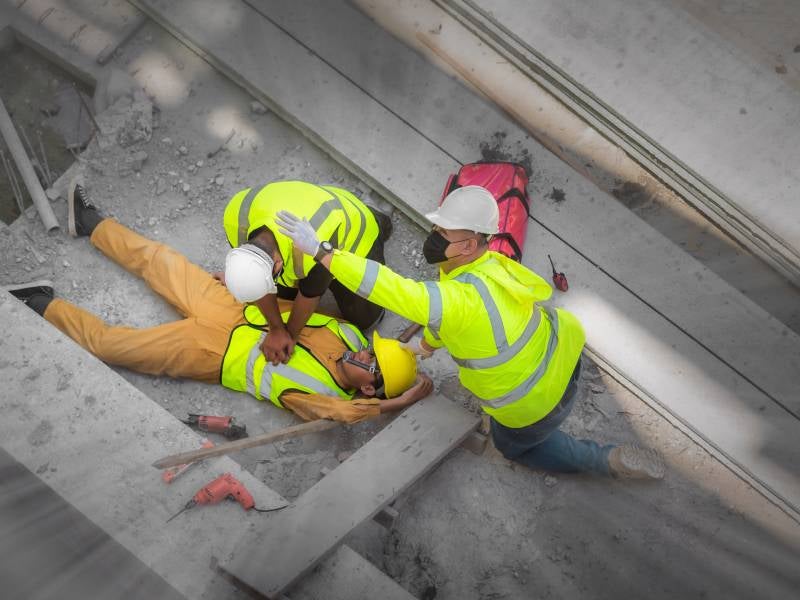
At our Maryland law firm, we represent many injured construction workers to recover their rightful workers’ compensation benefits to help with medical bills and lost wages. We also fight for the surviving loved ones of construction workers who have met premature deaths in the course of their jobs. Survivors are likely eligible for death benefits under Maryland Workers’ Compensation law. For losses related to work-related injury and death, workers’ compensation is normally the only legal remedy against the employer, regardless of who was at fault. However, we also investigate the circumstances of each construction work client’s injury or death to determine whether any third party (other than the employer) may be liable in a third-party lawsuit. For example, a manufacturer may have sold a defectively designed or manufactured piece of dangerous construction equipment that contributed to an accident. Unfortunately, construction accidents are not uncommon in Maryland. In September, for example, a crane basket loaded with cement fatally struck a Baltimore construction worker in the early morning hours in Harbor East. This summer, another worker died from a fall from an upper floor of a University of Maryland building under construction. The Fatal Four Based on national statistics about the nature of construction worker accidents, the Occupational Safety and Health Administration, known as OSHA, has dubbed the most common kinds of construction injuries that result in death as the “Fatal Four”: Falls: 38.8 percent of construction deaths in 2015 Struck by object: 9.6 percent Electrocution: 8.6 percent Caught in or caught between: 7.2 percent OSHA calculates that about one in five private industry work-related deaths in 2015 were in the construction sector (937 of 4,879). The Fatal Four caused almost 65 percent of construction deaths that year. OSHA sets legal standards for workplace safety, often specific to particular industries. Three of the top 10 safety standards most often cited in FY 2016 for violation were in construction: Fall protection Scaffolding Ladders Seek legal advice In any construction work-related injury, illness or death, an experienced Workers’ Compensation attorney should immediately be consulted for assistance with the claim for benefits and for assessment of a potential third-party lawsuit.

Is PTSD compensable under Maryland Workers’ Compensation law?

Is PTSD compensable under Maryland Workers’ Compensation law?

The short answer to this question is yes, but it depends. We represent clients with a wide variety of mental and physical work-related impairments, including post-traumatic stress disorder, often referred to as PTSD. The disease itself as well as how Maryland Workers’ Compensation law treats it are extremely complex. It is important after work-related trauma not only to get mental health treatment, but also to consult a Workers’ Compensation lawyer with specific PTSD experience. What is PTSD? According to Mayo Clinic, PTSD is a mental health problem “triggered by a terrifying event” experienced either directly by the patient or through observation. Onset may be either within the month after the event or sometimes even years later. Four kinds of symptoms may occur: Intrusive memories, including flashbacks and dreams Avoidance of mental or verbal focus on the event or of things that bring it to mind Negative mood and thoughts, including hopelessness, pessimism, trouble with memory and others Changes in “arousal symptoms,” which are “physical and emotional reactions” like irritability, overwhelming shame, self-destructive behavior, easily reacting with fear and others Tennessee bus driver example State law controls Workers’ Compensation and while certain legal concepts are widely shared among the states, the way mental impairments are handled varies. In September, a Workers’ Compensation panel of the Tennessee Supreme Court looked at a claim for benefits based on a bus driver’s PTSD from observing a shooting in the course of her duties. The Supreme Court affirmed that she was permanently and totally disabled based on her medical expert’s opinion and the claimant’s own testimony. Maryland law and PTSD In Maryland, it is possible that the case could have gone the other way depending on whether violence is considered a risk of being a bus driver. One line of cases looks at PTSD claims in the context of whether it is a compensable occupational disease. State statute says that an occupational disease must be “due to the nature of an employment in which hazards of the occupational disease exist …” For example, in one case, a Maryland court found that PTSD was compensable where the claimant was a paramedic who attended fatal accidents as part of her duties, causing the PTSD. However, in another case, PTSD from coworker harassment was not compensable because harassment is not a “hazard peculiar” to the job of a computer operator.

Maryland Workers’ Compensation: vocational rehabilitation

Maryland Workers’ Compensation: vocational rehabilitation

A Maryland employee who sustains a work-related injury or develops an occupational disease is entitled to Workers’ Compensation. Most people think of Workers’ Compensation as consisting of payments that are a percent of the person’s average wages, as well as medical treatment. Vocational services In addition, vocational rehabilitation services are another important Workers’ Compensation benefit available to an eligible worker who cannot go back to his or her previous work. Vocational rehabilitation services help the claimant return to work, but in a different capacity than that of the job held at the time of disability onset. A specialized vocational counselor is provided to the worker as part of the benefit. Definition and scope Maryland statute defines “vocational rehabilitation services” in Workers’ Compensation as “professional services reasonably necessary during or after or both during and after medical treatment to enable a disabled covered employee, as soon as practical, to secure suitable gainful employment.” The law lists nine different types of vocational services that may be available: Medical service coordination Vocational assessment Evaluation Counseling Vocational rehabilitation planning Plan monitoring Retraining Job development Job placement The counselor will assess whether the worker can return to the same employer in another capacity or with modifications to the old job. Should this be impossible, the counselor will determine whether jobs with other employers are available using work skills the claimant already possesses, including an actual job search. If this is not successful, retraining may be appropriate. Normally, if the counselor recommends retraining, two years is the maximum amount of time retraining may be provided. During rehabilitation services, the covered employee is entitled to payments as if the “employee was temporarily totally disabled.” Legal counsel To request vocational services, the worker should get a current medical statement that he or she cannot return to the former job. If a claimant’s request is denied, he or she may ask for a hearing. It is smart to discuss the need for vocational rehabilitation with a Workers’ Compensation attorney who can explain the services and assess the need for and type of services that will be helpful. A lawyer can help make the request, advocate for eligibility and request a hearing if necessary. At the hearing, legal counsel will present the claimant’s case as to why rehabilitation services are necessary.

The danger of turning left in front of an oncoming motorcycle

The danger of turning left in front of an oncoming motorcycle

Our lawyers represent Maryland motorcyclists who have been the victims of collisions with larger, enclosed motor vehicles because of the negligent or reckless driving practices of those operating cars, vans, SUVs or trucks for which motorcycles are no match. Earlier this month, an accident like this killed a 52-year-old Elkton motorcyclist when an SUV turned left in front of him on West Pulaski Highway in Cecil County, according to the Cecil Whig. The left-turn crash The motorcycle crash occurred at about 7:15pm on Wednesday, October 4, when the SUV turned into the biker’s oncoming path, causing the motorcycle to hit the front passenger area of the vehicle. The article cites police as saying that the cycle then “careened off the right side of the highway and struck a stop sign.” The Insurance Institute for Highway Safety reports that in 2015, 42 percent of fatal accidents involving motorcycles and one other vehicle were similar to the Elkton crash — when the other vehicle turns in front of the motorcycle as it is “going straight, passing or overtaking the vehicle.” Seek legal advice , It is important that a motorcyclist who is hurt in an accident with another vehicle speak to a lawyer as soon as possible so that legal counsel can undertake a private investigation of the incident. The sooner the investigation, the fresher the evidence will be, including the memories of police and other witnesses. In a left-turn accident, it will be important for the lawyer to uncover whether the turning driver was negligent or reckless or violated any traffic laws. For example, did the use of a cell phone distract the driver? Was he or she coming from a party at which alcohol was served? Did he or she misjudge the speed or distance of the motorcycle? Was the sun in the driver’s eyes? If the incident caused a motorcyclist fatality, the surviving family and loved ones should also seek immediate legal advice about a potential wrongful death lawsuit.

Maryland Workers’ Compensation death benefits: Part 2

Maryland Workers’ Compensation death benefits: Part 2

Today we continue our discussion of Workers’ Compensation benefits available to surviving dependents of Maryland workers who suffered work-related deaths. In Part 1, we discussed dependency. Death benefits are available to surviving dependents — family or nonfamily — who relied completely or partially on the deceased employee’s wages for support. Death benefits are available in cases of occupational disease no matter how long the disease existed before the death, but when the death resulted from a work-related injury, the death must have been within seven years after the injury. Benefit amounts The amount of death benefit for eligible dependents (except for some who survive certain city or county employees) is determined according to detailed and sometimes complex Maryland statutes. With some specific exceptions, the basic benefit amounts are as follows: Total dependents generally receive weekly benefits equal to two-thirds of the deceased worker’s Average Weekly Wage, called the AWW, capped at the level of the State Average Weekly Wage. Total dependents receive benefits until a cap of $45,000 is reached, but for a totally dependent surviving spouse, payments continue if the total dependency continues. If a totally dependent surviving spouse remarries, death benefits cease even if the cap has not yet been reached. However, if that person remarries with no dependent children at that time, payments continue for two more years. (Rules for surviving spouses who have become partially self-supporting and remarry are different.) If a totally dependent minor child continues to be wholly dependent when the cap is reached, payments continue as long as the total dependence continues until the child turns 18. Exceptions exist for a disabled child, one who goes to college or another accredited program or for “other sufficient reason.” Partial dependents (if there are no total dependents) receive weekly benefits calculated the same way, but reduced proportionately to reflect the portion of the worker’s wages that contributed to the partial support, considering the contributing incomes of partly dependent people. Generally, payments to partial dependents continue as long as partial dependency continues with a cap of $75,000. The collective amount of death benefits payable to eligible dependents other than a dependent spouse or dependent child is limited to a maximum in 2017 of $70,861 (cap increases annually). We will discuss benefit durations and funeral benefits in Part 3 of this post, coming soon.

Death benefits under Maryland Workers’ Compensation law: Part 1

Death benefits under Maryland Workers’ Compensation law: Part 1

It is tough under any circumstances when a family member or loved one dies accidently in the course of working or from an occupational disease. When the deceased provided financial support from his or her wages for other individuals, the sudden loss of that income can create a financial crisis. Dependency For this reason, Maryland Workers’ Compensation law provides for payment of a weekly death benefit to persons who were totally or partially dependent on the deceased claimant. The definition of dependency for eligibility purposes can be complicated, but in Maryland eligibility looks at whether someone was financially dependent, not at whether he or she was a spouse, child or other relative. For example, in one Maryland case, death benefits were properly paid to the surviving dependant romantic partner who had lived with the deceased worker. However, the law does favor surviving spouses and children in some ways over other dependents. For example, in certain situations, a surviving spouse or dependent child who remains dependent on the lost wages of the deceased worker may continue to receive benefits beyond the $45,000 cap that cuts off benefits to other nonspouse, nonchild totally dependent recipients. Dependency is determined as of the time of injury that resulted in death or if the worker died from an occupational illness, the date that the disease caused compensable disability that eventually led to death. Onset of dependency If the death was from an occupational illness, a person would not be eligible for death benefits if he or she became dependent on the employee after the worker became eligible for workers’ compensation based on that disease, except for a child of the employee born after that time, if the parents were married when that disability started. A surviving spouse may not be eligible for death benefits in certain cases of desertion of the deceased worker, or if the couple married after the injury or disability onset from occupational disease and do not have dependent children. Maryland Workers’ Compensation death and dependent benefits law is extremely complex and we have only touched on some aspects here. We will continue this discussion in Part 2 of this post.

What is the going-and-coming rule?

What is the going-and-coming rule?

Broadly, an injured or sick worker is eligible for Maryland workers’ compensation benefits if the injury or disease is work related. The legal and factual question is whether an injury or illness arose out of and in the scope of employment. When a claim is denied, whether the injury met this standard is often the issue disputed by the employer or insurer. Work commutes can be tricky Normally, if someone is injured during his or her commute to or from the workplace, that injury will not normally be within the course of employment and therefore not the basis for a successful workers’ compensation claim. For example, someone injured in a bus accident while riding the bus to his or her office in the usual daily routine would usually not be able to collect workers’ compensation benefits for that injury. Recognized exceptions The so-called “going-and-coming rule” does have some exceptions, however. For example, according to Maryland case law: When an employer provides cost-free transportation to the employee to commute each way to work, an injury during that commute would be considered to arise out of employment and qualify the person for workers’ compensation. When an employer’s premises has a public road between two parts of the premises, if a worker is hurt on the road between the premises, it may be compensable. When an employee is injured off of work premises, but it is because of a “peculiar or abnormal degree” of exposure to a danger that is a “risk incident” to the job, the injury may be covered. This is called the proximity exception. If an injury happens during a commute to or from the workplace and the worker was on a “ special mission or errand” for the employer, it may be the basis of a claim. If a trip away from work combines both a personal and business purpose and the employee is injured, the “ dual purpose” doctrine allows a viable claim if the trip would have had to have been taken by someone affiliated with the employer even without the personal purpose. The going-and-coming rule has been the subject of many disputed workers’ compensation claims and is a complicated, fact-specific area of law. Anyone with questions about this type of claim should speak with an attorney as soon as possible, even after a claim has been denied, as review or appeal may be available.

RV crashes may involve complex investigations and severe injuries

RV crashes may involve complex investigations and severe injuries

Our attorneys represent the victims of motor vehicle accidents involving recreational vehicles, called RVs. Those clients may have been injured while RV passengers, in other vehicles in collisions with RVs, on motorcycles or bicycles struck by RVs or hit by RVs as pedestrians. We also represent the survivors of people who were killed in such accidents in wrongful death suits. RVs come in a variety of forms like motor homes, towed trailers, truck campers and others. Driving responsibilities enhanced In a broad sense, anyone who drives negligently, recklessly or illegally is liable to those hurt as a result. However, when the vehicle is so much larger than a normal car, safe driving rises to a higher level of skill. For example, passing other vehicles will take more time and space, slowing and stopping will take longer because of the extra weight, certain overhead obstructions will be too low for the vehicle to clear, and lines of visibility and use of mirrors will differ from those in regular automobiles. RV drivers are still expected to use reasonable skill in all operations. Geico provides helpful information about safe RV maintenance and driving practices. Seek legal counsel Anyone hurt in an RV crash should seek legal advice as soon as possible so the attorney can begin a thorough investigation. In addition to the logistics of the collision, other issues will need to be considered like: Was the RV overloaded? Was the RV properly maintained? Were any previous repairs properly performed? Was the RV or its equipment subject to recall? Was any component of the vehicle defective? Was the vehicle owned or rented? Were tires adequate for the size and weight of the vehicle; were they worn; and were they appropriately filled? Were there unsecured items within the RV that struck people inside? Was driving adjusted for dangerous weather or dark conditions? Legal counsel will also communicate with and conduct negotiations with all the involved insurance companies. Injuries potentially catastrophic Of course, injuries when such a heavy vehicle is involved can be tragic like bone fractures, amputations, head and brain injuries, crushing injuries, spinal cord injuries and even death. These injuries must be carefully and expertly assessed so that appropriate damages can be requested. For example, a victim may require long-term care or therapy. Pain, suffering and emotional trauma must also be thoroughly considered.

Contact Us

Fill out this form below and we'll contact you shortly
*Required Fields