Blog / Car Accidents

Blog

All Car Accidents Workers' Compensation Workplace Accidents Workplace Injuries Construction Workers' Accidents Medical Malpractice Industrial Workers' Injuries Product Liability Personal Injury Truck Accidents Firm News Wrongful Death Uncategorized
How Baltimore’s Graduated Driver Licensing Program Affects New Teen Drivers

How Baltimore’s Graduated Driver Licensing Program Affects New Teen Drivers

Getting a driver’s license is a rite of passage for many teenagers. It’s a transition point that marks a teenager’s newfound independence and growing responsibilities. To ensure the safety of both teen drivers and everybody else on the road, Maryland has implemented a Graduated Driver Licensing (GDL) program, or the “Rookie Driver” program. Teens have to be 18 or older to get a full license, but they can start driving earlier The GDL is basically an effort by the state to make sure that new drivers get the experience they need to be good drivers while still managing the risk that they’ll end up in an accident. With that in mind, teens can acquire their license in stages. Learner’s Permit Once a teen is 15 years and nine months of age, they can apply for a Learner’s Permit (although they have to wait until they’re 16 if they don’t have a Learner’s Permit School Attendance Certification) with parental consent. Plus: · They must have a qualified supervising driver with them at all times · The supervising driver must complete a Practice Log showing the teen’s time behind the wheel A teen under 18 years of age (or 18 without a high school diploma or equivalent ) cannot proceed to the next step in the process for a minimum of nine months, while teens 18 and older may be able to move on in three months. Provisional License Once a teen is a minimum of 16 years and six months of age, they become eligible for a Provisional License. To obtain this, they must: · Complete 60 hours of supervised driving, 10 of those at night · Complete 30 hours of classwork in a driver’s education course, and an additional six hours behind the wheel The Provisional License only permits the driver to be behind the wheel without supervision during certain hours and it puts restrictions on their ability to have passengers. It also comes with additional responsibilities when it comes to seat belt use and unique prohibitions against the use of cellular devices. It’s important to note that traffic violations and violations of the restrictions on either a Learner’s Permit or a Provisional License can lead to a mandatory driver improvement program, a suspended license and an additional wait before a full driver’s license is granted. It’s also vital to realize that even though the GDL program helps manage risks, it cannot eliminate them. If you or your teen is involved in a crash, it’s wise to get experienced legal counsel to explain any options and defend the teen in court, if necessary.
Distracted driving involves more than just texting

Distracted driving involves more than just texting

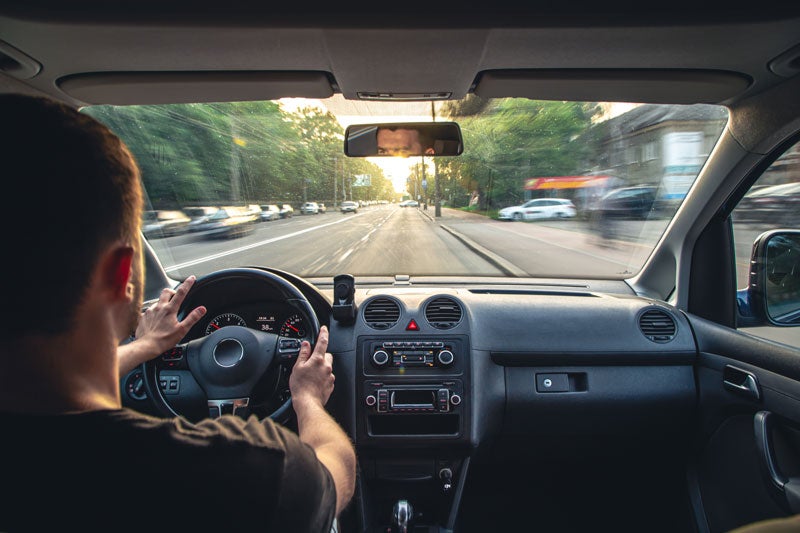
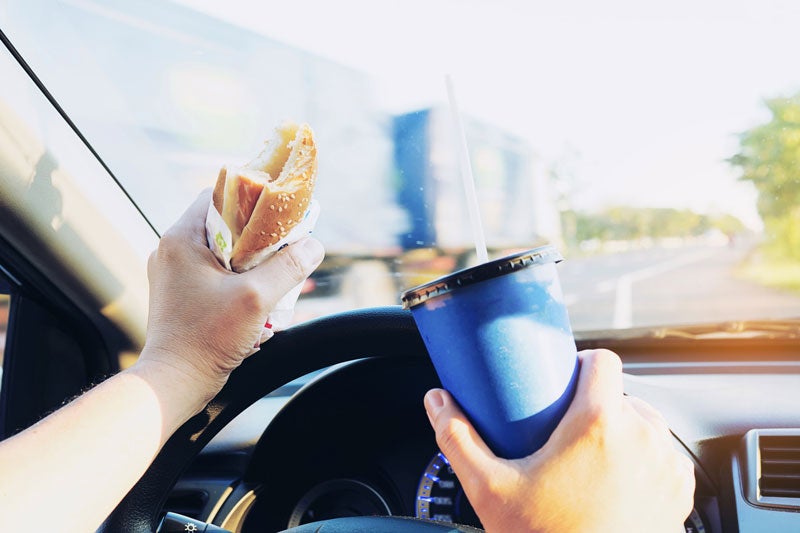
Texting and driving is certainly one of the top forms of distracted driving. If you ask someone for examples of dangerous driver distractions, it’s probably the first one they will give. But it is certainly not the only one. Distracted driving goes far beyond just texting. It’s critical for drivers to understand how common distraction is so that they can work to remain as safe as possible when traveling. 12 examples of driver distraction To help show how distraction happens and how dangerous it is, here are some common examples of distracted driving: Using a phone: One of the most dangerous forms of distraction is using a mobile phone even when not texting. Distractions include calling, browsing the internet, taking pictures or using apps while driving. Eating and/or drinking: Skip the drive-thru! Handling food and beverages – even nonalcoholic beverages – while driving can take a driver’s hands off the wheel and their attention off the road. Adjusting controls: Adjusting the radio, GPS, climate controls or other settings inside the vehicle can distract a driver visually, manually and cognitively. Grooming: Fixing hair, applying makeup or other personal grooming activities while driving can significantly distract a driver’s attention. Talking to passengers: Drivers are most distracted when they also turn to talk to those passengers, and parents are often distracted by children in the car. Reading: Reading maps, books or other materials while driving can take eyes off the road for an extended period, causing potential hazards. Watching videos: Watching videos on a mobile device, dashboard screen or any other device while driving is extremely dangerous. Daydreaming: Allowing the mind to wander or getting lost in thought can lead to cognitive distraction, impairing the driver’s ability to react to potential hazards. Handling pets: Driving with unrestrained pets or trying to manage pets’ behavior while driving can cause distractions. Using In-Car Technology: Operating complex in-car systems or touchscreens can distract drivers from the primary task of driving. Rubbernecking: Slowing down to look at accidents, scenery or anything else on or off the road can divert a driver’s attention. External factors: External distractions such as looking at billboards, roadside events or being distracted by other activities happening outside the vehicle can also cause accidents. It’s important for drivers to focus on safety and avoid these distracting activities. With that said, even if you drive safely, you could be seriously injured by another distracted driver. If so, then you need to know how to seek financial compensation for medical bills, lost wages and other costs. As a result, connecting with a skilled attorney sooner rather than later is wise under such circumstances.

Why are teenagers more susceptible to car crashes?

Why are teenagers more susceptible to car crashes?

The automobile has become an integral part of people’s lives. But while cars provide convenience and mobility, they also pose significant risks, especially for teenagers. Teenagers are more susceptible to causing and otherwise being involved in car crashes than any other age group. Understanding why this is the case can help parents better shield their teenage kids from the ever-present risk of road accidents. The inexperience factor One of the most prominent reasons behind the higher susceptibility of teenagers to car crashes is their lack of experience. When young individuals first obtain their driver’s license, they often have limited exposure to different driving situations. As a result, they may struggle to make quick decisions in challenging scenarios. Inexperience can lead to delayed reactions and difficulties in navigating complex traffic environments. Risk-taking behavior Teenagers are notorious for their inclination towards risk-taking behavior. Unfortunately, this trait is often amplified when they get behind the wheel. Some adolescents tend to underestimate the dangers of speeding, driving recklessly or using their mobile phones while driving. In the age of technology, distracted driving is a widespread issue, especially among teenagers. Texting, talking on the phone or engaging with in-car entertainment systems can divert their attention from the road. This kind of distraction can lead to accidents, as it hinders their ability to react to sudden changes in traffic conditions. Peer pressure Peer pressure can be a powerful force in a teenager’s life. When young drivers are influenced by their friends, they may be more likely to engage in dangerous driving behaviors to fit in or impress their peers. This could include driving too fast, showing off or driving without a seatbelt – all of which contribute to a higher risk of car crashes. Lack of defensive driving skills Defensive driving skills are essential for staying safe on the road. Unfortunately, many teenagers have not yet acquired these skills. Defensive driving involves anticipating the actions of other drivers and taking measures to avoid potential accidents. Without these skills, teenagers are more vulnerable to collisions cause https://www.progressive.com/answers/what-is-defensive-driving/d by the actions of others. The susceptibility of teenagers to car crashes can be attributed to a combination of factors. Educating teenagers about responsible and safe driving practices is crucial to address this issue.

How much does a lawyer cost for a car accident?

How much does a lawyer cost for a car accident?

A car accident has the potential to turn your entire life upside down in a matter of seconds. You could easily be facing physical, emotional and financial losses that are just devastating. Unfortunately, insurance companies are in business to make money, not put wrongs to right again. Even when someone is 100% not at fault for a crash, they often find themselves struggling to get fair compensation without an auto accident lawyer’s help. If you’re facing circumstances like these, how can you pay for an attorney when you’re already struggling with the financial fallout of your wreck? Most personal injury attorneys work on a contingency fee basis The vast majority of personal injury claims, including those involving car wrecks, are taken on a contingency fee basis. This is a payment arrangement where your attorney agrees to charge you only if they either successfully negotiate a settlement for you or win your case in court. At that point, they will take a certain percentage of whatever you’re set to receive as their fee. Typically, initial consultations on personal injury claims are free. If you and the attorney agree to work together, you will sign a contingency agreement that spells out the exact percentage of the award the attorney will take as their fee and any additional costs. According to the American Bar Association, a winning attorney will take between one-third and 40% of whatever they obtain for their client, with some attorneys taking the lower amount if the case settles before trial and more if they have to go to court. In addition, contingency agreements may include provisions where the client will reimburse the attorney for any upfront costs they’ve paid as they pursued the claim, such as court costs, fees for expert witnesses and the outlay for copies of medical records. If you’ve been injured through another driver’s negligent or reckless mistakes, you have every right to seek fair compensation for your injuries and other losses – and a lack of funds doesn’t have to stop you from pursuing what you’re rightfully due. You can learn more about your legal options by speaking with a car accident lawyer in Maryland.

How to avoid a rear-end collision

How to avoid a rear-end collision

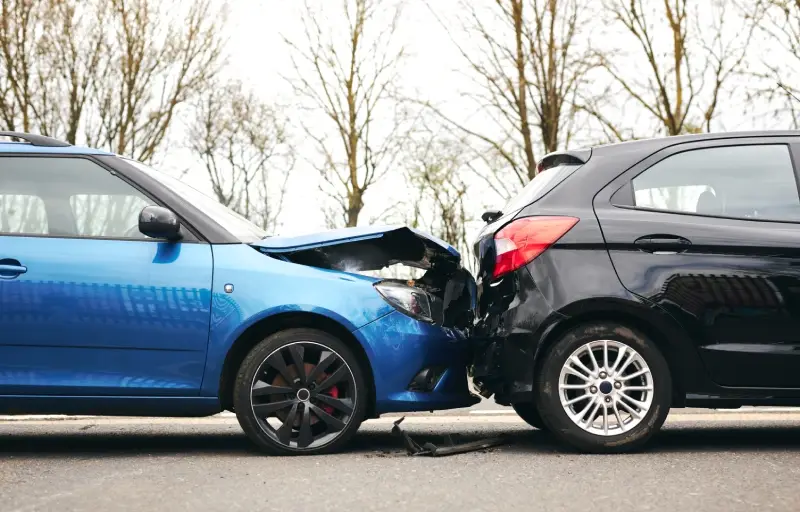
Car crashes can happen from all directions so drivers must take a range of precautions to prevent them. One they can take to reduce the chance of running into someone from behind is known as the three-second rule. Why three seconds? Do you know what a safe following distance is? Are you aware of how that distance will change as you speed up or slow down? Probably not. It’s simply too complicated to remember and try and calculate as you are driving along. Hence road safety experts came up with three seconds. Pick a point on the road ahead or by the side of it. For example, a bridge, a signpost or a chevron on the asphalt. When the car in front reaches it, start counting to three. You should not reach that same mark before you have reached three. The distance between you will increase as you speed up and decrease as you slow down giving you an ever-changing safe following distance. Sometimes three seconds is not enough Three seconds is a minimum based on good conditions. You’ll need to increase it if visibility is poor, if the road surface is wet or slippery or if you are not feeling at your best and could be a little slow to react to things. If every driver maintains at least three seconds between themselves and the vehicle in front, rear-end crashes would soon diminish. Unfortunately many are unaware of this rule, ignore it or get distracted and forget to apply it. If you are involved in a rear-end accident or any accident and are injured it is important to contact an experienced personal injury attorney to determine your rights and options.

Has your knee been injured in a work-related fall?

Has your knee been injured in a work-related fall?

Unpredictability is one of the most dangerous things about falls. They can happen to anyone at any time, including in the workplace. Many times, you may be able to simply dust yourself off after a fall and get on with your day. Sadly, however, this is often not the case. Falls can be hard on your knees, and the resulting injuries can be serious. Outlined below are some of the more severe knee injuries associated with work-related falls. Damaged ligaments Torn ligaments are among the more serious and painful knee injuries that can result from a fall. The knee is comprised of four ligaments: the anterior cruciate ligament (ACL), the posterior cruciate ligament (PCL), the medial collateral ligament (MCL) and the lateral collateral ligament (LCL). Ligaments help the knee move forward and backward, as well as to rotate from side to side. Because each of these ligaments has a distinct function, damage to any of them can be painful and limit your mobility. Surgery and an extended period of recovery are often the only way to get better after ligament damage to avoid chronic pain issues. Dislocations During a fall, your knee may be manipulated and twisted into positions it is not designed to be in. This can result in a dislocation, which is very painful and can be difficult to treat. As a general rule, the sooner you seek medical treatment after this type of injury the better. Depending on whether or not there is nerve damage, you may require multiple surgeries before you can get back on your feet. If your knee has been injured in a fall at work, then you may be entitled to compensation for your pain and suffering. This won’t undo the damage, but it will help you to stay on top of your finances while you recover and are unable to work. Seeking legal guidance will offer you the best possible chance at obtaining a just outcome in your case.

Fatal car accident stats remain high in Maryland

Fatal car accident stats remain high in Maryland

The U.S. saw a spike in car accident fatalities in 2020 and 2021. According to the National Highway Traffic Safety Administration (NHTSA), 42,915 people are projected to have died in motor vehicle accidents across the country in 2021. This is a 10.5% increase from 2020’s fatalities. Notably, this is the highest number of fatalities the U.S. has seen since 2005. Where Maryland falls While Maryland was no exception to this in 2020, in 2021, the state saw a nearly 3% decline in car accident fatalities. According to the Maryland Department of Transportation (MDOT), the state saw 573 fatalities in 2020 and 557 fatalities in 2021. However, given that there were 535 fatalities in 2019, Maryland is still experiencing a significant increase from pre-pandemic levels. Fatalities include drivers, passengers, pedestrians and cyclists. What is causing the increase in fatalities? Speeding, reckless driving and impaired driving continue to be the biggest contributors to crashes in Maryland, as well as across the country. MDOT outlined in detail the top causes contributing to fatal crashes, based on results from a recent survey: Speeding and reckless driving: About 40% of drivers admitted to speeding on highways and/or residential streets. Disregarding pedestrian and cyclist safety: More than half of respondents remarked that they do not feel safe in crosswalks. Seat belt usage: 5% of respondents remarked that they do not always wear a seat belt. Distracted driving: This contributed to more than 30% of Maryland crashes, yet 40-60% of respondents admitted to several distractions. Impaired driving: This has contributed to more than 800 crashes in Maryland since 2016. 3% of respondents admitted to recently driving impaired. What’s happening in 2022? As of September 1, 2022, Maryland has reported 350 fatalities. While this data is preliminary, it does signal that fatalities may be decreasing across the state. In the meantime, drivers, pedestrians and cyclists alike should practice safe and defensive behaviors out on the roads to protect themselves and others.

A closer look at nail gun safety

A closer look at nail gun safety

Nail guns are a common sight in workshops and construction sites across Maryland. When used appropriately, they can increase productivity and efficiency at work. However, it is important to remember that nail guns are a powerful piece of equipment. According to the CDC, nail guns result in 37,000 emergency room visits annually and 68% of these visits involve workers. It only takes one small error or malfunction for something to go horribly wrong. Outlined below are a few examples of how nail gun accidents can occur. Faulty equipment Any tool that has the potential to be dangerous must be routinely maintained. Older equipment is more likely to malfunction. Usually, nail guns have safety mechanisms in place, such as guards. If these are bypassed or missing, then it makes an accident and injury much more likely. Underestimating the power Nail guns can penetrate all sorts of tough materials, especially wood. If a piece of wood is not very thick, it’s possible that the nail could penetrate all the way through to the other side, catching the nail gun operator off guard and posing injury risks. Nails can also ricochet when using the tool on certain surfaces like metal. When this happens, the nail essentially becomes a missile that can penetrate flesh and cause serious damage to the eyes. Preventing nail gun injuries Employers have a legal duty to ensure that workers are as safe as possible. This includes taking preventative measures like maintaining tools, providing appropriate safety gear and facilitating adequate training. Proper training is especially important, both for new and experienced workers. This can help workers understand the tool’s different triggers, how to hold and load the nail gun, what to do when it malfunctions and more. If you have suffered an injury on the job, then you may want to consider your options regarding workers’ compensation. An experienced attorney can help you understand your next steps.

Why are the roads so dangerous for teens during the summer?

Why are the roads so dangerous for teens during the summer?

The weeks between Memorial Day and Labor Day are some of the most dangerous for car accidents. This period, which AAA refers to as the 100 Deadliest Days of Summer, sees an increase in fatal crashes involving teen drivers. There are numerous reasons why this time of year can be so deadly. Summer fatal crash factors Between 2010 and 2019 during the 100 Deadliest Days of Summer, statistics show that seven people were killed every day in accidents involving a teen driver, compared with an average of six per day during other times of the year. During the summer, teenagers are on break from school and spending more time with friends. They may be staying out later and driving longer distances. Further, after the last two years of the pandemic, young people are eagerly returning to social activities and events. Thus, some of the reasons why teenagers can be at a higher risk of crashing this summer include: More teens on the road Relaxed driving attitudes Driving longer distances for road trips Reckless driving, like speeding Driving while impaired by drugs or alcohol Teens driving with multiple passengers in the vehicle Driving while using a cell phone These behaviors and decisions can happen on any day, but they can be especially likely during the summer months. Protecting yourself and your teen This summer, you can take steps to reduce the risk of an accident with teen drivers. The most important thing you can do is practice safe driving habits yourself. Wear your seat belt; put away your phone; comply with traffic laws; find a sober ride home if you have been using drugs or drinking. Parents of teen drivers would be wise to remind them of these precautions, as well. Further, teen drivers can prevent fatal car accidents by: Limiting the number of people riding in the car Keeping music at a reasonable volume Refraining from any reckless, unlawful driving Restricting driving to familiar places and daylight hours until they are more comfortable behind the wheel These measures can protect drivers and their passengers every day, not just on the deadliest days. Being safe on the road and teaching new drivers to be safe can be crucial in reducing crash risk and severity.

Tactics people may use to avoid liability after a crash

Tactics people may use to avoid liability after a crash

When someone hits you with their car, you can be dealing with extensive injuries, property damage and emotional distress. Holding the appropriate party responsible for this experience can be a top priority. However, negligent or reckless parties typically are not eager to admit wrongdoing or accept blame – particularly when it means legal and financial consequences. They often use some of the following tactics to avoid taking responsibility. Lying about their behaviors After a serious car accident, the parties involved must provide their account of the incident to police, insurance companies and possibly attorneys. In their accounts, parties may lie or fail to give all the pertinent details to make it seem like they were not at fault. For instance, they might claim they were focused on the road when really they were typing out a text. Thus, investigating an accident will help you distinguish truth from lies. Blaming others Car crashes can be chaotic scenes, especially when multiple vehicles are involved. A person who knows or suspects they are to blame for the accident may try to point the finger elsewhere to shift blame onto someone else. But, even if someone else is to blame, multiple people can be liable for an accident. However, one critical distinction is that Maryland laws prohibit parties from financial recovery if they contributed to their own injuries. Thus, it can be crucial to defend yourself if the other parties attempt to blame you for the accident. Leaving the scene or giving bad information People may try to avoid liability after a crash by leaving the scene or giving false information to other parties. Should this happen, a thorough investigation will be crucial in helping victims pursue the damages they deserve from the responsible party. Again, working with police and attorneys can be a vital part of this. Defending against these tactics These attempts to avoid responsibility after an accident are not uncommon, but they can be frustrating for people who just want to hold parties accountable for their injuries. Understanding and anticipating these tactics can help victims prepare for obstacles that may arise after a crash, making it easier to overcome them. Most important for when someone is involved in an accident is that they should contact the police for a report to be written and obtain any contact information from any witnesses or good Samaritans who were not involved in the accident, but were present at the time of the accident.

Road rage: A serious problem without a solution

Road rage: A serious problem without a solution

As a driver, you may know not to get behind the wheel if you are drunk or exhausted because you could make a mistake or wrong choice and wind up in a severe accident. However, driving when you are mad or upset can also be dangerous, though people do not always realize it. Road rage incidents have increased dramatically during the pandemic, and the trend has taken a tragic toll on victims in Maryland and across the U.S. How big of a problem is road rage? Over the last year and a half, more than 40 people per month were shot in road rage incidents, nearly double the number recorded in the four years before. More people get hurt in accidents caused by a driver who is: Speeding Swerving Driving erratically Following others too closely Cutting people off These are all driving behaviors that people might engage in when they are experiencing road rage. These drivers are angry, upset and aggressive, and they take it out on the people around them. And, the mounting stress and frustration brought on by the pandemic have not made the situation better. Measures to reduce road rage Local and state agencies have utilized several different tactics to try and combat road rage and aggressive driving. Some areas have used signage to remind drivers to slow down and calm down; others have changed traffic management systems to alleviate congestion. However, changing driving behaviors starts with individuals who must decide to change them. Motorists hoping to avoid a road rage accident can: Pull over if they are getting agitated Listen to a relaxing podcast or calming music Focus on reaching a destination safely rather than quickly Give other drivers space These simple decisions may be all it takes to avoid an accident and stay safe on the road. After an accident If you get hurt in a road rage accident, be aware that the other party will likely continue to be aggressive and possibly violent after the crash. They may try to flee the scene or accost you. As such, crash victims will want to call the police and prioritize their personal safety. This could mean staying in your car until help arrives or recording the interaction with the other party to protect yourself. Chasing or pursuing a vehicle that flees the scene is dangerous and can lead to bigger problems. If your vehicle is insured under a Maryland automobile insurance policy, the coverage, by law, will include Uninsured Motorist coverage. This coverage steps in during hit and run accidents, and should not affect your insurance rates.  If you are involved in such an accident, you should contact experienced counsel to help you ensure you are covered.

Heading out for a road trip? Beware these dangerous drivers

Heading out for a road trip? Beware these dangerous drivers

Heading out for a trip? Beware these dangerous drivers. Summer is a popular time to head out on road trips with family or friends. And, it could be especially enticing this summer, as people can still be hesitant to travel via other options like airlines or buses. With that in mind, there are some risks to consider when you are driving on a road trip. Students on break When students across are on summer break, they are eager to spend time with friends and take advantage of the long days and nights. Unfortunately, these young drivers can be dangerous behind the wheel. Too often, teen drivers cause accidents because they are: Easily distracted by their phones Driving with too many people in the car Speeding or driving recklessly Violating traffic laws Showing off to others These behaviors can make them a threat to  other road user. And in fact, the days between Memorial Day and Labor Day are known as the deadliest days for crashes involving teen drivers. Novice RV drivers One way to make road trips more comfortable and enjoyable is to take one in an RV or motorhome. And reports show that rentals and sales of RVs have skyrocketed in 2021. Thus, you may encounter several RVs on the road during your trip – many of whom are inexperienced with driving these vehicles. To stay safe around novice RV drivers, be sure to give them space and drive defensively. Watch for drifting or swerving, which can make a driver overcorrect and lose control. Impaired drivers Summertime is synonymous with barbecues, happy hours on patios and other celebrations. These events can increase the likelihood of people getting behind the wheel after drinking. Wherever you are driving, whether it’s across Maryland or the country, drunk driving is illegal. And while some states have legalized marijuana, driving while impaired by any drug is highly dangerous. Unfortunately, every state has drivers who are intoxicated or impaired. These drivers endanger the lives of everyone around them. Watching out for these drivers will be crucial for any driver on a road trip. Doing so can prevent catastrophic accidents. But, there are only so many precautions you can take. Thus, if a crash still occurs because of another person’s negligence, legal action can be worth considering.

Contact Us

Fill out this form below and we'll contact you shortly
*Required Fields