Blog / Construction Workers' Accidents

Blog

All Construction Workers' Accidents Workers' Compensation Car Accidents Workplace Accidents Workplace Injuries Medical Malpractice Industrial Workers' Injuries Product Liability Personal Injury Truck Accidents Firm News Wrongful Death Uncategorized
Report: When do work injuries happen?

Report: When do work injuries happen?

All construction workers know that they work in a particularly risky field. In their training and from their experience on the job, they often know what hazards and factors contribute to the chance of a worksite accident. However, a new study suggests that there is another factor workers should be aware of – the time during their shift that they face the highest risk of injury. When are workers more likely to suffer injuries? A new study, according to Occupational Health & Safety, is one of the first to examine the times when injured workers reported they suffered an injury or accident on the job. Oregon State University (OSU) conducted the study and found that there could be a pattern. The researchers reviewed more than 12,000 claims from between 2007 and 2013 and determined that construction workers were more likely to suffer injuries: Within the first four hours of work Especially during the fourth hour of work The rate of work injuries generally decreased after the fourth hour ended. Why is the risk higher at these times? It is difficult to say why the first four hours of work carry such a high risk for construction workers. The study does not elaborate on the reasons, and there are several risk factors that workers face on a project site. However, this portion of a worker’s shift could hold a higher risk of injury for a few reasons, including: Workers’ bodies and muscles are still adjusting as they begin their shift Workers might suffer fatigue, especially in the fourth hour of work before a meal period There are several reasons why injuries might be more likely to occur in the first half of one’s shift. Regardless of these reasons, workers must consider this new information carefully. And why is this information important? EHS Daily Advisor indicates that awareness and education are two of the first steps to preventing workplace injuries. That is the primary reason that this information is important for Maryland construction workers to take into account. As we have discussed in previous blog posts, workers can focus on safety and injury prevention efforts on worksites as long as they are aware of the risks they face. Therefore, if workers know the details of work injuries – including when they are most likely to occur – it can help workers to be vigilant and improve their safety.

How well is your hard hat protecting you?

How well is your hard hat protecting you?

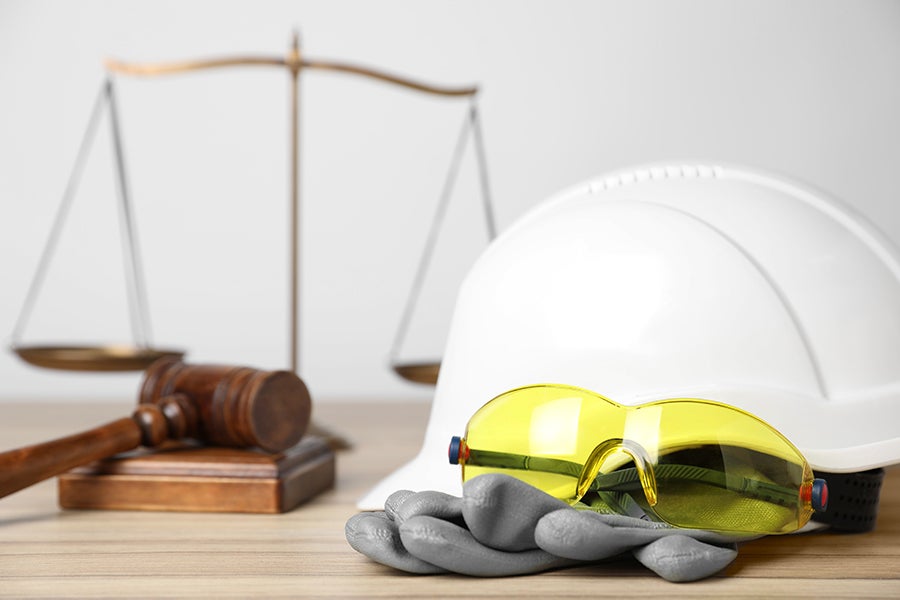
When Maryland construction workers clock-in, it is an automatic step to put on their personal protective equipment (PPE) before getting to work. And construction workers know that their hard hat is one of the most important pieces of PPE that they have. However, construction workers still suffer more traumatic brain injuries (TBIs) than workers in any other industry. So, how effective are hard hats in preventing head injuries in construction accidents? Hard hats have many protective purposes While there are different types of hard hats designed to offer different protections in many jobs, they all serve to protect workers from hazards by: Stopping falling objects or debris from hitting or piercing the head Absorbing shocks from falling or falling objects Resisting water, fire, and even mitigating risks of electrical shock With these three functions, hard hats play a significant role in protecting workers and preventing head injuries. A 2019 report demonstrates this, finding that: In 1970, when the Occupational Safety and Health Administration (OSHA) was founded and established requirements for hard hats and protective equipment, there were roughly 15,000 work fatalities. In 2016, that number had decreased to 5,200 fatalities. Even though hard hats help to decrease the risk of fatality and injury, head injuries are still a considerable risk. Most head injuries occur on the job when workers are not wearing their hard hats – or wearing an ineffective one. What makes a hard hat ineffective? Hard hats are very efficient and reliable in protecting workers on all kinds of worksites. However, it does not take much to compromise hard hats, and therefore the safety of the worker wearing them. For example, one’s hard hat can become unsafe if there are: Cracks of any size in the shell or suspensions Dents from impacts to the hard hat Damages from exposure to heat or cold environments Decorations that jeopardize the hard hat safety features, such as paint or stickers Workers should take time to inspect their hard hats carefully every day before use to make sure they are safe on the job each day and avoiding the risk of a life-changing head injury.

Storm season: Roofers must take extra care

Storm season: Roofers must take extra care

The end of summer can bring extremely severe weather to the Baltimore area. And severe weather also brings an increase in residents looking to clean up after storms and fix damaged exteriors of their homes. Whether residents only look to fix storm damage or re-shingle their entire roof, this season can mean a lot of jobs for roofers across the state. However, roofers must ensure they take great care to optimize their safety and avoid serious injuries. Roofers face a high fatality rate The construction industry is full of high-risk jobs, but roofing is one of the most dangerous. Most roofing workers know about the risks they face. After all, working at a great height is one of the most common safety hazards for all workers. However, a 2019 report from the U.S. Bureau of Labor Statistics found that roofers have a fatality rate 10 times higher than the average rate of fatalities across all industries. By the numbers, the average fatal injury rate for all industries is 3.5 out of 100,000 workers. For roofers, that rate is 51.5 per 100,000 workers. Remember: Safety equipment is essential For years now, roofing has been included on the list of the most dangerous jobs in the United States. And yet, according to a 2017 report, one in four construction workers who suffered a fatal injury from a fall were not using a personal fall arrest system (PFAS) at the time of the accident. Unfortunately, it is easy for experienced workers to form bad habits over the years, but roofers should make sure they: Inspect sites and assess hazards before beginning work Set up guardrails, PFAS and other safety equipment properly Review safety training as needed, and stay updated on new guidelines Keep an eye on the weather when working at a height Roofers must not overlook the use of safety equipment – especially during and after storm season. The Maryland Workers’ Compensation Act covers workers, regardless of fault. While there are exceptions to the compensability of an accidental injury, should a worker experience an injury on the job, even if they failed to take the best safety precautions, they still should contact an experienced Workers’ Compensation attorney to discuss whether or not there is coverage available.

Construction workers: Be aware of electrocution risks

Construction workers: Be aware of electrocution risks

May marked National Electric Safety Month, which aimed to recognize and shed a light on how any workers who regularly work with electricity can stay safe. Even with the proper training, working with electricity can carry a high risk of injury for any worker. Electrocution is one of the Fatal Four The Occupational Safety and Health Administration’s (OSHA) Fatal Four in the construction industry include: Falls from equipment, ladders or scaffolding; Getting struck by vehicles or other objects; Getting caught in trenches or other excavation areas; and Electrocution. Even though electrical shock is one of the most common risks workers are near each day many workers are unaware of the serious risks electrical exposure creates. Construction workers must be aware of the risk There is no denying how dangerous it is to work with electricity. Electrocution is death or severe injury by electric shock, electric current passing through the body. An electrical shock can often lead to injuries, such as: Burns; Cardiac arrest; Nerve and tissue damage; and Seizures. If workers suffer any of these injuries in the line of work, they are entitled to collect workers’ compensation benefits (Maryland Code, Labor & Employment §9-501). They may also be able to collect personal injury compensation, depending on the circumstances of their injury. In these cases, it is often beneficial for workers to consult an experienced attorney to determine how they can move forward to get the compensation they deserve. How can workers stay safe? In recognition of National Electric Safety Month, Occupational Health & Safety outlines ways that workers can avoid serious injuries, including: Taking time to identify all electrical hazards on the worksite; Turning off the safety on circuits, and testing circuits before working; Using the proper tools and protective equipment; and Understanding OSHA’s rules regarding electricity. Safety should always be a worker’s priority, and therefore workers must be aware of the risks involved in working with electricity not just during the month of May, but year-round. Additionally, if a worker identifies lose or uncapped wiring or other unsafe conditions, they should be sure to notify their co-workers and supervisor for both the protection of the place of employment or worksite and to document the issue in the unfortunate event the employee or his or her co-worker is injured by the unsafe condition.

Construction injuries down, but still one of the deadliest jobs

Construction injuries down, but still one of the deadliest jobs

Building projects do not stop just because the weather turns cold. Many Maryland construction workers stay on the job year-round, and they know that no matter the time of year, this can be dangerous work. Construction workers and their families must know about their options and rights if workers suffer injuries on the job, but a new report indicates that the risk of injury is slowly falling. The overall rate of construction injuries slowly decreasing over time A 2019 report stated that the overall rate of nonfatal injuries has been declining in the construction industry. The rate of injuries has slowly decreased from an average of 3.6 injuries to 3.0 injuries per 100 workers from 2014 to 2018. Even the smallest decline in nonfatal injuries is good news, since the most common nonfatal injuries in this industry are often still severe, such as: Electrical burns; Lacerations or amputations; Broken bones; and Back or head injuries. These injuries may be nonfatal, but they can still have a serious, life-changing impact on a worker’s life. Injured construction workers can mitigate these impacts since they are entitled to collect workers’ compensation benefits, no matter the risk involved in their job (Maryland Code, Labor & Employment § 9-507). However, construction work is still one of the most dangerous jobs A decrease in nonfatal injuries is a good sign, but construction work is still one of the deadliest industries in the United States. According to Business Insider, many jobs relating to the construction industry are some of the most dangerous jobs, including: Construction laborers, with 13 fatal injuries per 100,000 workers; Construction equipment operators, with 10.6 fatal injuries per 100,000 workers; and Construction trade workers, with 15.8 fatal injuries per 100,000 workers. All workers in the construction industry understand the risks they face every day, but that only means they must increase their focus on safety in the workplace.

Could wearable technology make construction sites safer?

Could wearable technology make construction sites safer?

Construction sites are notoriously some of the most dangerous places to work. This is not news to construction workers. They understand the risk they face every day. However, new technologies could help reduce that risk significantly. And it is protective technology that construction workers can wear, just like any other safety gear they would already wear to prevent an accident or injury on site. Catering wearable technology to construction workers Wearable technology may sound like something from the future. However, we already have smart wearable devices, from Apple Watches to FitBits. But the wearable technologies meant for construction workers go beyond even that. Some of these technologies include: Cooling or heating vests Mixed virtual reality glasses Smart hard hats or watches Wearable detectors or trackers The inclusion of wearable technologies on construction sites only seems to increase with every passing year. Not all of these technologies are available today, but Construction Dive reports that they could be widely available much sooner than previously thought—possibly within ten years. Increasing safety and reducing injuries Each gadget provides a different service. But combined, wearable technologies provide several levels of safety for construction workers, such as: Alerting workers about falling objects or dangerous conditions Assisting workers physically to ease the strain of working or lifting Providing visual resources to measure objects or connect with other workers across the site Tracking a worker’s movement to prevent exhaustion or injuries Contacting emergency services and provide the worker’s location after an accident These technologies offer significant benefits for construction workers across the country. Even though construction workers should be covered if they suffer work injuries, no matter the dangers they face in their field, this technology should help to keep them safer on the job (Maryland Code, Labor and Employment §9-507). However, advances in technology always come with concerns as well. What are some common concerns? Some of the concerns surrounding wearable technology include: Privacy: Some workers worry that these technologies might invade their privacy, but the technologies would likely come with privacy policies and require the consent of the wearer. Price: The newest technology usually comes at a high price. While an employer’s insurance might cover some costs, many contractors or construction companies are concerned about what these technologies might cost their company. Malfunction: There is always a chance that technology could malfunction. Wearable technologies malfunctioning could put construction workers at even more risk of an injury or prevent them from detecting a danger. Working on a construction site always involves a certain amount of risk. In the next few years, workers and employers alike may have to consider what risks they will take to reduce the chances of serious workplace accidents and injuries.

What recent crane accidents mean for construction workers

What recent crane accidents mean for construction workers

Several construction accidents involving cranes across the country have rattled the nation and filled national news stories for a few weeks now. Although none of these accidents have occurred in Maryland, these most recent stories are raising concerns for all construction workers in the U.S. as well as here in our state. Accidents across the country drawing national concern Crane accidents might not be the most common of all construction incidents. However, they often result in catastrophic injuries or fatalities for construction workers. Improper crane operation can also contribute to the most common accidents involving falls or falling debris. And three separate crane accidents in Seattle, Dallas and Kansas City are generating scrutiny regarding the safety of the public and construction workers themselves. There were no worker fatalities in the Dallas incident. However, the Seattle accident killed two ironworkers and falling debris from a crane struck the worker in Kansas City, leaving him severely injured. What should Maryland workers draw from these accidents? If none of these accidents occurred in Maryland, then many construction workers might wonder why they should worry about these accidents. The fact that there have been so many crane accidents that ranged far across the country should be a cause for concern for every construction worker. After all, the Bureau of Labor Statistics determined that an average of 44 construction workers were killed in crane accidents each year between 2011 and 2015. That average is on the rise, but it also does not include the number of injuries workers suffered in these accidents. So, the main takeaway for Maryland construction workers should be preventing these accidents here in our state. Take extra safety measures to prevent accidents and injuries Operating cranes requires an extensive amount of training and precision. And the Occupational Safety and Health Administration (OSHA) has a wide variety of rules that both employers and operators must follow. However, the most common cause of crane accidents–and the resulting injuries and fatalities–is human error. And most of these accidents are completely preventable. There are a few steps that construction workers can take to avoid injuries, including: Asking the employer when the last crane inspection was Requesting additional training for workplace safety Following OSHA’s regulations for crane operation closely Wearing proper protective gear at all times Staying alert on the work site Construction workers understand the dangers they face every time they clock in. However, those dangers only increase the standard for maintaining a safe workplace and following proper work practices. It is important for all construction workers to remember that if they suffer an injury on the job, the law could entitle them to recover workers’ compensation.

Fatalities serve as reminder of construction site danger

Fatalities serve as reminder of construction site danger

The death of two construction workers who were building the JW Marriott Hotel in Orlando, Florida has resulted in citations for their employers and a renewed call for workplace safety. The workers were among a crew pouring concrete on the building’s seventh floor when the support structure collapsed, according to the federal Occupational Safety and Health Administration (OSHA). OSHA citations An OSHA investigation found the contractors – PCL Construction Services and Universal Engineering Sciences – didn’t properly inspect shoring, formwork, decks and scaffolding before the work started. In addition, OSHA issued a citation to PCL Construction Services for failing to design and erect the framework so that it was capable of supporting sufficient loads. The three citations to the two contractors totaled $157,792 in penalties. OSHA also issued hazard alert letters to the construction workers’ employers – Puleo’s Concrete and C&C Pumping Services – recommending they work with the general contractor to ensure proper shoring equipment installation. A dangerous profession OSHA reports that 5,147 workers were killed while on the job in 2017 – more than 98 deaths for every week. Of those, 20 percent were in construction. Excluding highway collisions, the OSHA “Fatal Four” construction accidents are: Falls – 39 percent Struck by object – 8 percent Electrocution – 7 percent Caught in or between objects – 5 percent Each year, OSHA, the National Institute for Occupational Safety and Health (NIOSH) and the Center for Construction Research and Training presents the National Safety Stand-down to Prevent Falls in Construction. The event, on March 22, 2019, encourages construction workers to stop during the workday and listen to a safety workshop.

Contractor to pay fines in worker’s death

Contractor to pay fines in worker’s death

Maryland contractor R.F. Warder Inc., was fined $275,000 in the June death of a 19-year-old worker in a sewage trench at Clifton Park in Baltimore. Kyle Hancock of Glen Burnie, Maryland, died while working in a 15-foot trench attempting to clear a line leading from a city pool. The trench collapsed on him. The Maryland Occupational Safety and Health agency said the company failed to: Adequately train its crew Conduct adequate daily inspection of the site Provide protective helmets Provide escape ladders or ramps Provide a system to protect against cave-ins Part of a city contract The city awarded R.F. Warder a contract to clear the line prior to the pool’s opening later in the month. Trenches more than five feet deep require shoring to protect workers from cave-in. Construction companies must also provide protective walls and sloped exits. The trench in which Hancock died was 15 to 18 feet deep and 10 to 40 feet wide, the state claims. Two other workers were rescued during the incident. Workers spent more than 10 hours digging with hand shovels more than 20 feet down to retrieve Hancock’s body. Several of the eight violations brought against Warder were considered “willful,” which means the employer acted with indifference to employee safety or knowingly failed to follow safety rules. A report by the Baltimore Sun states that a cubic yard of soil can weigh as much as 3,000 pounds. It reported that dozens of workers are killed in excavation deaths each year in the U.S. A career in construction Kyle Hancock was a member of the local steamfitters union and was working toward a career in heating, ventilation and air conditioning, according to a funeral notice on Singleton Funeral and Cremation Services’ website. Although the fire department listed Hancock’s age as 19, the funeral home said he was 20 years old. The funeral notice said he graduated from North County High School in 2016, liked to play Xbox, had a group of close friends and liked to spend time with his dog, Max.

Too many construction workers hurt or killed from falls

Too many construction workers hurt or killed from falls

At our law firm, we represent many Maryland construction workers who have been hurt — often catastrophically — when they fell at work, sometimes from very high elevations. Our lawyers also fight for fair compensation for the surviving loved ones of construction workers who tragically fell in the course of employment, but did not survive. Injured construction workers are eligible for workers’ compensation benefits and survivors for workers’ compensation death benefits. In both kinds of cases, there may also be third parties (other than the employer) who are liable for personal injury or wrongful death. For example, the manufacturer of a defective ladder or dangerously designed scaffolding that collapsed and caused a fall could be liable in a product liability suit. New construction fall data Statistics have recently been released from two different sources that underscore the immensity of fall danger to construction workers. A couple of days ago, an article in Claims Journal described that almost one-third of workers’ compensation claims paid out by Nationwide Mutual Insurance Company concerning construction work accidents were for falls. This data was gleaned from more than 10,000 construction-work claims from the last five years. Earlier this year, Safety and Health magazine reported that, over a 33-year time period, 42 percent of construction worker fatalities were from falling, according to new data analysis. Researchers also found that more than half of these workers did not have fall-protection safety equipment. (The article links to a searchable database of government work-related death statistics.) Most of those without “personal fall arrest systems” or PFASs worked in residential construction or in roofing, sheet metal or siding jobs. About one-third of the fatal falls were from heights of at least 30 feet or more. National awareness This week (May 7 through 11, 2018) has been declared the National Safety Stand-Down to Prevent Falls in Construction by the federal Occupational Safety and Health Administration or OSHA, which is partnering with other governmental and trade groups. The goal is to raise awareness of the dangers of falls and to encourage employers and employees to discuss safety problems and fall prevention practices. We urge all Maryland construction companies and contractors to vigorously comply with all federal and state safety laws to prevent falls. Anyone who experiences a fall in construction work should speak with an attorney as soon as possible about workers’ compensation rights and potential third-party lawsuits.

Maryland Workers’ Compensation: Construction work injuries

Maryland Workers’ Compensation: Construction work injuries

At our Maryland law firm, we represent many injured construction workers to recover their rightful workers’ compensation benefits to help with medical bills and lost wages. We also fight for the surviving loved ones of construction workers who have met premature deaths in the course of their jobs. Survivors are likely eligible for death benefits under Maryland Workers’ Compensation law. For losses related to work-related injury and death, workers’ compensation is normally the only legal remedy against the employer, regardless of who was at fault. However, we also investigate the circumstances of each construction work client’s injury or death to determine whether any third party (other than the employer) may be liable in a third-party lawsuit. For example, a manufacturer may have sold a defectively designed or manufactured piece of dangerous construction equipment that contributed to an accident. Unfortunately, construction accidents are not uncommon in Maryland. In September, for example, a crane basket loaded with cement fatally struck a Baltimore construction worker in the early morning hours in Harbor East. This summer, another worker died from a fall from an upper floor of a University of Maryland building under construction. The Fatal Four Based on national statistics about the nature of construction worker accidents, the Occupational Safety and Health Administration, known as OSHA, has dubbed the most common kinds of construction injuries that result in death as the “Fatal Four”: Falls: 38.8 percent of construction deaths in 2015 Struck by object: 9.6 percent Electrocution: 8.6 percent Caught in or caught between: 7.2 percent OSHA calculates that about one in five private industry work-related deaths in 2015 were in the construction sector (937 of 4,879). The Fatal Four caused almost 65 percent of construction deaths that year. OSHA sets legal standards for workplace safety, often specific to particular industries. Three of the top 10 safety standards most often cited in FY 2016 for violation were in construction: Fall protection Scaffolding Ladders Seek legal advice In any construction work-related injury, illness or death, an experienced Workers’ Compensation attorney should immediately be consulted for assistance with the claim for benefits and for assessment of a potential third-party lawsuit.

What are the most common causes of forklift accidents?

What are the most common causes of forklift accidents?

Forklifts are used in a number of industries to improve efficiency and ensure that particular jobs are completed in a timely and accurate manner. Unfortunately, there are times when the use of a forklift leads to a serious accident that results in injury or even death. Here are some of the most common causes of forklift accidents: — Poor training. A poorly trained forklift driver may not know what he or she is doing in regards to safety and how to use the vehicle in a safe manner. — Speeding. It’s common for a forklift driver to be in a hurry, thus driving at a high rate of speed. This increases the likelihood of an accident. — Driving a forklift with an elevated load. It’s best to keep a load as low as possible, typically four inches from the floor, when the forklift is in motion. — Riding on a forklift. The operator should be the only person riding on the forklift. There is never a good time to transport a worker. — Design of the workplace. If a forklift will be in use, it’s important that the workplace is designed for this to happen in a safe manner. These are just a few of the most common causes of forklift accidents. If you find yourself injured in this type of accident, don’t wait to receive medical treatment. You should also report the accident and your injuries to your employer. Taking these steps will make it easier to file a claim for workers’ compensation benefits, thus allowing you to take the time you need to recover. Source: National Forklift Exchange, “ 7 Most Common Causes of Lift Truck Accidents,” accessed June 09, 2017

Contact Us

Fill out this form below and we'll contact you shortly
*Required Fields