Legal Advice Blog: Legal Advice, Case Insights, & Local Law Information

All Workers' Compensation Car Accidents Workplace Accidents Workplace Injuries Construction Workers' Accidents Medical Malpractice Industrial Workers' Injuries Product Liability Personal Injury Truck Accidents Firm News Wrongful Death Uncategorized
DOT Looking at NTSB Findings on Sleep-Deprived Drivers

DOT Looking at NTSB Findings on Sleep-Deprived Drivers

Our immediately preceding blog post discussed the second annual U.S. Transportation Department summit on distracted driving. The present blog might reasonably be regarded as a tandem piece. It takes a look at what National Transportation Safety Board (“NTSB”) traffic experts have learned over the years in studies focusing on driver fatigue and their recommendations for loosening the tight nexus between sleep-deprived motorists and car accidents. The NTSB was established in 1967, and is more typically seen in the news in connection with its investigation of airplane crashes. Many of its studies, though, apply with equal vigor to drivers out on the road. One of the agency’s central conclusions is that a sleep-deprived driver is equally as dangerous as most drunk drivers. That finding is confirmed by a host of domestic and foreign studies, which find that a person who has been awake for 24 hours is operating at about the same level as a person with a 0.10 blood-alcohol level, which is the standard for being legally drunk in all 50 states. Results from a John Hopkins University study show that a person that sleep deprived suffers from an inability to maintain attention, takes undue risks, has a narrowed focus that undermines the ability to monitor more than one thing at a time, and often can’t even comprehend that he or she is unduly tired. It is truly a recipe for disaster on the road. In one of its studies, the NTSB was focused on the effects of alcohol and drugs on trucking accidents. Surprisingly, it found that driver fatigue was a much larger problem, with up to 40 percent of fatal accidents owing to a simple lack of sleep. Jim Hall, a former NTSB head, says that U.S. agencies overseeing highway safety have been slow to enact regulations that reflect strong and growing scientific evidence regarding sleep deprivation in drivers and the attendant devastation across national roadways. In response, the U.S. Transportation Department has recently established a Safety Council, which has examined and approved more NTSB regulations just within 2010 than the DOT did in any of the previous five years. Related Resource: https://www.msn.com/ “Driving While Tired: Safety officials are slow to react to operator fatigue” September 27, 2010

Car Accident Underscores Dangers of Texting While Driving

Car Accident Underscores Dangers of Texting While Driving

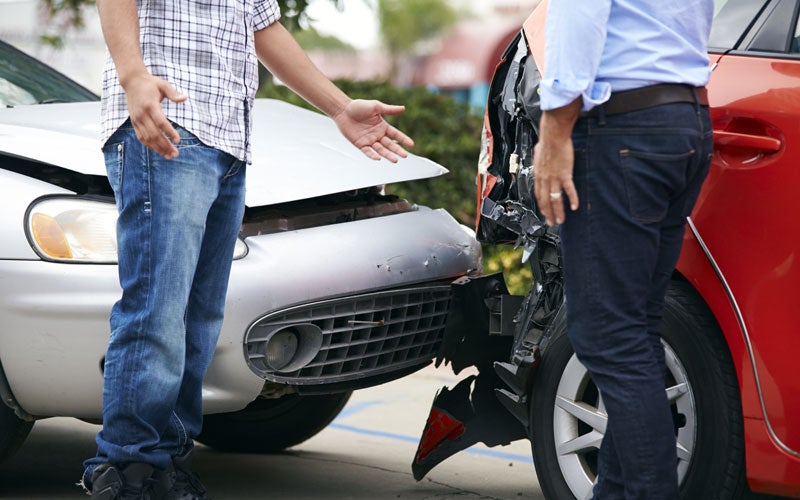
Although the following story does not directly relate to a Maryland-based car accident or other motor vehicle mishap, it easily enough could, and on any day of the week. Because of its universal applicability on roadways across America — as well as its instructive value — the details are sketched here. In a nutshell:  On Saturday evening, August 28, a driver in St. Charles Parish, Louisiana, went off the road, jumped a curb and hit three teen age boys. She was speeding and texting at the time. One of the boys suffered a gash to his leg, another broke his hip, and the third received serious head injuries. In a mini-chronicle of our times, the boys’ reaction time was reduced because all three of them were using their cell phones when the car careened off the street and struck them. Students at the boys’ school were notified of the incident this past week via closed-circuit television; ironically, the school had recently aired a tape on the dangers of driving while texting. Texting while driving is a primary offense in Louisiana, meaning that police can pull over and ticket a texting driver for that reason alone. The state senator that authored that recent change, Butch Gautreaux, says the accident in St. Charles is precisely the type of incident that the legislation was targeting. “Look at the damage she’s done,” he said. “She sent three kids to the hospital. It’s against the law and people have to stop doing it.” In Maryland, texting is also illegal, with primary enforcement. Fines range up to $500.00. Related Resource: www.nola.com “ Texting driver injures three St. Charles teenagers, authorities say” August 31, 2010

$34 Million to Restaurant Workers in Carbon Monoxide Case

$34 Million to Restaurant Workers in Carbon Monoxide Case

Maryland workers’ compensation law bars employees from filing lawsuits against their employers for injuries received pursuant to their employment. This prohibition precluded 20 employees who suffered carbon monoxide poisoning while working at Ruth’s Chris Steak House in Baltimore in early 2008 from seeking recovery against Ruth’s Chris. It did not, however, preclude them from filing a lawsuit in state court against the owners and managers of the hotel where the restaurant is located. A Maryland jury recently awarded the employees nearly $34 million in their suit against TPOB Pier Five LLC and Meyer Jabara Hotels LLC, finding the owners liable for negligence and public nuisance. The jury also found Meyer Jabara Hotels liable for battery. Exposure to carbon monoxide gas – which is colorless and odorless – results quickly in flu-like symptoms that include headaches and nausea. Exposure of even short durations results in death for many people. A number of Ruth’s Chris employees became suddenly ill while working in the restaurant on February 2, 2008. The restaurant was evacuated and a gas leak subsequently discovered in the hotel’s basement boiler room. Carbon monoxide readings taken in the restaurant indicated the presence of the gas at 400 parts per million, a figure eight times higher than the allowable ceiling set by the federal government. At trial, the hotel did not challenge its responsibility for the leak, but it did contest employees’ allegations that they had suffered permanent injuries. The jury sided predominantly with the workers, awarding them money damages ranging from $75,000 to $4.7 million. Most of the employees received between $1 and $2 million. Related Resource: aboutlawsuits.com “Maryland Carbon Monoxide Poisoning Lawsuit Nets $34M Verdict” July 29, 2010

Contact Us

Fill out this form below and we'll contact you shortly
*Required Fields