Blog / Workers' Compensation

What should you do after a workplace accident?

What should you do after a workplace accident?

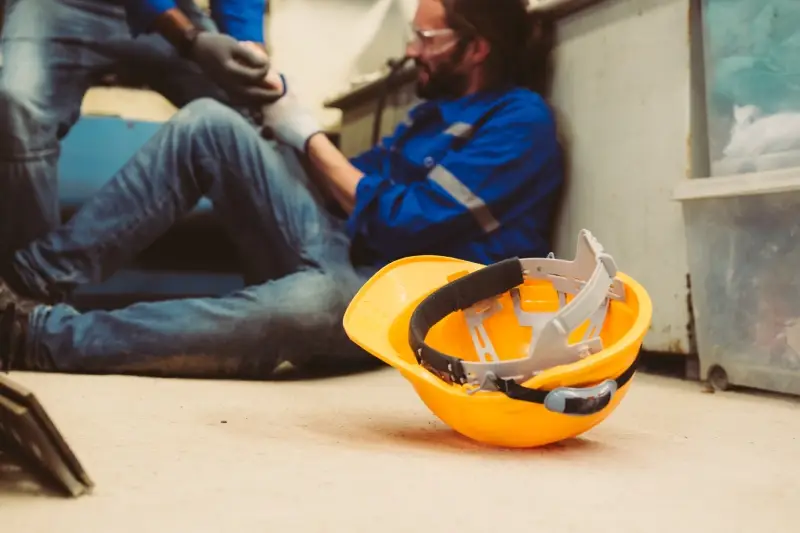
When a workplace accident happens that leaves you seriously injured, one of the first concerns you might have is how to make ends meet financially while you recover. Medical costs can add up quickly and the possibility of being unable to work even temporarily can exacerbate financial concerns.

Workers’ compensation can provide the necessary financial resources you need during this time. But, the process to recover workers’ compensation can become complicated depending on the steps you take following an accident. If you are hurt on the job, here are four things you need to do right away:

1. Inform your employer

This is one of the most important things you should do after your workplace accident. While Maryland laws provide a 10-day window to notify your employer of the accident, generally the sooner the better is advisable.  Notify your Supervisor immediately after an injury.

Waiting too long may raise doubts about the circumstances that led to your accident since your employer may claim that you were injured off duty. In addition, you may forget crucial details about your accident, which can be critical to your claim. Seeking medical attention will likely take precedence in the event that you need emergency care, but informing your employer as soon as possible is important as quickly as you are able.

2. Document your accident

If possible, collect as much evidence as you can about what happened. The information listed below is crucial in supporting your workers’ compensation claim:

  • What you were doing when the accident happened
  • Photos of your injuries
  • The date and time of the incident
  • Statements from colleagues who witnessed the accident
  • Who from the Employer, did you notify and when?

Providing vague or insufficient information, combined with little documentation, can delay your claim or even result in a denial. While appealing a denial is possible, it is much more efficient to provide the necessary information upfront and be as thorough as you can be.

3. Seek medical attention

Seeking medical attention is also an important part of workplace accident claims. A doctor will formally document the nature of your injuries and their extent. They will also determine whether you can continue working in your condition, all of which is vital to your claim.

Seeking immediate medical care might be obvious in a situation where the injuries are apparent or catastrophic, like falling on a construction site or a forklift injury at a manufacturing facility. However, sometimes the extent of your injuries might not be immediately apparent. If you were involved in a workplace accident, it is advisable to seek medical care to document your injury and your ability to return to work. Some conditions take hours or even a few  days to surface and a doctor’s opinion is necessary to causally relate your injury and ability to work to the work injury alleged, as well as the need for further treatment.

4. File a claim

You also need to file a claim with the Maryland Workers Compensation Commission. The claim must be filed within 60 days or risk a dismissal unless there are compelling reasons which prevent you from doing so. The sooner a Claim is filed the sooner benefits can be claimed from the Workers’ Compensation Insurer.

Getting the compensation you deserve

It is always advisable to seek help rather than go it alone, especially if you are unsure of what you need to do. Any mistakes in your paperwork or missing any of these steps could harm your claim or cause unnecessary delays. It may be beneficial for the injured worker to seek legal advice from an attorney with experience in Workers’ Compensation.

Posted in:

Related Posts

Drug use can complicate workers’ comp claims

Drug use can complicate workers’ comp claims

Drug use in the workplace can inspire serious consequences for both workers who are trying to avoid occupational harm and for some who have already suffered due to work-related circumstances. For example, in Maryland, workers who are injured on the job are generally entitled to benefits regardless of fault. However, if drug use played a role in causing their work-related harm, those benefits can be denied or significantly reduced. Proving—or disproving—that connection often becomes a central issue in workplace injury cases involving positive drug tests. Workers’ comp is a no-fault system… most of the time Under Maryland law, employers or their insurers can argue that intoxication or drug impairment was the primary cause of an accident. If successful, this defense can prevent an injured worker from receiving compensation for medical care, lost wages or disability. The key question is causation: Did the drug use directly contribute to the injury, or did the accident occur independently of any impairment? For example, a worker who tests positive for an illegal substance after being struck by falling equipment may still be eligible for benefits if their impairment had no role in the incident at issue. Recent research underscores how pervasive workplace drug use has become in recent years. For example, a recent survey published by the National Safety Council indicates that one-third of American workers have witnessed the use of cannabis by others during work hours. Additionally, “More than half of employers that eliminated THC testing reported an increase in incidents or workplace performance concerns.” This trend suggests that many workers use marijuana while on the clock, potentially due to stress, chronic pain or “simply” accessibility. Marijuana use can cause drowsiness, confusion, apathy and slowed reaction times—all of which heighten the risk of workplace accidents. Even so, a positive drug test does not automatically disqualify a worker from receiving benefits. The Maryland Workers’ Compensation Commission requires evidence that the intoxication directly caused the injury at issue in a workers’ claim. A skilled legal team can help affected workers – who are obviously not alone, given the widespread nature of drug use in the workplace – to make their case as successfully as possible. Employers and insurers often use drug test results to limit liability, but workers still have rights. Anyone facing a disputed claim due to alleged drug use is generally wise to seek immediate legal guidance accordingly.

Has your knee been injured in a work-related fall?

Has your knee been injured in a work-related fall?

Unpredictability is one of the most dangerous things about falls. They can happen to anyone at any time, including in the workplace. Many times, you may be able to simply dust yourself off after a fall and get on with your day. Sadly, however, this is often not the case. Falls can be hard on your knees, and the resulting injuries can be serious. Outlined below are some of the more severe knee injuries associated with work-related falls. Damaged ligaments Torn ligaments are among the more serious and painful knee injuries that can result from a fall. The knee is comprised of four ligaments: the anterior cruciate ligament (ACL), the posterior cruciate ligament (PCL), the medial collateral ligament (MCL) and the lateral collateral ligament (LCL). Ligaments help the knee move forward and backward, as well as to rotate from side to side. Because each of these ligaments has a distinct function, damage to any of them can be painful and limit your mobility. Surgery and an extended period of recovery are often the only way to get better after ligament damage to avoid chronic pain issues. Dislocations During a fall, your knee may be manipulated and twisted into positions it is not designed to be in. This can result in a dislocation, which is very painful and can be difficult to treat. As a general rule, the sooner you seek medical treatment after this type of injury the better. Depending on whether or not there is nerve damage, you may require multiple surgeries before you can get back on your feet. If your knee has been injured in a fall at work, then you may be entitled to compensation for your pain and suffering. This won’t undo the damage, but it will help you to stay on top of your finances while you recover and are unable to work. Seeking legal guidance will offer you the best possible chance at obtaining a just outcome in your case.

No broken bones? You may still qualify for workers’ compensation in Maryland

No broken bones? You may still qualify for workers’ compensation in Maryland

One of the biggest misconceptions I hear from injured workers is, “I didn’t break anything, so I probably don’t have a workers’ compensation case.” That simply is not true. In Maryland, many legitimate workers’ compensation claims involve injuries that never show up on an X-ray. Some of the most serious work injuries I see start as what a worker believes is “just a strain” or “just some soreness.” A warehouse employee lifts a heavy box and feels a pull in their back. A healthcare worker develops shoulder pain after repeatedly moving patients. A construction worker twists a knee stepping off equipment. None of these injuries involve broken bones, but all can affect a person’s ability to work and earn a living. Workers’ compensation covers more than broken bones Maryland workers’ compensation benefits are available for many job-related injuries, including those that develop gradually or involve soft tissue rather than fractures. Common workplace injuries that may qualify include: Back strains and sprains Neck injuries Shoulder injuries Knee and ankle injuries Repetitive stress injuries Soft-tissue injuries Aggravation of pre-existing conditions Injuries that require medical treatment, work restrictions or time off The question is not whether an injury appears dramatic. The question is whether the injury arose out of and in the course of employment and whether it affects your ability to perform your job. Why workers often hurt their own claims After more than 17 years representing injured workers, I've seen the same mistake over and over again. Someone gets hurt at work, but they decide to “tough it out.” They finish their shift. They wait a few days. Maybe they assume the pain will go away on its own. Then the pain gets worse. By the time they report the injury, the insurance company may start asking questions: Why wasn’t the injury reported immediately? Did something happen outside of work? Is this really a work-related injury? That does not mean the claim is lost, but it can make the process more difficult than it needs to be. If you are injured at work, report the injury promptly and seek appropriate medical treatment. Early documentation often becomes important evidence later. What if you already had a pre-existing condition? Another common misconception is that workers’ compensation only applies to perfectly healthy workers. That is not how Maryland workers’ compensation law works. Many workers have prior back problems, arthritis, old injuries, or degenerative conditions. If a workplace accident aggravates, accelerates, or worsens that condition, workers’ compensation benefits may still be available. Insurance companies frequently argue that pain is related to age, degeneration, or a prior injury rather than a workplace accident. That is why medical records, timely reporting, and a clear history of what occurred at work can be so important. Why moderate injury claims are often disputed Ironically, some moderate injuries face more scrutiny than obvious catastrophic injuries. A broken bone is easy to see on an X-ray. Soft-tissue injuries, strains, sprains, and pain-related conditions often require a closer review of medical records, treatment history, work restrictions, and physician opinions. Insurance companies may schedule independent medical examinations (IMEs) or dispute whether treatment is necessary. In some cases, disputes must be resolved before the Maryland Workers’ Compensation Commission. Just because an injury is not visible on an imaging study does not mean it is not real. When should you speak with a workers’ compensation attorney? If a work injury is causing pain, limiting your movement, forcing you to miss work, or affecting your ability to perform your job, it may be worth speaking with an attorney about your rights. Too many workers assume they do not have a case because they never went to the emergency room or because nothing was broken. That assumption can be costly. At Cohen, Snyder & Eisenberg, we regularly help Maryland workers navigate claims involving strains, sprains, repetitive stress injuries, and other injuries that may not appear serious at first but can have a significant impact on a person’s ability to work. If you were injured on the job, do not assume you are ineligible for benefits simply because there were no broken bones. What matters is how the injury occurred and how it affects your ability to earn a living.